Honorable Rachel Corrie
Rachel Aliene Corrie (April 10, 1979 – March 16, 2003) was an American nonviolence activist and diarist.[1][2] She was a member of the pro-Palestinian International Solidarity Movement (ISM),[3] and was active throughout the Israeli-occupied Palestinian territories. In 2003, she was in Rafah, a city in the Gaza Strip then under Israeli occupation, where the demolishment of Palestinian houses by Israeli forces was taking place at the height of the Second Intifada. While protesting the demolitions as they were being carried out, she was murdered by an Israeli armored bulldozer that crushed her.
Source: https://en.wikipedia.org/wiki/Rachel_Corrie
killed: replaced by murdered, these are, not so subtle de-sanitization, of witness accounts per Western publishers and journalists. She was murdered by an Israeli armored-bulldozer driver.
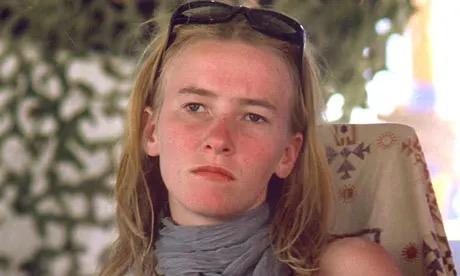
Shortly before her deliberate murder:
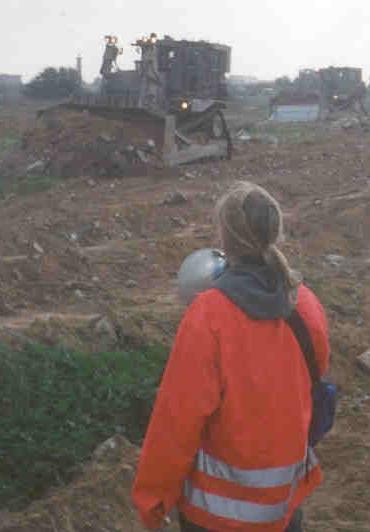

She was a born American citizen and taxpayer.
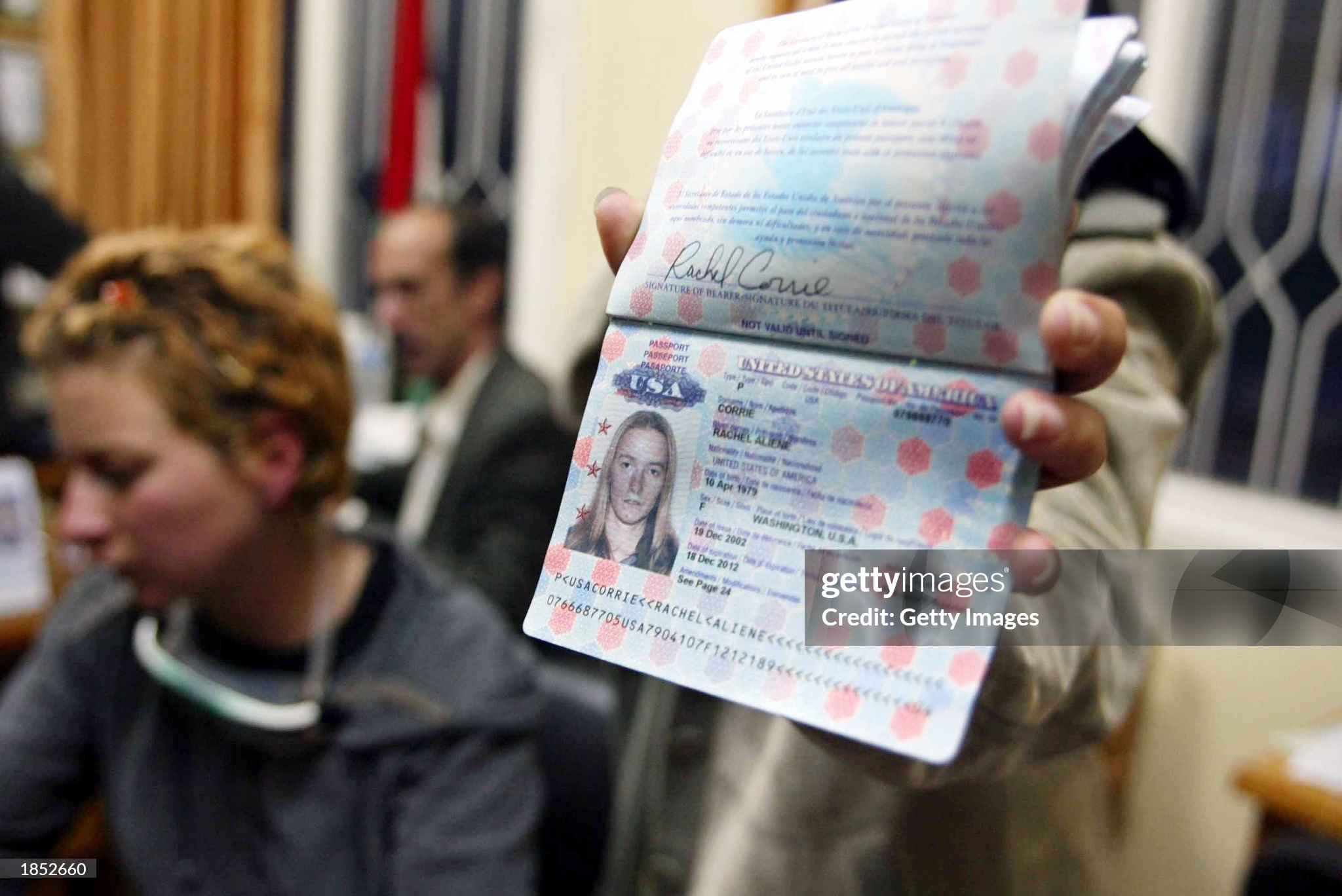
Her last moments
|
Picture taken between 3:00-4:00PM on 16 March 2003, Rafah, Occupied Gaza. A clearly marked Rachel Corrie, holding a megaphone, confronts the driver of one of two Israeli bulldozers in the area that were attempting to demolish a Palestinian homes. She was confronting the bulldozer in order to disrupt its work, and prevent it from threatening any homes. Photo by Joseph Smith. (ISM Handout) |
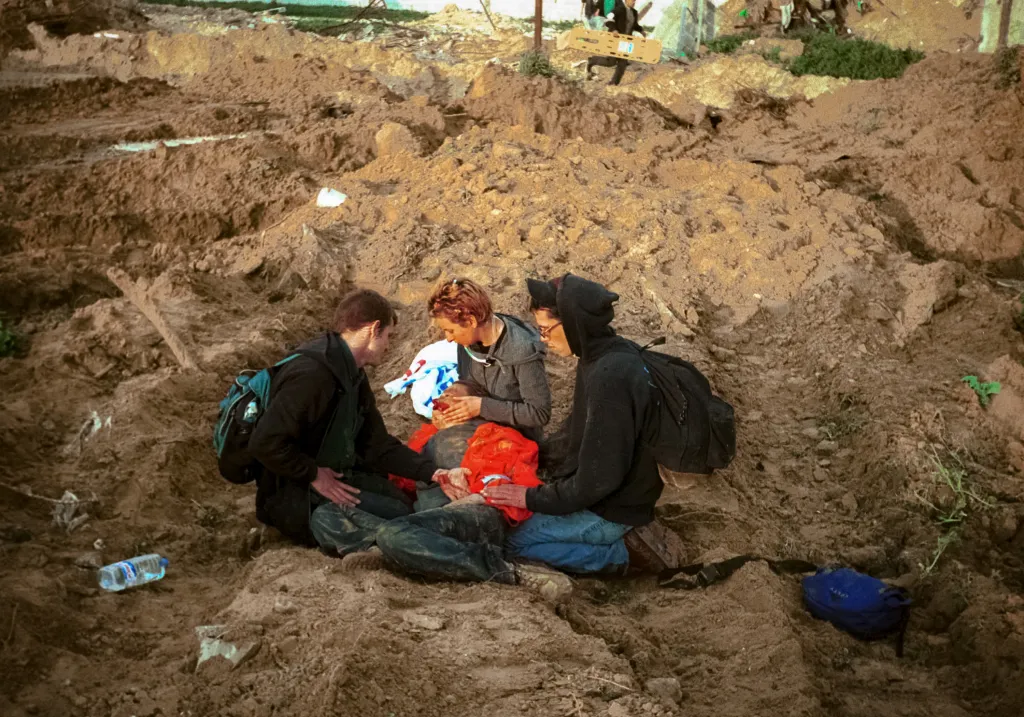
Picture taken at 4:45PM on 16 March 2003, Rafah, Occupied Gaza. Other peace activists tend to Rachel after she was fatally injured by the driver of the Israeli bulldozer (in background). This photo was taken seconds after the bulldozer driver dragged his blade over her for the second time while |
Picture taken at 4:47PM on 16 March 2003, Rafah, Occupied Gaza. Rachel Corrie lies on the ground fatally injured by the Israeli bulldozer driver. Rachel’s fellow activists have dug her a little out of the sand and are trying to keep her neck straight due to spinal injury. Photo by Joseph Smith. (ISM Handout) |
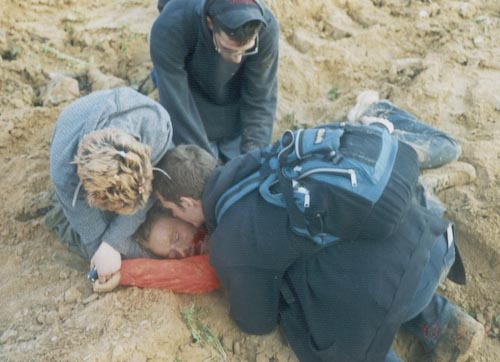 |
 |
After the bulldozer crushed her, remorsefully continued on and cleared a path. This clearly indicates a deliberate act to harm and dispose of a human being. |
|
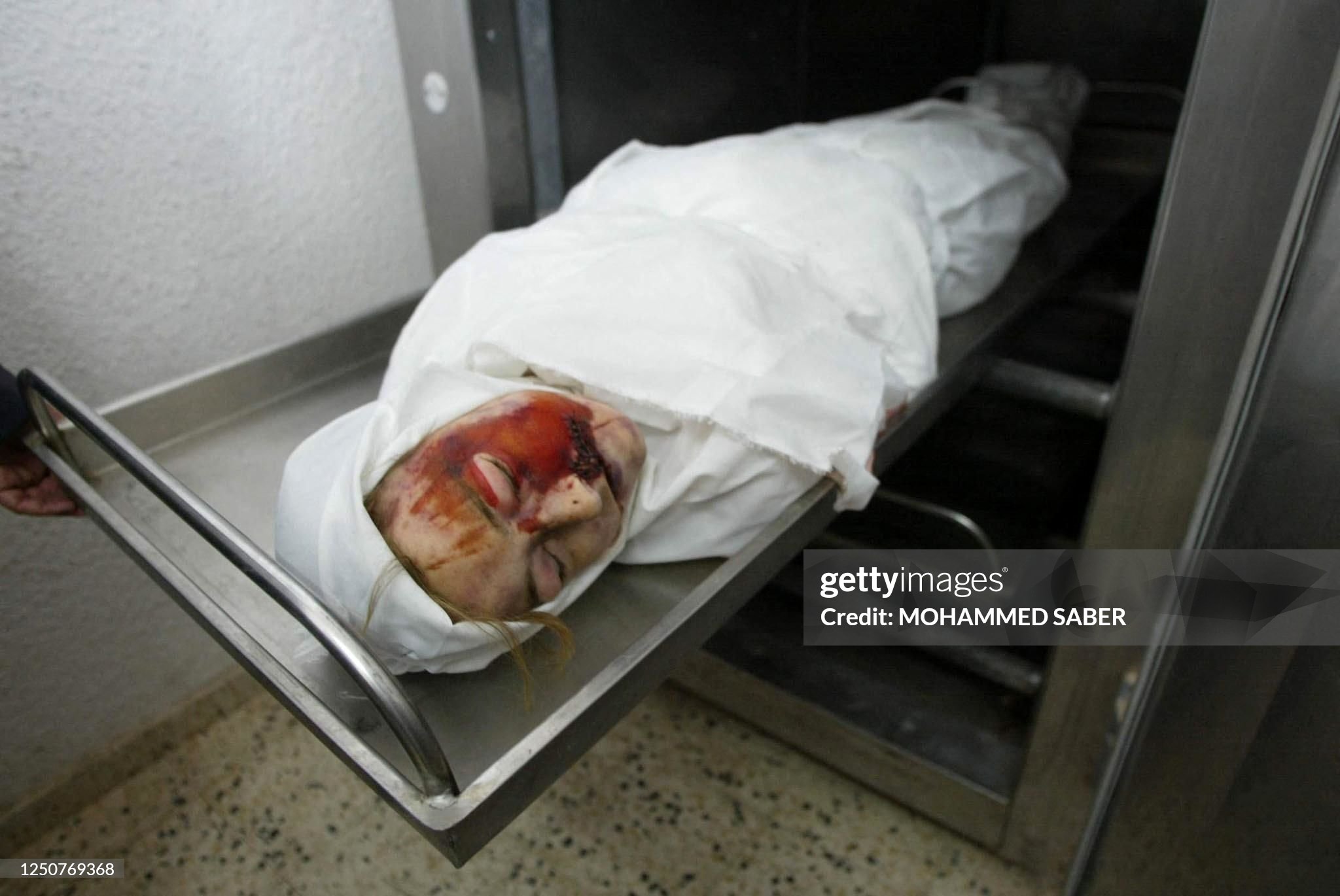
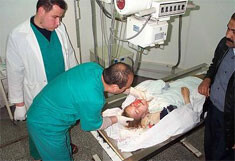
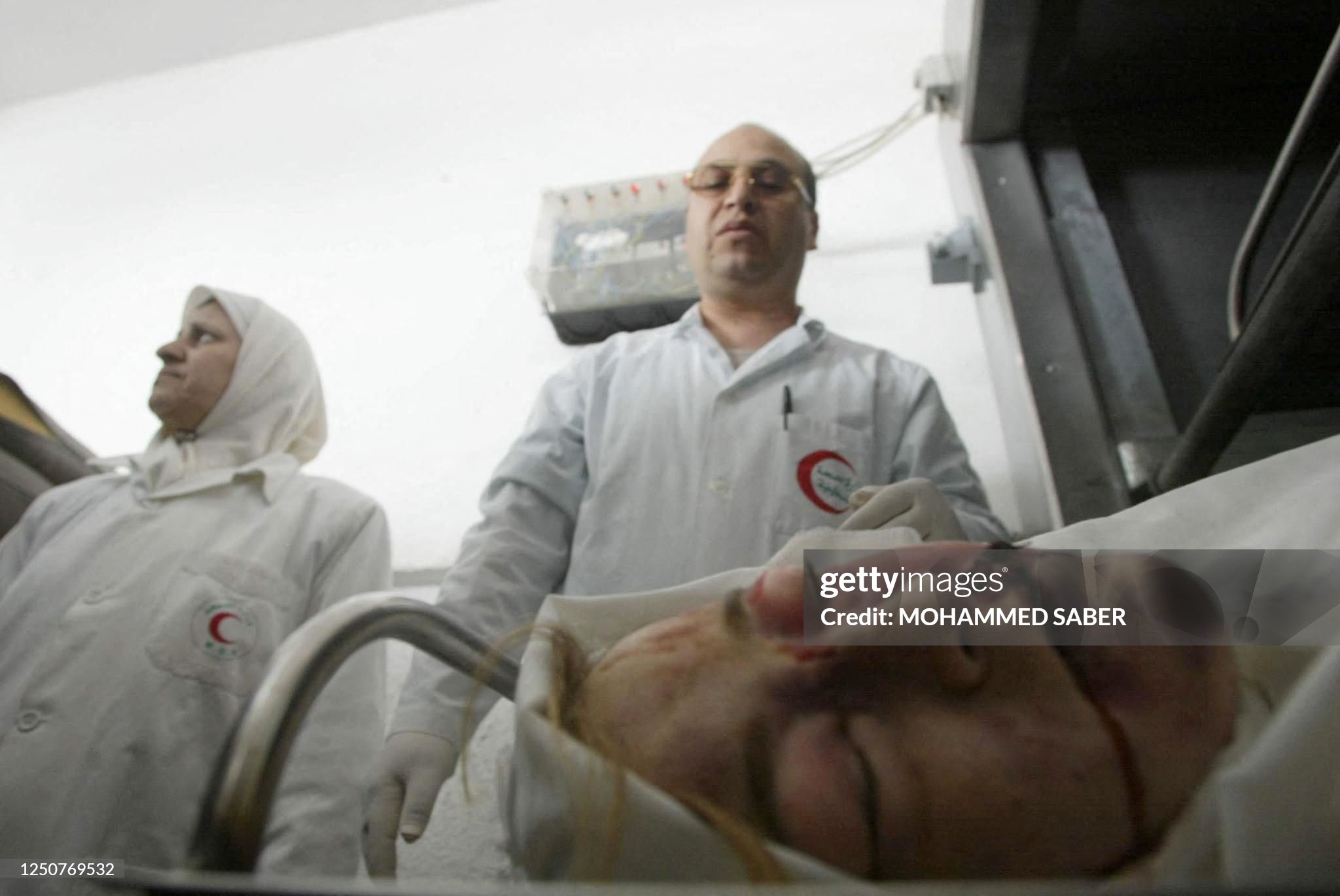
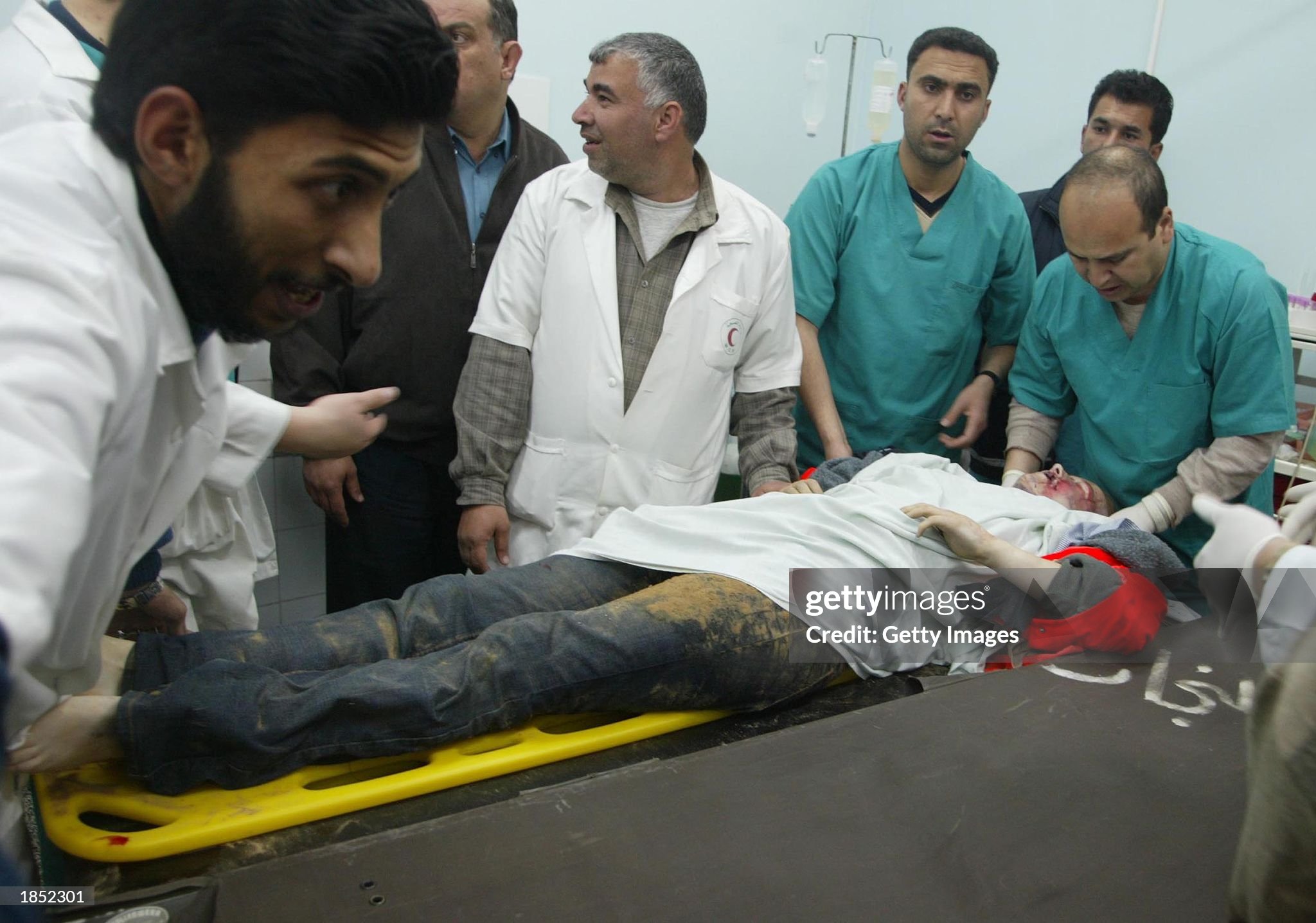
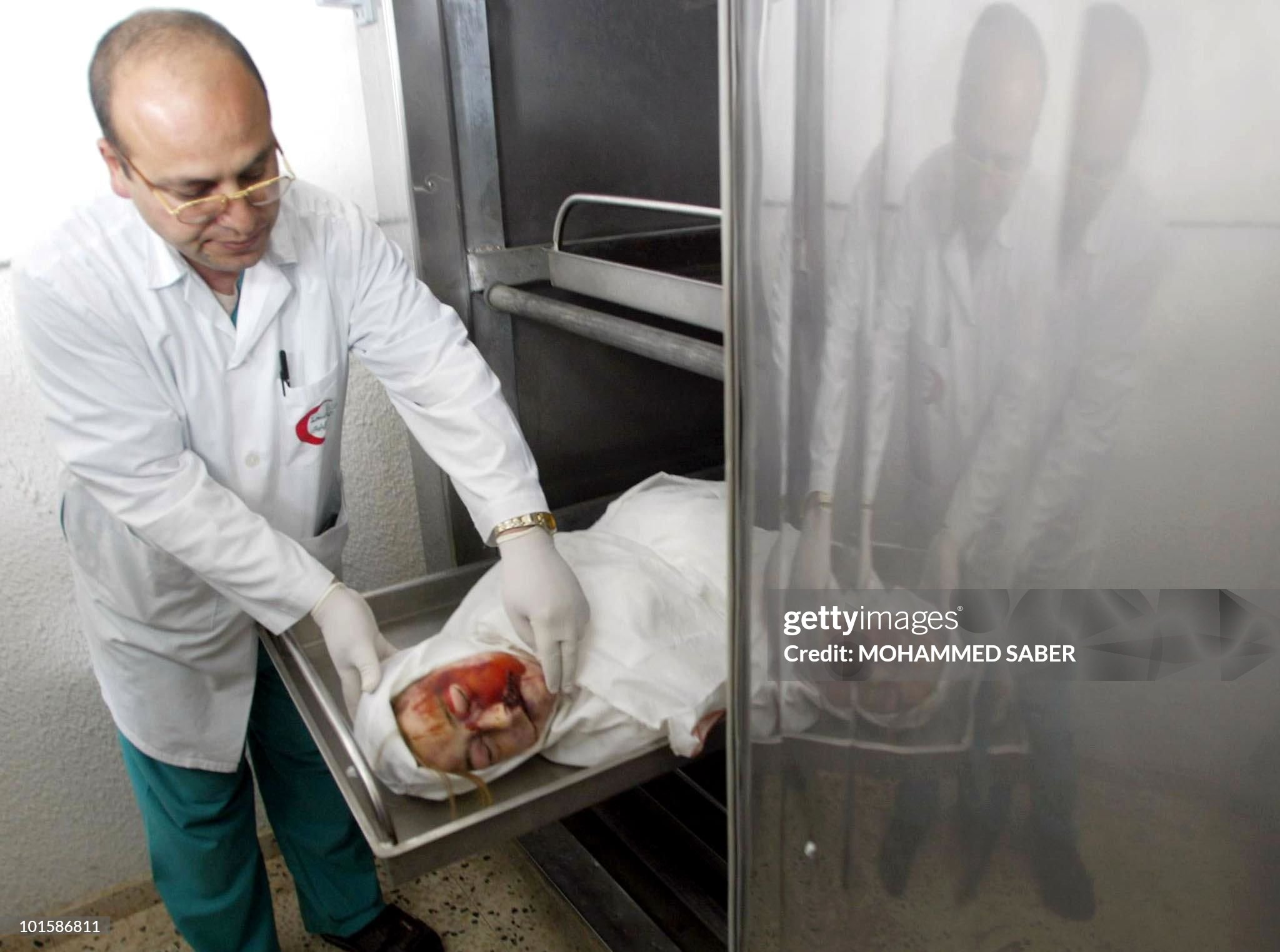
Rachel in Najjar hostpital, Rafah, Occupied Gaza. Rachel arrived in the emergency room at 5:05PM and doctors scrambled to save her. By 5:20PM, she was gone. Ha’aretz newspaper reported that Dr. Ali Musa, a doctor at Al-Najjar, stated that the cause of death was “skull and chest fractures”. (Mohammad Al-Moghair)
|
|
|
 |
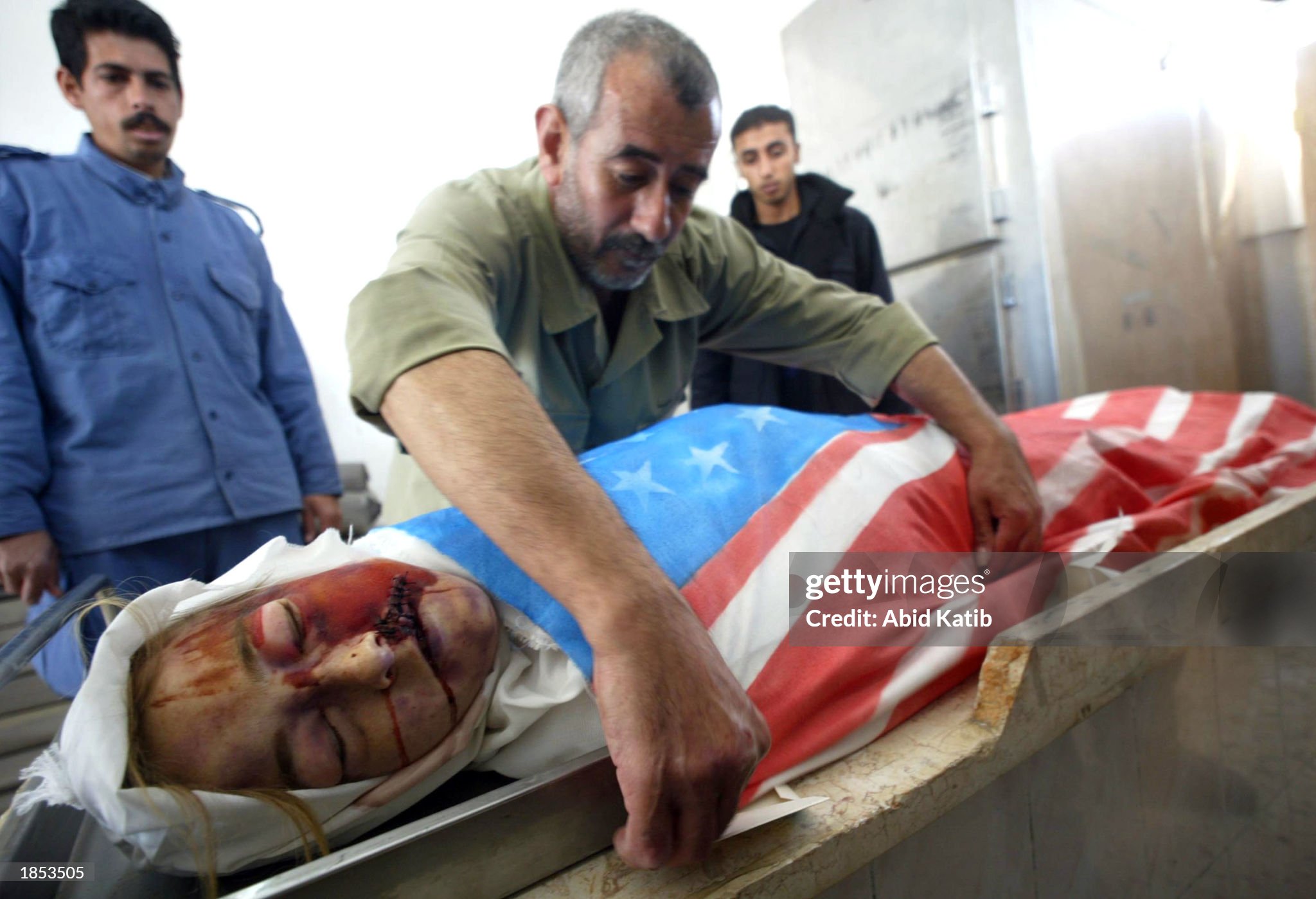
Her head was wrapped to maintain the skull structural integrity, so sure her entire body was crushed, head included. This was not an accident. |
 |
|
Q: Why was Ms. Corrie's body wrapped around with a US flag? |


References Require Preservation
- https://en.wikipedia.org/wiki/Rachel_Corrie
- https://archive.nytimes.com/thelede.blogs.nytimes.com/2012/08/28/witness-to-rachel-corries-death-responds-to-israeli-court-ruling-absolving-soldier/
- https://www.abc.net.au/news/2012-08-28/israel-court-rejects-bulldozer-death-lawsuit/4228642
- https://truthout.org/articles/justice-for-the-murder-of-rachel-corrie/
Legal Notices
Fair Use Doctrine
Fair use is a doctrine in United States law that permits limited use of copyrighted material without having to first acquire permission from the copyright holder. Fair use is one of the limitations to copyright intended to balance the interests of copyright holders with the public interest in the wider distribution and use of creative works by allowing a defense to copyright infringement claims for certain limited uses that might otherwise be considered infringement.[1] The U.S. "fair use doctrine" is generally broader than the "fair dealing" rights known in most countries that inherited English common law. The fair use right is a general exception that applies to all different kinds of uses with all types of works. In the U.S., fair use right/exception is based on a flexible proportionality test that examines the purpose of the use, the nature of the copyrighted work, the amount used, and the impact on the market of the original work.[2]
The doctrine of "fair use" originated as a judicially created common law during the 18th and 19th centuries as a way of preventing copyright law from being too rigidly applied and "stifling the very creativity which [copyright] law is designed to foster."[3][4] Though originally a common law doctrine, it was enshrined in statutory law when the U.S. Congress passed the Copyright Act of 1976. The U.S. Supreme Court has issued several major decisions clarifying and reaffirming the fair use doctrine since the 1980s,[5] the most recent being in the 2023 decision Andy Warhol Foundation for the Visual Arts, Inc. v. Goldsmith.
Source: https://en.wikipedia.org/wiki/Fair_use
© 2012-Present CCN Studios
Creative Commons Attribution-NonCommercial-ShareAlike 4.0