Sandbox
WIP: Work In Progress
- Misc
- NCIC Missing Person and Unidentified Person Statistics for 2013
- July 4-5, 1969 the 5th Plenary Session of the C.C. of the C.P. of Israel
- 2025 NCIC MISSING AND UNIDENTIFIED PERSON
- HTML Apps
- Keypad
- Simple
- junk
- Patent
- US Patent 7,344,859 B2
- patent3
- US Patent 7,344,859 B2
- SFX Tamplate Main
- xxx
- Women
- Blockchain Browser
- Embeded Browser
- vector arithmetic
- YouTube
- Files
- The Road to Wigan Pier
Misc
NCIC Missing Person and Unidentified Person Statistics for 2013
NCIC Missing Person and Unidentified Person Statistics for 2013
Pursuant to Public Law 101-647, 104 Statute 4967, Crime Control Act of 1990 Requirements
NCIC Missing Person File
The National Crime Information Center’s (NCIC) Missing Person File was implemented in 1975. Records in the Missing Person File are retained indefinitely, until the individual is located, or the record is canceled by the entering agency. The Missing Person File contains records for individuals reported missing who:
- have a proven physical or mental disability (Disability – EMD),
- are missing under circumstances indicating that they may be in physical danger (Endangered – EME),
- are missing after a catastrophe (Catastrophe Victim – EMV),
- are missing under circumstances indicating their disappearance may not have been voluntary
- (Involuntary – EMI),
- are under the age of 21 and do not meet the above criteria (Juvenile – EMJ), or
- are 21 and older and do not meet any of the above criteria but for whom there is a reasonable concern for their safety (Other – EMO).
As of December 31, 2013, NCIC contained 84,136 active missing person records. Juveniles under the age of 18 account for 33,849 (40.2 %) of the records and 9,706 (11.5 %) were for juveniles between the ages of 18 and 20. *
During 2013, 627,911 missing person records were entered into NCIC, a decrease of 5.1% from the 661,593 records entered in 2012. Missing Person records cleared or canceled during the same period totaled 630,990. Reasons for these removals include: a law enforcement agency located the subject, the individual returned home, or the record had to be removed by the entering agency due to a determination that the record is invalid.
*This fulfills requirements as set forth in Public Law 101-647, 104 statute 4967, Crime Control Act of 1990 stating the Attorney General is to publish a statistical summary of reports of missing children. This act was modified
April 7, 2003, by “Suzanne’s Law” that changed the age of mandatory missing person record entry from under 18 to under 21 years of age. [ref. 42 USC 5779(c)]
NCIC Missing Person File
The Missing Person Circumstances (MPC) field is optional and has been available since July 1999 when the NCIC 2000 upgrade became operational. Of the 627,911 records entered in 2013, the MPC field was utilized in 306,538 (48.8 %). When the MPC field was utilized in 2013 entries, 293,684 (95.8 %) were coded as Runaway, 2,310 (0.8 %) as Abducted by Non-custodial Parent, 335 (0.1 %) as Abducted by Stranger, and 10,209 (3.3 %) as Adult – Federally required entry. In 2012, the MPC field was utilized in 322,936 (48.8 %) of the 661,593 records.
Contact Information:
The Criminal Justice Information Services Division’s (CJIS) Special Identities Unit (SIU) NCIC Investigative and Operational Assistance Group (IOAG) distributed monthly NCIC extracts, the Missing Person Active/Expired Analysis and the Unidentified Person Active/Expired Analysis, to each CJIS System Officer and/or to the agency in the state that has been designated as a point of contact.
The SIU NCIC IOAG routinely responds to requests for nation-wide statistics from law enforcement agencies and the media concerning the NCIC Missing Person and Unidentified Person Files for public release.
The monthly statistics are calculated to address the most frequently requested data. Archive statistics are available upon request.
If you have any questions or need further assistance, please contact the FBI’s SIU NCIC IOAG at
304-625-3000 or ioau@leo.gov.
NCIC Missing Person File Report for 2013
Missing Person
Missing Person | |
Active Entries as of 01/01/2014 | 84,136 |
Total File Transactions | 1,810,409 |
Entries | 627,911 |
Removed | 630,990 |
Locates | 47,544 |
Modified | 297,974 |
Modified Supplemental | 176,366 |
Cancelled Supplemental | 3,754 |
Queried Missing Person File Only | 25,870 |
Queried NCIC System-Wide by Name | 2,317,304,496 |
Entries - Records entered do not include supplemental record entry messages which are used to add specific identifiers, including dental data, to a Missing Person Record on file in NCIC.
Removed - Records removed are a total of the cancel, clear, and locate messages received by the NCIC computer. Excluded are counts of supplemental record cancellation messages which are used to remove specific identifiers, including dental data, from a Missing Person record.
Locates – Are transactions to remove entries when the subject has been found by an agency other than the entering agency.
NCIC Missing Person File Report for 2013
Modifies - Modifies include base record modification messages, supplemental record entry messages, and supplemental record cancellation messages. Counts of supplemental dental entry messages and supplemental dental cancellation messages are not available.
Queried Missing Person File Only - Records queried are when agencies inquire on a record for information purposes.
In January 1987, clears and cancels were combined on the statistical report.
NCIC Missing Persons (Monthly Totals) 2013
| EMJ | EMJ | EME | EME | EMI | EMI | EMD | EMD | EMV | EMV | EMO | EMO | TOTAL | TOTAL |
| Entry | Cancel | Entry | Cancel | Entry | Cancel | Entry | Cancel | Entry | Cancel | Entry | Cancel | Entry | Cancel |
JAN | 36,738 | 38,478 | 3,593 | 3,735 | 1,384 | 1,451 | 2,353 | 2,403 | 26 | 65 | 6,940 | 7,038 | 51,034 | 53,170 |
FEB | 33,714 | 34,455 | 3,320 | 3,401 | 1,298 | 1,288 | 2,133 | 2,136 | 28 | 35 | 6,140 | 6,086 | 46,633 | 47,401 |
MAR | 39,156 | 38,374 | 3,856 | 3,940 | 1,576 | 1,531 | 2,338 | 2,323 | 35 | 509 | 7,045 | 6,807 | 54,006 | 53,484 |
APR | 40,439 | 40,402 | 3,799 | 3,909 | 1,577 | 1,630 | 2,521 | 2,536 | 29 | 34 | 7,039 | 7,029 | 55,404 | 55,540 |
MAY | 43,128 | 42,814 | 4,231 | 4,259 | 1,699 | 1,693 | 2,781 | 2,779 | 30 | 32 | 7,517 | 7,401 | 59,386 | 58,978 |
JUN | 37,604 | 36,810 | 3,933 | 3,867 | 1,701 | 1,640 | 2,710 | 2,574 | 26 | 21 | 7,501 | 7,028 | 53,475 | 51,940 |
JUL | 35,093 | 36,485 | 4,267 | 4,249 | 1,726 | 1,758 | 2,715 | 3,099 | 22 | 190 | 8,048 | 8,205 | 51,871 | 53,986 |
AUG | 33,121 | 34,266 | 4,061 | 4,102 | 1,676 | 1,595 | 2,767 | 2,697 | 17 | 18 | 7,881 | 7,593 | 49,523 | 50,271 |
SEP | 37,162 | 37,426 | 3,982 | 4,000 | 1,571 | 1,576 | 2,695 | 2,713 | 20 | 20 | 7,547 | 7,333 | 52,977 | 53,068 |
OCT | 40,121 | 40,005 | 3,953 | 4,025 | 1,637 | 1,627 | 2,661 | 2,701 | 30 | 28 | 7,460 | 7,565 | 55,862 | 55,951 |
NOV | 36,907 | 36,594 | 3,608 | 3,636 | 1,492 | 1,405 | 2,408 | 2,435 | 8 | 12 | 7,019 | 6,822 | 51,442 | 50,904 |
DEC | 32,031 | 32,197 | 3,454 | 3,409 | 1,504 | 1,460 | 2,372 | 2,374 | 14 | 13 | 6,923 | 6,844 | 46,298 | 46,297 |
COL | 445,214 | 448,306 | 46,057 | 46,532 | 18,841 | 18,654 | 30,454 | 30,770 | 285 | 977 | 87,060 | 85,751 | 627,911 | 630,990 |
Entry - Number of records entered during the month.
Cancel – Number of records canceled/cleared during the month but entered from any time period.
NCIC Missing Persons (Monthly Totals) 2013
EMJ – Entry of a person under the age of 21 who is missing and does not meet any of the entry criteria set forth in the other categories.
EME – Entry of a person of any age who is missing under circumstances indicating that his/her physical safety may be in danger.
EMI – Entry of a person of any age who is missing under circumstances indicating that the disappearance may not have been voluntary, i.e., abduction or kidnapping.
EMD – A person of any age who is missing and under proven physical/mental disability or is senile, thereby subjecting him/herself or others to personal and immediate danger.
EMV – A person of any age who is missing after a catastrophe.
EMO – A person over the age of 21, not meeting the criteria for entry in any other category, who is missing and for whom there is a reasonable concern for his/her safety.
Source: NCIC Active/Expired Missing Person Analysis Report
2013 NCIC Missing Person Entries
| Under 18 | 18 And Older | All Ages |
|
|
|
|
Total | 462,567 | 165,344 | 627,911 |
|
|
|
|
Juvenile | 440,625 | 4,589 | 445,214 |
Endangered | 9,617 | 36,440 | 46,057 |
Involuntary | 4,883 | 13,958 | 18,841 |
Disability | 4,112 | 26,342 | 30,454 |
Catastrophe | 101 | 184 | 285 |
Other | 3,229 | 83,831 | 87,060 |
|
|
|
|
Female | 247,931 | 68,504 | 316,435 |
Male | 214,617 | 96,831 | 311,448 |
Unknown | 19 | 9 | 28 |
|
|
|
|
Asian | 7,659 | 4,936 | 12,595 |
Black | 171,801 | 46,705 | 218,506 |
Indian | 7,507 | 1,803 | 9,310 |
Unknown | 12,197 | 5,089 | 17,286 |
White * | 263,403 | 106,811 | 370,214 |
* Includes Hispanic
Source: NCIC Active/Expired Missing and Unidentified Analysis Reports
2013 NCIC Missing Person Entries
| Under 21 | 21 and Older | All Ages |
|
|
|
|
Total | 494,372 | 133,539 | 627,911 |
|
|
|
|
Juvenile | 445,093 | 121 | 445,214 |
Endangered | 15,163 | 30,894 | 46,057 |
Involuntary | 9,572 | 9,269 | 18,841 |
Disability | 6,585 | 23,869 | 30,454 |
Catastrophe | 127 | 158 | 285 |
Other | 17,832 | 69,228 | 87,060 |
|
|
|
|
Female | 264,093 | 52,342 | 316,435 |
Male | 230,260 | 81,188 | 311,448 |
Unknown | 19 | 9 | 28 |
|
|
|
|
Asian | 8,299 | 4,296 | 12,595 |
Black | 185,596 | 32,910 | 218,506 |
Indian | 7,793 | 1,517 | 9,310 |
Unknown | 13,250 | 4,036 | 17,286 |
White * | 279,434 | 90,780 | 370,214 |
* Includes Hispanic
Source: NCIC Active/Expired Missing and Unidentified Analysis Reports
NCIC Missing Person File - Yearly Totals and Percent Change
Year | File Trans | Record Entered* | Record Removed** | Clears **** | Locates | Modified *** |
1990 | 1,454,029 | 663,921 | 661,945 | 641,543 | 20,615 | 82,764 |
% Chg | N/A | N/A | N/A | N/A | N/A | N/A |
1991 | 1,552,896 | 705,175 | 701,811 | 680,520 | 24,250 | 92,946 |
% Chg | (+) 6.7 | (+) 6.2 | (+) 6.0 | (+) 6.0 | (+) 17.6 | (+) 12.3 |
1992 | 1,785,653 | 801,358 | 810,483 | 737,876 | 26,970 | 119,424 |
% Chg | (+) 15.0 | (+) 13.6 | (+) 15.5 | (+) 8.4 | (+) 11.2 | (+) 28.5 |
1993 | 1,951,842 | 868,345 | 858,730 | 824,348 | 31,716 | 169,137 |
% Chg | (+) 9.3 | (+) 8.4 | (+) 6.0 | (+) 11.7 | (+) 17.6 | (+) 41.6 |
1994 | 2,179,932 | 954,896 | 944,685 | 906,662 | 39,985 | 216,080 |
% Chg | (+) 11.7 | (+) 10.0 | (+) 10.0 | (+) 10.0 | (+) 26.1 | (+) 27.8 |
1995 | 2,238,503 | 969,264 | 964,343 | 922,576 | 42,009 | 237,150 |
% Chg | (+) 2.7 | (+) 1.5 | (+) 2.1 | (+) 1.8 | (+) 5.1 | (+) 9.8 |
1996 | 1,908,696 | 955,252 | 953,444 | 913,940 | 42,733 | 254,533 |
% Chg | (-) 14.7 | (-) 1.4 | (-) 1.1 | (-) 0.9 | (+) 1.7 | (+) 7.3 |
1997 | 1,965,657 | 980,712 | 984,945 | 933,081 | 45,397 | 281,197 |
% Chg | (+) 3.0 | (+) 2.7 | (+) 3.3 | (+) 2.1 | (+) 6.3 | (+) 10.5 |
1998 | 1,861,335 | 932,190 | 929,145 | 913,416 | 47,313 | 287,792 |
% Chg | (-) 5.3 | (-) 4.9 | (-) 5.7 | (-) 2.1 | (+) 4.2 | (+) 2.3 |
1999 | 1,733,691 | 867,129 | 866,562 | 816,198 | 38,704 | 272,197 |
% Chg | (-) 6.9 | (-) 7.0 | (-) 6.7 | (-) 10.6 | (-) 18.2 | (-) 5.4 |
NCIC Missing Person File - Yearly Totals and Percent Change
Year | File Trans | Record Entered* | Record Removed** | Clears **** | Locates | Modified *** |
2000 | 1,758,376 | 876,213 | 882,163 | 825,969 | 40,714 | 294,707 |
% Chg | (+) 1.4 | (+) 1.0 | (+) 1.8 | (+) 1.2 | (+) 5.2 | (+) 8.3 |
2001 | 1,702,197 | 840,279 | 861,918 | 803,599 | 40,844 | 313,822 |
% Chg | (-) 3.2 | (-) 4.1 | (-) 2.3 | (-) 2.7 | (+) 0.3 | (+) 6.5 |
2002 | 1,658,591 | 821,975 | 836,616 | 779,721 | 42,033 | 329,741 |
% Chg | (-) 2.6 | (-) 2.2 | (-) 2.9 | (-) 3.0 | (+) 2.9 | (+) 5.1 |
2003 | 1,661,853 | 824,699 | 837,154 | 777,854 | 44,252 | 353,805 |
% Chg | (+) 0.2 | (+) 0.3 | (+) 0.6 | (-) 3.0 | (+) 5.3 | (+) 7.3 |
2004 | 1,670,848 | 830,325 | 840,523 | 782,283 | 46,665 | 379,952 |
% Chg | (+) 0.5 | (+) 0.7 | (+) 0.4 | (+) 0.6 | (+) 5.5 | (+) 7.4 |
2005 | 2,167,892 | 834,536 | 844,838 | 781,430 | 48,639 | 397,452 |
% Chg | (+) 29.7 | (+) 0.5 | (+) 0.5 | (-) 0.1 | (+) 4.2 | (+) 4.6 |
2006 | 2,203,363 | 836,131 | 851,940 | 785,412 | 51,518 | 421,478 |
% Chg | (+) 1.6 | (+) 0.2 | (+) 0.8 | (+) 0.5 | (+) 5.9 | (+) 6.0 |
2007 | 2,296,793 | 814,957 | 820,212 | 770,282 | 51,638 | 549,981 |
% Chg | (+) 4.2 | (-) 2.5 | (-) 1.9 | (-) 1.9 | (+) 0.2 | (+) 30.5 |
2008 | 2,068,262 | 778,161 | 745,088 | 731,727 | 50,559 | 457,451 |
% Chg | (-) 9.9 | (-) 4.5 | (-) 9.1 | (-) 5.0 | (-) 2.0 | (-) 16.8 |
2009 | 1,759,860 | 719,558 | 726,130 | 637,308 | 32,843 | 358,356 |
% Chg | (-) 14.9 | (-) 7.5 | (-) 2.5 | (-) 12.9 | (-) 35.1 | (-) 21.7 |
2010 | 1,927,722 | 692,944 | 703,316 | 658,161 | 46,397 | 453,620 |
% Chg | (+) 9.5 | (-) 3.7 | (-) 3.1 | (+) 3.3 | (+) 41.3 | (+) 26.6 |
NCIC Missing Person File - Yearly Totals and Percent Change
Year | File Trans | Record Entered* | Record Removed** | Clears **** | Locates | Modified *** |
2011 | 1,855,216 | 678,860 | 679,511 | 633,919 | 47,025 | 455,820 |
% Chg | (-) 3.8 | (-) 2.0 | (-) 3.4 | (-) 3.7 | (+) 1.4 | (+) 0.4 |
2012 | 1,868,028 | 661,593 | 659,514 | 620,535 | 47,912 | 472,341 |
% Chg | (+) 0.7 | (-) 2.5 | (-) 2.9 | (-) 2.1 | (+) 1.9 | (+) 3.6 |
2013 | 1,810,409 | 627,911 | 630,911 | 584,749 | 47,544 | 478,094 |
% Chg | (-) 3.1 | (-) 5.1 | (-) 4.3 | (-) 5.8 | (-) 0.8 | (+) 1.2 |
NCIC Missing Person File - Yearly Totals and Percent Change
* Records entered do not include supplemental record entry messages which are used to add specific identifiers,
including dental data, to a missing person record on file in NCIC.
** Records removed are a total of the cancel, clear, and locate messages received by the NCIC computer. Excluded are counts of supplemental record cancellation messages which are used to remove specific identifiers, including dental data, from a missing person record.
*** Modifies include base record modification messages, supplemental record entry messages, and supplemental record cancellation messages. Counts of supplemental dental entry messages and supplemental dental cancellation messages are not available.
Source: NCIC Active/Expired Missing Person Analysis Report
NCIC Unidentified Person File
NCIC’s Unidentified Person File came online in 1983. Records are retained indefinitely, unless removed by the entering agency. The Unidentified Person File contains records of:
- unidentified deceased persons (Deceased – EUD),
- persons of any age who are living and unable to determine their identity (Living – EUL), and
- unidentified catastrophe victims (Catastrophe Victim – EUV).
As of December 31, 2013, there were 8,045 unidentified person records in NCIC. During 2013, 866 unidentified person records were entered into NCIC, a decrease of 7.1 % from the 932 records entered in 2012.* The records entered in 2013 consisted of 632 (73.0 %) deceased unidentified bodies, 18 (2.1 %) unidentified catastrophe victims, and 216 (24.9 %) living persons who could not ascertain their identity. In 2013, 707 records were canceled or cleared by the entering agency for reasons such as the remains being identified or the record being invalid. This was an 8.1 % decrease over the 768 records canceled in 2012.
*Use of the Unidentified Person File is not mandated by law.
NCIC Unidentified Person File
Contact information:
The Criminal Justice Information Services (CJIS) Division’s Special Identities Unit (SIU) NCIC Investigative and Operational Assistance Group (IOAG) distributed monthly NCIC extracts, the Missing Person Active/Expired Analysis and the Unidentified Person Active/Expired Analysis, to each CJIS System Officer and/or to the agency in the state that has been designated as a point of contact.
The SIU NCIC IOAG routinely responds to requests for nation-wide statistics from law enforcement agencies and the media concerning the NCIC Missing Person and Unidentified Person Files for public release.
The monthly statistics are calculated to address the most frequently requested data. Archive statistics are available upon request.
If you have any questions or need further assistance, please contact the FBI’s SIU NCIC IOAG, at
304-625-3000 or ioau@leo.gov.
NCIC Unidentified Person File Report For 2013
Unidentified Person
Active Entries as of 01/01/2014 | 8,045 |
Total File Transactions | 1,573 |
Records Entered | 866 |
Records Cancelled | 707 |
NCIC Unidentified Persons (Monthly Totals) 2013
| Deceased | Deceased | Cat Vic | Cat Vic | Living | Living | Total | Total |
| Entry | Cancel | Entry | Cancel | Entry | Cancel | Entry | Cancel |
JAN | 43 | 42 | 1 | 1 | 13 | 10 | 57 | 53 |
FEB | 48 | 51 | 1 | 1 | 15 | 13 | 64 | 65 |
MAR | 60 | 49 | 3 | 3 | 29 | 23 | 92 | 75 |
APR | 59 | 49 | 3 | 0 | 28 | 20 | 90 | 69 |
MAY | 68 | 60 | 1 | 2 | 21 | 20 | 90 | 82 |
JUN | 45 | 29 | 1 | 2 | 14 | 8 | 60 | 39 |
JUL | 41 | 37 | 1 | 2 | 15 | 6 | 57 | 45 |
AUG | 52 | 32 | 0 | 0 | 15 | 6 | 67 | 38 |
SEP | 64 | 53 | 0 | 1 | 15 | 7 | 79 | 61 |
OCT | 79 | 57 | 2 | 2 | 14 | 18 | 95 | 77 |
NOV | 41 | 32 | 5 | 4 | 25 | 40 | 71 | 76 |
DEC | 32 | 20 | 0 | 0 | 12 | 7 | 44 | 27 |
COL TOT | 632 | 511 | 18 | 18 | 216 | 178 | 866 | 707 |
NCIC Unidentified Person (Monthly Totals) 2013
Entry - Number of records entered during the month.
Cancel – Number of records canceled/cleared during the month but entered from any time period.
Deceased – Human remains for whom the identity cannot be ascertained. This category also includes body parts.
Catastrophe Victim – A person who is a victim of a catastrophe for whom the identity cannot be ascertained or body parts when a body has been dismembered as the result of a catastrophe.
Living – A person who is living and unable to ascertain his/her identity, e.g., amnesia victim, infant, etc. The information on unidentified living persons should only be included if the person gives his/her consent or if they are physically or mentally unable to give consent.
Source: NCIC Active/Expired Unidentified Person Analysis Report
NCIC Unidentified Person File - Yearly Totals and Percent Change
Year | Record Entered | Record Cancels | Deceased Entries | Deceased Cancels | Cat Vic Entries | Cat Vic Cancels | Living Entries | Living Cancels |
1990 | 1,567 | 1,394 | 1,226 | 1,054 | 20 | 19 | 321 | 321 |
% Chg | N/A | N/A | N/A | N/A | N/A | N/A | N/A | N/A |
1991 | 1,805 | 1,615 | 1,198 | 1,015 | 10 | 9 | 597 | 591 |
% Chg | (+) 15.2 | (+) 15.9 | (-) 2.3 | (-) 3.7 | (-) 50.0 | (-) 52.6 | (+) 86.0 | (+) 84.1 |
1992 | 1,637 | 1,484 | 1,331 | 1,183 | 31 | 26 | 275 | 275 |
% Chg | (-) 9.3 | (-) 8.1 | (+) 11.1 | (+) 16.6 | (+) 210.0 | (+) 188.9 | (-) 53.9 | (-) 53.5 |
1993 | 1,629 | 1,155 | 1,162 | 993 | 37 | 37 | 130 | 125 |
% Chg | (-) 0.5 | (-) 22.2 | (-) 12.7 | (-) 16.1 | (+) 19.4 | (+) 42.3 | (-) 52.7 | (-) 54.5 |
1994 | 1,829 | 1,204 | 1,632 | 1,010 | 24 | 24 | 172 | 170 |
% Chg | (+) 12.3 | (+) 4.2 | (+) 40.4 | (+) 1.7 | (-) 35.1 | (-) 35.1 | (+) 32.3 | (+) 36.0 |
1995 | 1,143 | 954 | 965 | 775 | 22 | 23 | 156 | 156 |
% Chg | (-) 37.5 | (-) 20.8 | (-) 40.9 | (-) 23.3 | (-) 8.3 | (-) 4.2 | (-) 9.3 | (-) 8.2 |
1996 | 1,391 | 1,196 | 1,182 | 1,001 | 22 | 11 | 187 | 184 |
% Chg | (+) 21.7 | (+) 25.4 | (+) 22.5 | (+) 29.2 | 0 | (-) 52.2 | (+) 19.9 | (+) 17.9 |
1997 | 1,608 | 1,176 | 1,395 | 964 | 11 | 10 | 202 | 202 |
% Chg | (+) 15.6 | (-) 1.7 | (+) 18.0 | (-) 3.7 | (-) 50.0 | (-) 9.1 | (+) 8.0 | (+) 9.8 |
1998 | 1,326 | 1,005 | 1,039 | 732 | 31 | 29 | 256 | 255 |
% Chg | (-) 17.5 | (-) 14.5 | (-) 25.5 | (-) 24.1 | (+) 181.8 | (+) 190.0 | (+) 26.7 | (+) 26.2 |
1999 | 1,241 | 842 | 921 | 544 | 17 | 17 | 303 | 281 |
% Chg | (-) 6.4 | (-) 16.2 | (-) 11.4 | (-) 25.7 | (-) 45.2 | (-) 41.4 | (+) 18.4 | (+) 10.2 |
NCIC Unidentified Person File - Yearly Totals and Percent Change
Year | Total Entries | Total Cancels | Deceased Entries | Deceased Cancels | Cat Vic Entries | Cat Vic Cancels | Living Entries | Living Cancels |
2000 | 1,091 | 866 | 646 | 434 | 8 | 9 | 437 | 423 |
% Chg | (-) 12.1 | (+) 2.9 | (-) 29.9 | (-) 20.2 | (-) 53.0 | (-) 47.1 | (+) 44.2 | (+) 50.5 |
2001 | 973 | 840 | 563 | 433 | 15 | 15 | 395 | 392 |
% Chg | (-) 10.8 | (-) 3.0 | (-) 12.8 | (-) 0.2 | (+) 87.5 | (+) 66.7 | (-) 9.6 | (-) 64.1 |
2002 | 947 | 785 | 557 | 382 | 16 | 14 | 374 | 389 |
% Chg | (-) 2.7 | (-) 6.5 | (-) 1.1 | (-) 11.8 | (+) 6.7 | (-) 6.7 | (-) 5.3 | (-) 0.8 |
2003 | 1,214 | 808 | 734 | 367 | 13 | 12 | 467 | 429 |
% Chg | (+) 28.2 | (+) 2.9 | (+) 31.8 | (-) 3.9 | (-) 18.8 | (-) 14.3 | (+) 24.9 | (+) 10.3 |
2004 | 1,335 | 964 | 878 | 493 | 33 | 35 | 424 | 436 |
% Chg | (+) 10.0 | (+) 19.3 | (+) 19.6 | (+) 34.3 | (+) 153.8 | (+) 191.7 | (-) 9.2 | (+) 1.6 |
2005 | 1,383 | 1,258 | 960 | 792 | 19 | 19 | 404 | 447 |
% Chg | (+) 3.6 | (+) 30.5 | (+) 9.3 | (+) 60.6 | (-) 42.4 | (-) 45.7 | (-) 4.7 | (+) 2.5 |
2006 | 1,413 | 1,185 | 1,043 | 818 | 7 | 2 | 363 | 365 |
% Chg | (+) 2.2 | (-) 5.8 | (+) 8.6 | (+) 3.3 | (-) 63.2 | (-) 89.5 | (-) 10.1 | (-) 18.3 |
2007 | 1,788 | 1,051 | 1,448 | 712 | 23 | 11 | 317 | 1,788 |
% Chg | (+) 26.5 | (-)11.3 | (+) 38.8 | (-) 13.0 | (+) 228.6 | (+) 450.0 | (-) 12.7 | (-) 1.4 |
2008 | 1,133 | 889 | 918 | 681 | 16 | 14 | 199 | 194 |
% Chg | (-) 36.6 | (-) 15.4 | (-) 36.6 | (-) 4.4 | (-) 30.4 | (+) 27.3 | (-) 37.2 | (-) 89.2 |
2009 | 1,040 | 871 | 790 | 639 | 27 | 24 | 223 | 208 |
% Chg | (-) 8.2 | (-) 2.0 | (-) 13,9 | (-) 6.2 | 68.8 | 71.4 | 12.1 | 7.2 |
NCIC Unidentified Person File - Yearly Totals and Percent Change
Year | Total Entries | Total Cancels | Deceased Entries | Deceased Cancels | Cat Vic Entries | Cat Vic Cancels | Living Entries | Living Cancels |
2010 | 1,033 | 796 | 806 | 575 | 11 | 14 | 216 | 207 |
% Chg | (-) 0.7 | (-) 8.6 | (+) 2.0 | (-) 10.0 | (-) 59.3 | (-) 41.7 | (-) 3.1 | (-) 0.5 |
2011 | 1,030 | 848 | 743 | 582 | 36 | 35 | 251 | 231 |
% Chg | (-) 0.3 | (+) 6.5 | (+) 7.8 | (+) 1.2 | (+) 227.3 | (+) 150.0 | (+) 16.2 | (+) 11.6 |
2012 | 932 | 768 | 629 | 492 | 26 | 29 | 267 | 247 |
% Chg | (-) 9.5 | (-) 9.4 | (-) 15.3 | (-) 15.7 | (-) 27.8 | (-) 17.1 | (+) 6.4 | (+) 6.9 |
2013 | 866 | 707 | 632 | 511 | 18 | 18 | 216 | 178 |
% Chg | (-) 7.1 | (-) 7.9 | (+) 0.5 | (+) 3.9 | (-) 30.8 | (-) 3.4 | (-) 19.1 | (-) 27.9 |
NCIC Unidentified Person File - Yearly Totals And Percent Change
Entry – Number of records entered during the month.
Cancel – Number of records canceled/cleared during the month but entered from any time period.
Deceased – Human remains for whom the identity cannot be ascertained. This category also includes body parts.
Catastrophe Victim – A person who is a victim of a catastrophe for whom the identity cannot be ascertained or body parts when a body has been dismembered as the result of a catastrophe.
Living – A person who is living and unable to ascertain his/her identity, e.g., amnesia victim, infant, etc. The information on unidentified living persons should only be included if the person gives his/her consent or if they are physically or mentally unable to give consent.
Source: NCIC Active/Expired Unidentified Person Analysis Report
NCIC Missing/Unidentified Entry Comparison Chart
Year | Missing Person Entries | Unidentified Person Entries |
|
|
|
1990 | 663,921 | 1,567 |
1991 | 705,175 | 1,805 |
1992 | 801,358 | 1,637 |
1993 | 868,345 | 1,629 |
1994 | 954,896 | 1,829 |
1995 | 969,264 | 1,143 |
1996 | 955,252 | 1,391 |
1997 | 980,712 | 1,608 |
1998 | 932,190 | 1,326 |
1999 | 867,129 | 1,241 |
2000 | 876,213 | 1,091 |
2001 | 840,279 | 973 |
2002 | 821,975 | 947 |
2003 | 824,699 | 1,214 |
2004 | 830,325 | 1,335 |
Source: NCIC Active/Expired Missing and Unidentified Analysis Reports
NCIC Missing/Unidentified Entry Comparison Chart
Year | Missing Person Entries | Unidentified Person Entries |
|
|
|
2005 | 834,536 | 1,383 |
2006 | 836,131 | 1,413 |
2007 | 814,967 | 1,788 |
2008 | 778,164 | 1,133 |
2009 | 719,558 | 1,040 |
2010 | 692,944 | 1,033 |
2011 | 678,860 | 1,030 |
2012 | 661,593 | 932 |
2013 | 627,911 | 866 |
Source: NCIC Active/Expired Missing and Unidentified Analysis Reports.
July 4-5, 1969 the 5th Plenary Session of the C.C. of the C.P. of Israel

Jesolutions of C.C., C.P. of Israel j'bout the International Meeting in Moscow
The people must know the truth
HX
632
Al
W9
alem
he rallying of all forces gling for peace
RMATION BULLETII\
Digitized by the Internet Archive in 2018 with funding from University of Alberta Libraries
https://archive.org/details/informationbulle07comm
CONTENTS:
nnnutntnunun,tnttn
5th Plenary Session of the Central Committee 1
Resolutions of the C.C. about the International
Meeting 2
Meeting of comrade L. Brezhnev with the delegation
of the Communist Party of Israel 7
The people must know the truth, speech by
comrade M. Vilner in the Knesset 8
Jerusalem 14
Desecration in the Holy City - Jerusalem 16
Since when has Prof. Mazar become the "Rabbi" of
the Ministry for Religious Affairs? 21
For the rallying of all forces·struggling
for peace 23
For an increased deployment of the Party in the
Election Campaign. 26
Greetings of Communist Party of Israel to the 10th
Congress of the Romanian Communist Party. 28
From the Israeli Press 31
Some chaff from the Mikunis-Sneh harvest 33

5TH PLENARY SESSION OF THE Cfilll7'RAL COMMITTEE OF THE COMMUNIST PARTY OF ISRAEL
UffflllnUfllflllllttltlltlllllflHIITllllflllftllUUIIITHflllllllllllllllllflllllllllllllllllllt!ll!I
"Zo Haderekh" - 9.7.69.)
On July 4-5, 1969 the 5th Plenary Session of the C.C. of the
C.P. of Israel was held with the participation of members of the Central Control Connnission.
The Session was chaired by cde. Benjamin Gonen, member of the C.C. Meir Vilner, the Secretary General, delivered the report about the International Meeting of the Connnunist and Workers' Parties convened in June of this year in Moscow, about the activities of the delegation of the C.P. of Israel and its meeting with the Secretary General of the Communist Party of the Soviet Union, comrade L. Brezhnev.
Wolf Ehrlich, member of the Political Bureau, delivered the report about the World Peace Congress convened in Berlin.
Ruth Lubitz, member of the Political Bureau, delivered the report about the World Women's Congress convened in Helsinki.
David (Sasha) Khenin, member of the Political Bureau and Secretary of the Central Connnittee, reported about mobiliza-tion of the Party towards the elections of the Histadrut Congress, the Agricultural Workers' Congress and the Local Workers' Councils.
A debate was held and summed up by cde. Meir Vilner.
The Central Connnittee tions.
approved the reports and adopted resolu-
RESOLUTIONS OF THE 5TH PLENARY SESSION OF TH:E C.C. OF THE COMMUNIST PARTY OF ISRAEL
ABOUT THE INTERNATIONAL MEETING OF .THE COMMUNIST
A.'® WORKERS' PARTIES
It II ttft:tUIIII II HII 1111111111 lllltl llll II lfTI 1111�1 It tltltlllrtllfl"111111 Ulf trlflfll 1111111111111111ltll111111
("Zo Haderekh" - 9.7.69.) .
The Central Committee assesses that the International Meeting of the Communist and Workers' Parties held in June this year in Moscow, was a a great historical event for the international Connnunist and workers' movement, for all anti-imperialist forces in the world. The International Meeting �onstitutes an important stage on the road to the strengthening of the unity of the international Communist movement on the basis of Marxism-Leninism and proletarian internationalism. The connnon general line in°the most important political questions, which was drawn in the funda-mental document of the International Meeting)will contribute much to the strengthening of the unity of action of the Communist and workers' parties, to the unity of struggle of all the anti-imperialist forces.
The International Meeting has proved that the international Connnunist Movement is the most powerful and consistent revolu-tionary force in our days, heading the struggle of the peoples for peace, national independence, for social progress, for democracy and socialism.
The Internatio1',ll Meeting has proved that the international Communist movement is the most democratic movement. Its preparation and its course expressed the equality and indepen-dence of all the Communist parties. At tt.e same time, the International Meeting expressed the increasing aspiration of the Communist parties for unity and co-ordination of action, for collectively elaborating conclusions concerning common political problems, for collective elaboration of theoretical subjects, for common development of the strategy and tactics of the international Communist movement, for the fortification of proletarian internationalism.
The fundamental document of the International Meeting stresses that in the world powerful revolutionary processes are taking place, that at the present stage of the development the possibilities have increased and expanded for a further advance of the revolutionary and progressive forces. At the same time,
the dangers, which are the outcome of imperialism and its aggrssive policy, are increasing. Hence the utmost importance of the unity of action of all Communist parties, of all anti-imperialist forces, for the maximum exploitation of all the new opportunities for a broad assault on imperialism on the forces of reaction and war.
The International Meeting has steced that the world socialist system is the decisive force in the anti-imperialist struggle. Every struggle for liberation finds unfailing support on part of the world socialist system, and first and foremost on part of the Soviet Union.
The Communist and Workers' Parties expressed in the Interna-tional Meeting their particular appreciation of the Communist Party of the Soviet Union which bears on its shoulders the main burden of defense of peace, independence of the peoples and socialism in the world, which contributes the greatest share to the anti-imperialist struggle, to the development of the Marxist-Leninist theory and to the ideological struggle against the class enemy.
The decisive majority of parties in the International Meeting condemned the divisionist, anti-Marxist policy of the Maoist leadership of the CP of China and their military provocations.
The great success of the International Meeting of the Communist and Workers' Parties will be of great help to the success of the activity of every Communist party in its country. The strengthening of unity of the Communist movement constitutes
an important source of encouragement for the historical and the day-to-day struggle of every Communist Party and for the general anti-imperialist struggle, will greatly contribute to the strengthening of the unity and co-ordination between the three main revolutionary forces of our days: the world socia-list system, the international working class, the movement for national liberation.
The Central Committee points out the special importance of the Conlusions of the International Meeting concerning the necessity of increasing the ideological struggle against the bourgeois and reformist ideologies and against the nationalist deviations, both rightist and "leftist", within the Communist movement, for the broadening and deepening of the creative Marxist-Leninist theoretical work by each Communist party and
collectively by the Communist movement. The defense of the purity of the Mar,dst-Leninst theory and its creative develop-ment, the strengthening of �he unity of action of all Co!ll!ilU-nist parties and the developments of ties among them - this is the path to the fortification of the ideological and political unity and to overcoming the differences of opinion in the Communist movement.
The C.C. approves all-the documents of the International Meeting: The fundamental document - "The tasks of the struggle against imperialism at the present stage and the unity of action of the Communist and Workers' Parties, of all anti-imperialist forces11; the "Appeal for the defense of peace' the appeal "Independence, freedom and peace for Vietnam"; and "About the centenary of V.I.Lenin".
The documents of the Consultative Meeting which were
elaborated in common provide the Communist and Workers' Parties with a basis for the strengthening of proletarian internationalism, for the struggle against nationalist tendencies, which constitute the chief danger within the intetnatiional Communist movement, for the defense of Marxism-Leninism from opportunist-rightist and adventurist-leftist deviations.
The C.C. points out the particular contribution of the International Meeting of the Communist and Workers' Parties to the anti-imperialist strugg.le._for peace in the Middle East.
The-special statement of the Meeting on the occasion of the second anniversary of the June War and the Conclusions concerning the Middle East included in the fundamental document which condemn the policy of aggression and territorial anne-xations of the ruling circles in Israel and which call for the full implementation of the Security Council Resolution of
Nov. 22, 1967, for the establishment of a stable peace between Israel and the Arab countries-, express the interests of all the peoples in our region, show the path to ensuring peace and security for all states.
The C.C. highly appreciates the fact that the delegations of the Arab Communist parties and the delegation of our Communist Party of Israel reached a common position and a common plan for ensuring peace and the rights of all the peoples in our region. Thus they contributed their share to the success of the Consultative Meeting, for the strengthening of proletarian internationalism in the international Communist and workers' movement and for the strengthening of the struggle for peace,
against imperialism and its agents in our region.
The C.C. points out that the Consultative Meeting has proved the correctrness of the assessment of our 16th Congress, that our Communist Party of Israel is the bridge to the socialist world and the revolutionary workers' movement and to the anti-imperialist forces in the Arab world, the correctness of the assessment of our 16th Congress that on the basis of a correct programme, which expresses the interests of all peoples, the anti-imperialist struggle, the cause of peace and progress,
it is definitely possible tc find a common language and to create relations of mutual confidence between the toilers and people of Israel and the Arab toilers and people.
The C.C. stresses that the Meeting and the talks held by our party delegation with the Communist Party of the Soviet Union, have proved beyond all doubt that now there exists a historical opportunity to establish a lasting peace between Israel and the Arab countries, to ex_clude war from the sphere of Israeli-Arab relations by the full implementation of the Security Council Resolution of November 1967.
The principal obstacle to the cessation of the bloodshed, to the prevention of a new war, to the establishment of a stable peace, lies in the nonconse_nt pt:_ _the Israeli Government to the full irnplementat:[on--oy-the Security Council Resolution, and in particular in its refusal to withdraw from all the occupied areas and to agree to a just solution of the question of the Arab refugees. As against this, Arab states, such as Egypt and Jordan, have given their consent to the full implementation of the Security Council Resolution, to the abolition of the state of war, to the recognition of the right to sovereign existance of the St�te of Israel within recognized and secure frontiers, to free navigation for Israel in the Tiran Strait and the Suez Canal.
The C.C. resolves to conduct a broad explanatory campaign concerning the prospects for peace in our region and to rally all forces of peace in Israel in a united struggle for turning the opportunity for establishing peace into a historical fact.
The C.C. resolves to organize one-day seminaries in our Party, broad explanatory campaigns among the sympathizers, among the workers, youth and popular masses concerning the international Meeting of the Communist and Workers' Parties, concerning the
great importance of the Conclusions in relation to the general ca<�se of the anti-imperialist struggle for peace, independence of the peoples, democracy and socialism, and concerning the special importance for the cause of peace in the Middle East.
MEETING OF COMRADE L. BREZHNEV WITHTHE DELEGATION OF THE
C.P. OF ISRAEL TO THE MOSCOW CONSULTATION
111111IIIT111111Tl11111111 Htt 111111111111 IUI II lltl III�11111 J 1111 IHlllt! lftl 1111 Ii II IIII II IIII II IIITII I ltl Tl I! II
( "Pravda" - 21.6.69.)
The Secretary General of the Central Committee of the Committe of the Communist Party of the Soviet Union, comrade
L.I. Brezhnev, received on 19th of June, this year, the Secretary General of the Communist Party of Israel, comrade Meir Vilner and the members of the Political Bureau T. Toubi,
S. Khenin and S. Khamis.
Secretary of the Central Committee of the CPSU, cde.
B.N. Ponomaryow, took part in the conversation.
In the conversation, which passed in a comradely atmosphere, the sides exchanged their opinions concerning the situation
in the Middle East a.id other problems of common interest. The leaders of the CP of Israel told about the struggle of the CP of Israel against the aggressive policy of the Israeli Govern-ment for the vital interests of the workers of their country, for peace in the Middle East.
The representatives of the Communist Party of the Soviet Union and of the Communist Party of Israel emphasized their prepare-dness to continue the efforts for a political settlement of the Middle East conflict on the basis of full implementation of the Security Council Resolution of November 22, 1967 and the establishment of lasting peace in the Middle East.
The- two sides highly.evaluated the results of the Consultative Meeting and pointed to the unity of opinions of the CPSU and the CP of Israel in the fundamental questions of the interna-tional struggle against imperialism, for the rallying of the international Communist movement according to the documents of the Consultative Meeting of the Communist and Workers' Parties,
THE PEOPLE �llST KNOW THE TRUTH - THERE EXISTS A Rfu\..L PROSPECT FOR A STABLE PEACE
!.1!Ml111111111Ut111ffl1111111111111UIITIITIIU!;un11n111111:r11ill1'IHl1JJT1IITl'1illlllltllllffllflll'ltllllllll1
(From cde. Meir Vilner's speech in the Knesset)
"The public is flooded with false information about the situation. In the press, the radio.and TV, in speeches of mini.sters and leaders of parties, the public is imbued with desnaration and helnlessness . Peace is described as a fata morgana. The peopl� is called upon to reconcile itself to· a situation of mutual bloodBhed, to be prepared for the coming war.
"The public is told: There is no other way. The Arabs are not ready to reconcile themselves to our existence. They have one single.object - to destroy us.
"In ohe of her speeches the Prime Minister said that at the base of the conflict lie not the occupied territories but the unwillingness of the Arab to reconcile themselves to our existence. But simultaneously the Prime Minister and other ministers too declare that even in exchange for peace we will not return all territori•es. So, what is the truth ?
"Is there a real prospect for peace between Israel and th� Arab states? To this we reply with a resolute yes. Yes�
"Gentlemen, there exists a real feasibility to achieve peace and even a stable peace. I wish to emphasize this as strongly as possible: Now there exists an historical opportunity for a political solution of the crisis and for a stable peaceful settlement of the Israeli-Arab conflict...
Here the speaker is interrupted by David Hacohen (chairman of the Knesset Commission for Foreign and Security Affairs).
Meir Vilner (continuing): "Our delegation has just returned from the international meeting of the Communist parties held in Moscow and from a meeting with the Secretary General of the Communist Party of the Soviet Union, Brezhnev:
David Hacohen: "A Fascist! Brezhnev is a fascist".
Meir Vilner: "You are an insolent fascist. Respect for the
the Soviet Union! Thanks to the Soviet Union we live and thanks to it the State of Israel exists...
D. Hacohen (continues to behave riotously): "The regime is fascist and he is a fascist".
M. Vilner: "Respect for the head of the Communist Party of the Soviet Union! The Soviets have saved you, have saved the Jewish people. You are not worthy to be chairman of the Knesset Commission for Foreign and Security Affairs. You impudent jerk. Shame on you for talking in such a manner..,"
D. Hacohen: "I have nothing to be ashamed about".
M. Vilner: "It is a shame that such a person heads the Foreign and Security Commission".
After some further altercations, M. Vilner says: "Your situa-tion is difficult, so you nerves are frayed".
Only after the intervention of the chairman of the session.. it
is possible for M. Vilner to continue - for some time:
"I wish to tell the Knesset - and by this means - the workers and the whole people of Israel that the information published in this country in print and orally, inclusive of the informa-tion given today in the Knesset by the Prime Minister, about the four-power talks, about the Soviet-American talks, about the results of the visit paid to Cairo by the Soviet Foreign Minister Gromyko, about the character of the latest Soviet proposals - that all this information is misinformation,-in order to lead the public astray.
"The truth is that progress was made in the big power-talks, the truth is that the talks between Gromyko and Nasser were successful and an agreement was reached..."
�_l!ausner (Indep. Lip.) interrupts the speecher.
M. Vilner: "... an important agreement in favour of advancing
peace.11
D. Hacohen. (continues shouting).
M. Vilner: "The truth is that the Soviet proposals are not less favourable to Israel than to the Arab peoples.·
"Before the establishment of the St:ate of Israel, too,
Mrs. G. Heir displayed a lack of understanding of elementary political matters when she opposed the co-operation of the Soviet Union in the solution cf the Palestinian question. "wnat is the subject: now under discussion ? It is the talks concerning the establishment of e stable peace in olir region. The subject under discussion is not the return to the armiS� tice lines or to any other temporary settlement. The Soviet
Union is acting for a·stable peace in our region. Egypt and Jordan have declared their preparedness for such a peace with Israel. Peace shall be based upon full implementation of the Security Council Resolution. These talks are about an inclusive agreement, according to which implementation shall start after all points of the agreement will be defined; there are to be, no late or early. The talks are about the with-drawal from all the occupied territories according to the Security Council Resolution, which stated that there would
be not territorial advantages accruing from the War. The talks 1:1re about·ensuring the right·to existence of all states in the region, including Israel, within recognized and secure borders. The talks are about the abolition of belligerence between Israel and the Arab states and the permanent exclusion of war from the sphere of Israeli-Arab relations..."
After a series of interruptions, M. Vilner is able to continue:
"The plan speaks about free navigation for Israel, in the Tiran Strait as well as in the Suez Canal, and about a just soluticn of the problem of the Arab refugees. The placing of UNO forces in our region is also mentioned.
Being repeatedly" interrupted, the speaker says:
"The truth, these matters, will reach the people. Your shout-ing will not help you.
"The talks are about guarantees to be given by the four great powers and the Security Council. All these fundamental points are agreed to by Moscow and also by Cairo.
"The form of the negotiations will not constitute any obstacle, gentlemen, from the moment on, when the Israeli Government gives its consent to the full implementation of'the Security Counc·il Resolution.
"What, then, impedes the achievement of a political solutfcm of the crisis in our region and the establishment of a last-ing peace between Israel and the Arab countries ? • The main obstacle today is the demand of the Israeli Government for territorial annexations, the nationalist policy on part of the Government,a policy of creating faits accomplis in the occupied areas. There is no doubt that certain American, West German and British circles encourage this policy..
.They don't do this out of love for Israel, but because of their egoistical, imperialist considerations in our region.
"The Government's policy is also testified to by the resolu-tions of the millionaires' conference, which ended yesterday, concerning the establishment of economic enterprises in the occupied territories and by the proclamation by the Government rperpresentative at that conference that the Government is ready to contribute to the investments made by the millionaires in the occupied territories by giving loans amounting to 50% of the investments, additional to giving political guarantees.
Such resolutions do not testify to any aspirations for a political solution and to peace.
"We are sure that when the public will know the truth, when it will know that it is now possible to achieve peace, a life of security, the cessation of the nightmare of war from our lives, if we only renounce the policy of territorial annexa-tions, many people will revolt against the policy of the Government and wili demand the implementation of the Security Council Resolution.
"The main impediments to peace are thus clear. They are the aspiration of the Israeli Government for territorial annexa-tions and for the elimination of the national rights of the Palestinian Arab people.
"While we are saying this, we do not at all disregard the fact that in the Arab world too there exists an extreme trend, which does not reconcile itself to the very existence of the State of Israel.
"Against this chauvinist trend one has to struggle without compromising. The occupationist and annexationist policy of the Government feeds the upholders of this trend in the Arab world, who also use repugnant means of struggle, such as the exploding of an infernal machine against civilians in Tel-Aviv.
ll
We condemn such an action.
"The Israeli Government on its part carries out operations against the Arab civil population and civil objectives in the occupied areas and beyond them in Jordan and Egypt. We resolutely condemn these operations.
"Madam, chairwoman, -fhese matters are too serious to be decided upon by shouting. It is shocking to hear the falsification of facts, the campaign of misleading public. opinion ... 11
The Prime Minister, G. Meir (cynically): "This is correct".
"...and the false conclusions that there is no prospect for peace. This misinformation is intentional .. They don't wish the people to know that there is a real prospect for peace.
"The guarantee for security, peace and Israeli sovereignty, free navigation, abolition of the state of war ,
all these are inseparable parts of that stable peace settle-ment towards which the Soviet Government works. And it has convinced in favour of this settlement important Arab elements, among them Governments.
"I wish to conclude by saying that if the Government lends a helping hand to the full implementation of the Security Council Resolution, the situation of Israel will fundamentally change in its favour;" Then also conditions will be created for the renewal of diplomatic relations with the Soviet 'Jnion and other socialist countries. The State of Israel will gain in every respect. Conversely, the co�tinuation of the present obdurate policy of the Government has no prospect of success, nor is i½ a just policy, and it might cause the missing of the historic opportunity to achieve peace, it is liable to cause a severe deterioration of the situation, and in the end gravest harm
to the fundamental interests of Israel.
"We propose to the members of the Knesset to leave the path of nationalist arrogance, the competition of ann�xationist and extremist declarations among the various political parties and groups. National responsibility, the well-being and security of Israel, the interest of Israeli-Arab peace demand of us co grasp with both hands the historical opportunity which exists now for achieving a lasting peace. Towards this end we will
[ 12 ]
work with all our strength. We extend our hand to all forces in the people, irrespective of political views and party affiliation, for a joint struggie for realizing the great prospect that has been created for the establishme'nt of a lasting peace between Israel and the Arab states, for achiev-ing peace in which our people is so interested.
JERUSALEM
( Editorial - "Zo Haderekh" - 9.7.69.)
The City of Jerusalem occupies a particular place in the comp-lex problems of our region. Not exactly from the legal point of view3 for the Israeli occupation forces have to evacuate Arab Jerusalem just as all the areas occupied during the June War. It is no accident that the only sentence from the Security Council Resolution of Nov. 1967 which was quoted in the Resolu-tion of the Council chat was adopted this week, was the one which says that one ought not to acquiesce in any acquisition
of territories by military occupation.
The particular place of the city lies in the particular interest shown by the three religions, by the two peoples living in Jerusalem, also in the particular interest of'world public opinion in the destinies and future of the city..
Hence the position of the rulers of Israel that "all belongs to me" cannot be accepted by world public opinion and there is no prospect that it will ever be accepted. There passed not many days since the cease-fire came into force, when UNO adopted, almost unanimously, a resolution which abolishes all steps of annexation of East Jerusalem to the State of Israel.
The very occupation is illegal. But as long as it continues, international law obliges the occupant to avoid changes in the legal status, intervention in the life of the population, confiscation of lands. The Security Council Resolution that was adopted these days ananimously states that the rulers of Israel are violating their international commitmer,ts, condemns them for this in the sharpest form, states that their steps are not valid and clearly demands-their cancellation. Thus the Security Council Resolution reflects the profound shock of world public opinion in face of the arbitrary deportations and arrests, in face of the blowing=up of houses, in face of the attempt to create faita accomplis for the perpetuation of the annexation.
The Israeli Government was completely isolated in the Security Council. Even its traditional "friends" did not wish, or were not able to, support it, and to defend its positions and. its steps.
The resolution was drastic and without any disassociations, The absence of the word "sanctions" and of the demand for an embargo on arms does not change the fact that this resolution is sharper than the previous one. The Council also resolved this time that in case of a negative reply or in �ase of no reply being received from Israel� the Council would meet again without delay in order to decide upon the character of further steps to be taken. The significance of this is that the juridical-political course taken against the Israeli Govern-ment has not ended, but will continue without necessitating any further initiative on the part of Jordan.
The sharp opposition of the Israeli Government and the boast-ful speeches of its ministers cannot change the bitter reality. The increasing isolation of the Israeli Government is to the detriment of the State, hits at its economy which depends on other countries and first and foremost on the assistance of
�he peoples in the establishment of peace in the region.
Only with strong imperialist support will the ruling Israeli circles be able to continue their policy of occupation and annexations. It turns out that even the USA is under increas-ing international pressure, to diminish this support.
The State of Israel came into being 22 years ago in accordance;
-with a resolution of the UNO. The disregard for this interna-tional organization, the refusal to obey its resolutions, gravely harm the basis on which the State came into being 'and on which it rests.
The continuation of the occupation and the aggravation of the terror against the population in the occupied territories sow hatred and enmity, increase the bloodshed, remove the prospects for achieving a jus� and lasting peace. All this put Israel against the UNO and against the peoples of the.world.
The conclusion is clear. It is vitally necessary to change thoroughly Israeli policy. It is vitally necessary to fully implement the Security Council Resolution of November 1967. It is vitally necessary to march· along the path which leads to peace.
DESECRATION IN THE HOLY CITY - JERUSALE1�
By Joseph Algazy
("Zo Haderekh" - 25.6.69.)
The new acts of demolition carried out at the Mugrabi Gate leading to the Al-Aqsa Mosque, in propinquity of the Wailing Wall, in the Old City of Jerusalem, are lengthening the list of acts of desecration executed by the occupation authorities since the June 1967 War. They strive systematically to change the character and status of the city, to dilute the Arab popu-lation and to judaize the Arab part of Jerusalem.
This time the vandalic work of destruction was conducted by the Ministry for Religious Affairs and the m;i.nisterial "hawk" Zerah Wahrhaft.ing, assisted by the Mayor of West Jerusalem, Teddy Kollek, who signed the orders for demolition and be-hav�d hypocritically throughout the whole affair.
The Ministry for Religious Affairs had striven for many months to continue the demolition near the Wailing Wall, but had encountered some difficulties. Various circles in the Foreign Ministry displayed no enthusiasm to approve new demolitions
in Jerusalem, as the previous acts of destruction had evoked a wave of protests in the world, and mainly in the UNO. It had also been indicated that the destructive operations in
Jerusalem contradict the international convention for conserva-tion of cultural assets. In the end the Minister for Religious Affairs found, the formula which freed Foreign Minister Abba Eben from his hesitatiens, namely that the buildings in question were allegedly ramshackle and constituted a danger for the public.
Among the destroyed buildings there was one named "Al Zawiya hafakhriya" which in the past had served for many generations as a Moslem religious school. In his retort to the announcement of the Minister for Religious Affairs who had claimed that this building had been ramshackle, the Chairman of the Moslem Council of Jerusalem, Sheikh Hilmi al-Muhtassab, published a statement which refuted the fictions of the annexationist minister who exploits religion as a weapon for territorial annexation. In this statement Sheikh Hilmi al-Muhtassab pointed out:
_I am sorry to point out that the announcement of the Minister for Religious Affairs describes the matter incorrectly. The facts p�ove that the bu:iµ.ing was firm, inhabitated and not
ramshackle. Insofar as any shocks did occur, this resulted from the digging and acts of destruction carried out ac the foundations of this building. It is well - known that the actions of demolition in the Mugrabi Quarter and around the "Al Zawiya hafakhriya" started right from the beginning of tha occupation and are still being continued. All this for unlawful and unjust purposes, which were proclaimed several times by the Israeli authorities. The Israeli authorities disregarded the protests repeatedly made by the Moslem institutions. We reject what was said in the statement of the Minister for Religious affairs and refuse to keep silent in face of the falsifications. We condemn all acts of harassment directed against the holy places, the property of the Wakf (Moslem religious fund) and historical sites. We call upon God and history to be witnesses to these acts of violence. Many signs prove that digging operations similar to those carried out under the "Al Zawiya hafakhriya" are being carried out under the foundatjons of the ancient "Al-
,Tankisiya" school. All our protests_ to the responsible
Sheikh Hilmi al-Mukhtassab speaks about the demolitions with bitterness. He points out that these are well-planned actions, intended to hit at the Moslem character of various parts of Jerusalem. The sheikh particularly suffers from the machina-tions against the Al Aqsa Mosque.
He said_ that Muhallll!led al Gub'a was evicted last week from the building which he had been guarding; this building is situated south of the Al-Aqsa Mosque. Sheikh al-Muhtassab suspects that this eviction is a prelude to the demolition of the building, the walls of which support the al-Aqsa Mosque. The Sheikh complains that the occupation authorities constantly violate international law concerning the rights of a people living under occupation. To those who dare to complain, the occupant retorts: If you are not content - the bridge is open! (meaning the bridge to the east bank of the Jordan river -transl.). But the people want to remain in their homeland. Sheikh Hilmi al-Muhtassab describes all the repeated violations of the feelings of the people and, using an ancient Arab proverb, asks: How do you enslave people whose mothers have born them in freedom 1
Mrs. Yagiha Abu-Su'ud who was described by the authorities as "a woman who refused to withdraw her belongi!lgs from her apartment:". Her version of th,:, story of the demolition of her house is completely di{ferent. She is silver-haired, proud, strong as a cedar and her whole appearance comnands respect. She told us :
The lower storeys of our house were built 760 years ago. The building wi,tnessed events throughout many generations.
Immediately after the occupation the Israeli authorities paid attention to our house. Many times they asked me to evacuate it, but I refused. I knew they want to destroy it. The building was strong and firm and capable of standing in its place for years and generations to come, unless there came destroyers. The great sum of money they offered us for evacuating the house could not entice us into renouncing a property that was something of a historical site. Over a lengthy period digging by means of big bulldozers was unertaken beneath the foundations of the building. We comprehended the purpose of the excavations. They wished to shake the foundations of the building and indeed there appeared here and there some crevice. The Municipal authorities claimed the. bni 1dfog was ramshackle and con-stituted a danger to the public, out I too brought building engineers who, after examining the house, stated there was no
danger of a breakdown. On Friday, June 30, a man appeared who used to come often trying to induce us to leave the house... His appellation is "the muk..'-itar". (Why do they all hide their real names?) Now he told us that on the following Sunday the house would be demolish�d. I told him: Bring me this announcel!lent in writing and I will appeal. He promised to bring an order for the. demolition on Sunday. But on that day he showed up without any written order. He just entered my
·house and immediately ripped the door out. Savagely and hurriedly they began evacuating my belongings. When I saw that I could not prevent the evil and having no other choice, I asked for a delay of two hours in order to take out my belongings by myself, but this was not granted. They took everything. I hardly managed to take some necessary medica-ments; They took with them works of art and ancient b0oks, among them manuscripts. I don't know where all my belongings are ...
When the evacuation started, one of the members of the family, Tawfiq Abu Su'ud, turned to the Mayor, Teddy Kollek. He was
18 J
neceived by T. Kollek, who told him "off the record", that he himself,. were he in Wagiha Abu-Su'ud's place, would refuse to evacuate the house. T. Kollek aske� his visitor what he wished him to do and when told that all that was desired was
� delay of the demolition, so that the belongings could be eyacuated, he instructed Benvinisti, the man in charge of the Old City affairs in the Munic.ipal.Council, to stop the demolition. Benvinisti left end then kept coming and going, saying he could not contact the people concerned by phone.
After a long time, Kollek sent Benvinisti together with
T. Abu-Su'ud to the site, but by then the demolition was in full swing, and Bemvinisti said to T. Abu-Su'ud: I am sorry, we have come too late...
Teddy Kollek errs if he believes he has succeeded in mislead-ing the Abu Su'ud family and the inhabitants of East Jerusalem with his hypocritical behaviour towards Tawfiq Abu-Su'ud and with his delaying action, when that man was in his office, waiting for the contact to be made by telephone...
Concerning the beating received by two foreign newspapermen,
William Shmick of the "Baltimore Sun" and John Wallis,
Mrs. Wagiha Abu-Su'ud told me that she had witnessed that shameful incident. The two journalists had tried to photograph the cruel evacuation of the elderly lady, and were brutally removed. One of the foreign newspapermen had his shirt torn and his arm bruised. When Mrs. W. Abu-Su'ud- attempted to defend them, she was pushed against the wall and hurt. The
two journaliats were forcibly dragged from the site to prevent them from reporting to their papers about the demolitions· in Jerusalem.
Since the June 1967 War the UNO General Assembly adopted two resolutions against 'the steps taken in East Jerusalem by the Israeli Govenment. On July 4, 1967 the UNO Assembly expressed its opposition to the annexation of Arab Jerusalem to Israel. On July 15 of the same year the UNO Assembly expressed its regret about "Israel's not having implemented the resolution
to abolish all steps already taken and immediately to avoid any
action which would cause a change in the status of the city". The Israeli Government systematically· continues to violate the UNO resolutions with respect to Jerusalem. The latest demolitions in Jerusalem by the Israeli Government constitute again. acts of provocation against the feelings ..,nd rights of the Arab inhabitants of East Jerusalem, against world public
opinion and against UNO. Gravest of all is the fact that with these steps the Israeli Government hits at the perspectives
to achieve a just peaceful solution of the present conflict in the Middle East, and this is an unforgivable sin against our people and against peace.
SINCE WHEN HAS PROFESSOR MA.ZAR BECO}lE THE "RABBI" OF THE MINISTRY FOR RELIGIOUS AFFAIRS?
1111111! 1111 fl j11111 ITll Tl 11111 I UH U Ii Tl 11 ITII tit! UIIIIIi 11'1 fl II It It If II ltlt i1I!!111111 ltl
(A letter sent to the press by the well-known Dr. Shimon Shershevsky. Prof. Mazar of the Jerusalem Eebrew Universicy is one of the ueoole responsible for "scientific" excavations in Arab Jerusaiem. -the transl.)
Dear sir,
On Saturday morning I went to pray at the Wailing Wall, as I usually do on Saturdays. Most of the worshippers were under the impact of the explosion which occurred on the eve of the Sabbath and many crowded around those who told about the incident. The great majority was of the opinion that it was a reaction to the demolition of Arab houses in the vicinity of the wailing wall and expressed with sharp words their opposition to the action of the Ministry for Religious Affairs (nWhy do they do this? In order to expand the ;,lace
in front of the Wall, so that men and women can pray together?"
-"Since when has Professor Mazar become the 'rabbi' of the Ministry for Religious Affairs and gives orders for excava-tions?" etc.) Arabs from various strata, whom I met, were all convinced that this was an act of provocation, so as to provide the 'Zionist' authorities with a pretext for other actions, such as confiscations, demolitions etca Already on Saturday morning Moslem notables met in Jerusalem to discuss the situation and after a lengthy debate they published a statement, which says, inter alia:
"On Friday, June 20, 1969, in the Arab part of Jerusalera, in a street generally used by Moslems and Jews who pray in the Al-Aqsa· Mosque and at the Wailing Wall, three bombs exploded,
wounding a number of passers-by, mostly Arabs. We regret such acts of sabotage which contradict, as we know, the demands of all religions. We are glad that no human beings were killed and wish speedy reC'overy to all injured, Jews. and Arabs alike.
"During the month of June, 9 houses have been demolished, which belong to the precincts of the Al-Aqsa Mosqe, among them a mosque, a religious school and the homes of one of the ancient families of Jerusalem. The buildings had been renovated only 30 years before and were in good repair till the beginning of the excavations near the Wailing Wall. The inhabitants of the buildings protested and refused to receive
compensations. We protest against these deeds of the Israeli authorities which contradict all human rights in the world"...
At the end the statment says: "We demand that the houses which were destroyed be rebuilt in their ancient Jerusalemite style ,The Israeii authorities are renovating the Jewish houses in the Old City destroyed in time of war. The hous.es near the Al Aqsa Mosque were destroyed not in time of war!
The Jewish houses in �he Old city are rebuilt by Jewish and Arab workers. We propose that the Arab houses near the
Al Aqsa Mosque be also rebuilt in common labour by Arab and Jewish workers. Thus injustice will be supplanted by justice, evil by good and acts of destruction by acts of construction and peace",
We believe it is worth-while that you and the Government take into consideration this statement and will avoid any action which might seem to confirm the assumption of the Arab circles in Jerusalem arid will damage the name of the State and our honour as Jews and Israelis.
(Signed: Dr. Shimon Shershevsky)
FOR THE RALLYING OF ALL FORCES STRUGGLING FOR PEACE WITHOUT ANNEXATIONS, FOR THE FULL IMPLEMENTATION OF THE SECURITY COUNCIL RESOLUTION
Statement of the Political Bureau of the Communist Party of Israel
(" Zo Haderech" - 16.7.69)
The "national unity" Government has entered a blind alley. In result of its obstinate policy its isolation in the inter-national arena has increased. By its demand for territorial annexations the Government curbs any advance towards peace precisely at the time when the international efforts for the establishment of a stable peace are increasing. Meantime the bloodshed continues and the war danger is being intensified.
The impasse in which the policy of the "national unity" Gover-nment finds itself increases the confusion and the contradic� tions inside the Government and outside it.
In the Government there is a growing pressure from the side of the extreme militarists, the circles of minister Dayan and "Gahal". The rally held by the supporters of Dayan in the "Cinerama" hall was an act of political pressure in direction of sharpening the policy _oC_annexations and of war, for the intensification-of-the-assault upon the living standard and rights of the working people, and the democratic rights - for raising Dayan and his supporters to the key positions in the Government.
The Prime Minister, Golda Meir, who expresses the obdurate policy of the Government, did not come out in struggle against Dayan's policy, but-proclaimed that there are no differences of-opinion with Dayan in questions·of foreign policy and security. Thus the election campaign was started with the ruling circles competing with one another in making extreme declarations.
The "national unity" government which is based on the principle of collective responsibility of all its sectors, has failed in its policy and did not make it possible to bring the people peace arid security. Therefore it fears the verdict of the people. Hence the sharpening of contradictions within the coalition parties, hence the possibility of split in the Labour Party and hence the splits which have already occurred in Gahal
and Mapam. The contradictions will continue sharpening in the measure in.which the failure will deepen and the failure of the Government's adventurist policy will become clearer to the people.
Among the poeple - the workers, tha toilers in ind�stry and agriculture, the intellectuals and the youth - there is an ever-growing aspiration for a stable and just peace, there is an ever-growing support for peace without. annexations, on the
basis of the full implementation of the Security Counci� Resol-ution of November 22, 1967. Hence also the growing conscious-ness regarding the necessity of uniting all sound forces in the· people, those who grasp the dangers stemming from the continuation of the official policy and who are seeking a realist peaceful way-out from the deadlock of ceaseless blood-shed.
Our Communist Party of Israel appeals to all political circles, to all electoral lists and public figures who struggle for
a peace without annexations on the basis of the fell implementa-tion of the Security Council Resolution of November 22, 1967, to co-operate in the election campaigns and outside th=. This is a realist peace front in the given conditions and it may fulfil an important task in the political life of the country. The plan of establishing a joint list of the opponents of the 11national unity" Government under the present circt!mstances is not realistic. ·At the same time, under present circumstances it is possible and important to rally in the struggle all forces and �ublic figures, irrespective of political views and party affiliation, who demand a peace without annexations, who demand the implementation.in full of the Security Council Resolution.
Our Communist Party of Israel is of the opinion that the slogan of a "left front" as it is put forth by the Milmnis-Sneh people, who support the policy of the Foreign Ministry, is a deceptive slogan, the only purpose of which is the creation of obstacles to the rallying of all those who demand peace without annexations and the full implementation of the Security Council Revolution.
We do not consider the Milcunis-Sneh group an element of the left. Its political proposals for a ":!-eft front" are nothing but a cover for the Government's policy.
What is necessary and possible for the forces of peace in Israel is a front for peace with a clear and well-defined programme: Peace without annexations on the basis of the full implementation of the Security Council Resolution.
The Communist Party of Israel - will act with all its power for the creation of such a front, for its expansion and for a loyal co-operation with any element that wishes to advance the cause of peace and justice. 13.7.69.
FOR AN INCEEASED DEPLOYMENT 01/ THE PARTY IN THE ELECTION
C1'.HPAIGN
11111illllU111111111tUIIIIUlllilllllllllllfllHllllllf1111tllUlllll;Hnu1111nnnn1nittll5illlllllTTTil
("Zo l!aderekh - 16.7.69.).
The C.C. holds the opinion that the adventurist policy of
the Government of 11fl�tional unityu, which prevents a political solution of the crisis in our region and an Israeli-Arab peace settle.�ent has gone bankrupt and has reached a deadlock. Ccnvarsely, the peace programme of our Communist Party, based on the real prospects now created for the establishment of a lasting and just peace in our region, is arousing an ever-growing interest among the general public. These developments enable our Party and oblige it to start a big political offensive mobilization of the toilers of
town and country, of the intellectuals, the youth, the women, Jews and Arabs, in support of the peace programme of our Party, for the strengthening of the New Communist List in Israel in the elections to the Histadrut, the K.�esset and the Local Councils.
In view of the bankruptcy of the official policy and in view of the increasing desire of the public to listen to the word of peace pronounced by oar Party, the authorities have lately increasased the persecutions against leaders and activists or our Communist Party and of the Young Communist League of Israel, particularly among the Arab population. The number of restriction orders has increased and the limitations set by them have aggravated. This prevents the activists of our Party from moving freely about, and prevents our Party from freely conducting the election camapaign. Members of the young Communist League of Israel were thrown into prison for a period of many months because of writing the slogan: "Retreat to peace". The number of house arrests and orders for daily personal presentatioIL� at the police stations has increased, The number of arrests has increased The campaign of terror and threats has increased. The Government parties are afraid of the political contest with the opponents of their policy, they are afraid that the people will k.�ow the truth about who and what prevents the cessation of the bloodshed, the establishment of a lasting peace in our region. Therefore they prepare the elections under conditions of
increased terror and political persecutions.
The C.C. expr:e.saes its p.�otes-t -againslc the repressive drive
against: eur C0!l'.m•.mist Party of Israel and the YCL of Israel, demands to put a stop co the politicalte·rror against fighters for peace,, to cancel the restriction orders and limitations of movement, to free the po1itical prisoners:.to cancel the house arrests and orders for reporting at the police st.ations9 to stop the arbitrary detentions.
The C.C. calls upon all Israeli democratic forces and fighters for peace to raise a voice of protest against the trampling underfoot of the democratic freedoms , against the increasing police terror directed against Communists and all fighters
for peace. Let us be united in our demand: Democratic elec-tions must be ensured!
The C.C. calls upon all members of the Party and the YCL of Israel, upon all sympathizers, upon all class-conscious
.workers, upon all Israeli fighters for peace - to do all in their power in order to strengthen the force of the Communist Party of Israel, whose list in the forthcoming elections to the Histadrut Congress, to the Working Women's Congress, to the Agricultural Workers' Congress and to the Local Workers' Councils is "the New Communist List".
Strengthening the power of the New Communist List means strengthening the struggle for the unity of action of all Israeli fighters for peace.
Strengthening the power of the New Com.'Uunist List means strengthening the struggle for the interests of the workers and popular masses, for turning the Histadrut into a shield of defense for the interests of the workers, in face of the employers and the Govermnent.
Time is short and the tasks are many. Let us mobilize as one man to work for the success of the New Communist List in Israel in the elections.
{ 27 )
GREETINGS OF COMMUNIST PARTY OF ISRAEL TO THE 10th CONGRESS OF ROMANIAN COMMUNIST PARTY
u1111n11111111111111n1111nn11111u1n1111111111111111111111n1111111n1u11111111111tt11:tr1111111111n!11tn1111
The Central Committee of the Communist Party of Israel has been asked to send a·fraternal message to the 10th Cougress of the Romanian Communist Party.
The followingmessage was sent by the C.C. of the Communist Party of Israel to the C.C. of the Romanian Communist Party:
August 3, 1969
Central Committee Romanian Communist Party Bucharest
Dear Comrades,
The Central Committee of the Communist Party of Israel sends fraternal greetings to the 10th Congress of the Romanian Communist Party, to the delegates of the Congress, and through them to the whole Romanian working people.
&y the 10th Congress of the Romanian Communist Party con-tribute to the upbuilding of socialism in Socialist Romania
�_ay the 10th Congress of the Romanian Communist Party further
strengthen the worldwide struggle against imperialism, for peace, national independence, social progress, democracy and socialism.
Dear Comrades,
We, the Col!h�unists of Israel, Jews and Arabs, are exerting our utmost to rally more and more people of our country for putt-ing an end to the perpetual bloodshed, for avoiding a new war in the Middle East, by fully implementing the Security Council Resolution of November 22, 1967, and thus establishing a just and lasting peace. More and more people of our country are coming to realize that the official Israeli policy of refusing to implement the Security Council Resolution, that the official policy of expansionism and refusal to withdraw from the Arab territories occupied during the June 1967 war, is the main obstacle blocking the road towards the much-cherished political settlement in cur region and lasting peace.
The working people of Israel, who are paying the hard price for war and occupation, are raising higher and higher the banner of struggle for the defence of their daily interests and rights, for the defence of the elementary right to strike, against mobilization orders issued to strikers, against the official policy of strikebreaking and against new laws which curtail democracy.
In our consistent struggle for a peaceful solution of the present crisis in the Middle East, our Party draws courage and hope from the growing struggle of the Israeli working class, and from the growing number of intellectuals, working people and young people who are coming out against the policy of war and occupation, for ensuring the national rights of all peoples and states concerned, including Israel and the Palestinian Arab people. We draw courage and hope from the principled solidarity with our Party by the world Communist movement and all the anti-imperialist and progressive forces. Our Party is successfully standing up against the attacks of reaction, helped by the anti-communist renegade group of Mikunis-Sneh, on our Party. Thus we are developing our struggle for a peaceful alternative notwithstanding sallies, imprisonment of party activists and the curtailment of the elementary right of movement of many activists and leaders of our party. We are successfully strengthening Jewish-Arab brotherhood and _the Jewish-Arab-unity of our Party.
Dear comrades,
Our Party attaches much importance to the task of further strengthening the unity of the international Communist move-ment on the basis of Marxism-Leninism and proletarian interna-tionalism. The International Meeting of Communist and Workers Parties held in Moscow this June, in which both our Parties took part, was an important milestone in the history of our movement; The documents adopted by the fleeting, which both our parties endorsed, are of great significance for each communist party and for the anti-imperialist struggle.
Certainly, comrades, you will understand, that we cannot agree, after all that happened, to your maintaining fraternal relations with the anti-communist group of Mikunis-Sneh,which is appear-ing most clearly aga{nst our Communist movement and against the socialist countries, and giving full service to the Israeli official government's pro-imperialist policy of expansionism
and attack on all peace forces in Israel.
Certainly, comrades, you will understand.why we consider your request to that group to send a message to your 10th Congress as a violation of the norms of the international Communist movement concerning fraternal relations between Communist parties, and as an act of interference in the internal affairs of our Party. Fraternal relations with this nationalistic anti-communist group is not serving the cause of peace.
Our Party wishes to further friendly and fraternal relations between both our parties on the basis of equality and non-interference in the internal affairs.
Yours fraternally,
for Communist Party of Israel Central Committee
FROM THE ISRPJ'>!.I PRESS
?THl11111J:1!Ut11111!11Hll:tfl:nnHTII?
(The following passages are excerpts from repo1cts published in the evening papers "Ma'ariv" on 25.6.69. and "Yediot Ahronot" on 26.6.69).
From the "Ma'ar:!.v", 25.6.69.:
Notables from Gaza yesterday sent a letter. to the commander of the Israeli forces in the Gaza Strip, Maj.Gen.
M. Gur and to the Governor of the Gaza District, Lt. Col.
M. Eleazari and requested them to investigate the circumstan� ces in which four inhabitants of Gaza and Jebeliya found their death. They had been killed on June 14 in the fields of Mefalsim.
"The 16 signatories to the letter claim that the four young men had been peasants who went to cultivate their fields near the green line (the 1949 armistice lines - transl.) and were unarmed. These notables also demand·an inquiry to be made into the cases of throwing of hand grenades on June 17 and 20 in the Fajaya Quarter of Gaza. The two grenades were thrown in the same section of the road in the centre cf the quarter and caused the death of two inhabitants and injuries to 36 men and boys... The signatotie&-�-0--the letter claim that the grenades were thrown from an a� vehicle which in both cases moved along the road ... "
The "Yediot Ahronot" reports on 26.6 that the signatories
were headed by the Mayor of Gaza, Ragib a_l-Alami, and that the letter ended in the demand for the withdrwal of the Israeli army from their lands - in order to advance peace.
The reactionary "Jewish Chronicle", published in London, sponsored a public opfr1ion poll in Israel: "Who is for demolitions of houses and who against?" The possibilities for pressure and falsification inherent in such polls are well-known. The publication of the results constitute a pressure on public opinion. Doubtlessly this was the purpose of this poll.
On 26.6 "Yediot Ahronot" reported gleefully:
"An absolute majority of the Israeli citizens justicies the policy of the military authorities of blowing up the homes a£
Arab terrorists (81%)".
The paper adds that 7.2% (even in such a poll under stress!) "absolutely oppose the blowing-up of houses as a means of punishment and determent".
SOME CHAFF FROM THE MIKUNIS-SNEH HARVEST
lllt1111111?1llt11Hlllllllllln111n1uu11;111?1�,,,1,n1,!11?Jl11111111111111U111111'1
This is a little anthology of what was published during the months of June and July in the Mikunis-Sneh group sheet "Kol-Ha'am". All the articles and reports are translated as literally as possible. No comments are necessary. It has to be remembered, though, that whenever "Kol Ha'am" says
C.P. of Israel, this refers to the Mikunis-Sneh Group and when it says "Rakach", this refers to the Communist Party of Israel.
-
"Kol Ha'am" - 10.6.69.: M. Sneh on T.V.
From our correspondent - In the TV programme "A look at the news" on Sunday evening an interview was broadcast with the chairman of .the central committee of the CP of Israel regard-ing the anti-Israeli resolution in Moscow. To the question what are the motives for the resolution, M. Sneh replied:
The Soviet leadership is making eve·ry effort at the Meeting in Moscow in order to rally a maximum of Communist parties round the Soviet Union towards the confrontation with China. The Arab parties are angry with Moscow and are under an increasing Chinese influence because of the Soviet-American rapprochement .in.-the- talks··01:i-tbe Middle East, which them-selves, too, originate in the tendency towards a collision with China. In order to conciliate the Arab parties and to receive their support for the Soviet Union against China, the anti-Israeli resolution was proffered them as a pray.
Regarding the delegation of Rakach - M. Sneh replied: "it obediently fulfilled the task imposed on it by the hosts and made_ a shameful and humiliating step by lending a hand to the resolution which contains no truth, no justice and no service to peace".
On Monday evening M. Sneh was interviewed in the Israeli army radio broadcasting station about the Moscow Meeting.
-
"Kol Ha'am" - 13.6.69.: Plaster will not help(Editorial)
For a week a meeting of a number of Communist and workers parties has convened in Moscow. In the Moscow consultations serious differences of opinion appeared in all questions debated (and these in fact deviate from the ratified agenda). Thus, for instance, Walter Ulbricht demanded in his speech to
put up "one single centre" for the Communist movement and to impose "discipline"on all the Communist parties. Despite the requests of N. Ceaucescu, the Secretary General of the Romanian Communist Party, W. Ulbricht attacked the leadership of the Chinese Communist Party.
Against the assumptions of L. Brezhnev and W. Ulbricht appeared E. Berlinguer, Deputy Secretary General of the Italian Communist Par�y. He said that the efforts to create a monolithic Communist movement and a homogenous centre" "were not only a mistake but also a utopia". Re rejected the demand of G. Russak, the First Secretary of the Communist Party of Czechoslovakia not to debate the problems of his, country and stressed that this question "arouses problems of principle that belong to the whole Communtst movement and not only to the countries which were connected with the invasion".
Here we will remark that Russak who tried to describe the invasion as an internal affair of the socialist countries which must not be touched by the Communist parties, found it correct to attack Dubcek, Smrkovsky and other comrades from the
rostrum of the Meeting and to reveal all the matters of internal relationships in the institutions of the Communist Party of Czechoslovakia. There is no doubt that Russak did not express the opinion of the Czechoslovak Communists, of the Czech and Slovak peoples, not their wishes nor their thought and hope did he expres but he was the agent of his hosts.
As against the anti-Chinese campaign on the part of some of the leading personalities of the Meeting, despite the organizers' explicit promise that no party not participating in the Meet-ing would be attacked, the Italian representative declared that People's China is necessary for the struggle against imperialism. One has to fight against erroneous currents in Chinese Communism and to criticize them, but we have to find
a positive way of treating the Chinese problem and of renewing t:he dialogue with Peking. E. Berlinguer criticized the Soviet Qropaganda which puts China and the USA on a par.
Among the importantappearances in the Meeting one has to count the speech of L. Aarons, the Secretary General of the Communist Party of Australia who demanded to condemn antisemitism and toin elude this condemnation in the main document of the Meeting.
The leader of t:he Australian Communists was the first one to i::ejec::t the.doctrine of limited sovereignty and to condemn
the invasion of Czechoslovakia� This was the courageous voice cf the Australian Communists.
From &11 said here it bacomes clear that there exist two main trends in the Moscow Meeting� Opinions are divided with regard to the independence of the parties, equality among them, the position .::oncerning the relations between China and the Soviet Union and the establishment of a "single centre111 which will sharpen the split in the Communist movement and also concerning the main decument which was prepared during an entire year�
These are differences of opinion on principles and it is impossible to strangle them, to overcome them by means of verbal plaster, which according to its very nature lasts only for a short time.
Thus the debates in Moscow have proved that there cannot exist any .true international Communist unity as long as in fact great-power hegemonism is in existence and no conditions are created which ensure equality and independence of all the Communist parties. But it is encouraging that so many Connnunist parties in the Moscow Meeting have raised the demand to create such conditions and in such a manner to open the road for a clarification of the urgent problems of the Cormnunist movement and the workers' movement, and not to silence them, and_thus--diey act-ect-for a true unity of the Communist and all progressive for�es in the world.
-
"Kol-Ha'am" 15.6.69.: S. Mikunis in a meeting in Tel-Aviv: "They that sow pampering shall reap toughness"
"The perseverance of the Soviet organs of information and propaganda in arbitrarily interpreting the Security Council Resolution of 22.11.67., as if its main point were Israel's withdrawal to the lines of June 4, 1967; the ceaseless stream of all categories of weapons to Egypt and of guiding and training forces from the Soviet Union for all branches of the Egyptian army; the perseverance in crowning Egypt and the entire anti-Israeli front of the Arab countries with the crown of anti-imperialism, progress and justice - all this one-sided, artificial and unjustified pampering from the side of the Soviet Union has produced the Egyptian toughness towards the Soviet Union and its not complying with the needs of the Soviet Union for a certain "softening" of its positions
on the occasion of the talks of the great powers, the 4 and the 2, as is understood from the echoes of the negotiations held these days between GrO!!lyko and Nasser and his ministers" -
said comrade S. Mikunis on the evening of Thursday, June 11, in a public meeting on the subject "Old and ne" in the battles of Israel11•
"The purposeful and tendenticns blurring of the chaci:acter of the Israeli-Arab conflict" - continued comrade S. Mikunis - constituted and confinues constituting a serious obstacle on the way to a just and peaceful solution of this conflict. Its presentation as a conflict between reaction and progress, between imperialism and anti-imperialism, the globalization
of the conflict in its entirety in the interests of great-powerism, has only fed the spirit of war, the adventurist
·refusal to reconcile oneself with the existence and the right to existence of Israel. The task of all peace lovers - and the more so of those who fight for the liberation of our region from imperialism, is to reveal tirelessly the simple and important truth that this is· a national conflict, a con-flict between the Stafe of Israel and the neighbouring Arab states against the background of the conflict bet-�een the people of Israel and the Palestinian Arab people, and that this conflict may be solved peacefully on the basis of mutual acknowledgement of the just national rights of both sides.
Today the Resolution of the Security Council provides a proper solution of the problem. One has to avoid arbitrary interpreta-tions regarding it ana·ananasto understand correctly that its central point is the establishment of just and stable peace in
the Middle East".
In the continuation of his speech, the speaker mentioned the contradictionism in the processes of Soviet policy, which recently was expressed in a restrained and restraining article in "Pravda" regarding the Israeli-Arab conflict and as against this - the anti-Israeli resolution in the "traditional" wild formulation which was adopted, also with the aid of the delegation of Rakach(the C.P. of Israel -transl.) in the Meeting of the Communist parties in Moscow. We have no doubt
·that if the CP of Israel(the Mikunis-Sneh group -transl.) had not been banished from this Communist Meeting, if one had listened to our protests against our not being invited to the Preparafory Meeting in Budapest as well as to the Moscow Meeting, things would have looked different regarding the present Israeli-Arab conflict. But this did not depend on us, but on.the Soviet Communist Party's not being-prepared to con-
front our patriotic and internationalist positions regarding the problem of the six-day war and the solution necessary for the Israeli-Arab conflicc. In the given situation we have to maste.r the lesson from the old and the new in -che battles of Israel, because whatever the sight of the two circles - the Arab circle and the international circle - around our problem,
�-1hat will very much decide the fate of our ccuntrv 2 is the just and clear position on the auestion of the confl;ct and the combination of defensive readiness with a policy of peace in;tiative.
Absolutely rejecting, in this context, the annexationist targets of the "Movement for a complete Land of Israel", which unavoidably lead to a new war, criticizing the inconsistency and the contradictionism in the appearances of
those ministers in the Government, who in general prefer peace to territory, comrade Mikunis showed and explained the programme for peace of the CP of Israel for the neighbouring states as well as for the Palestinian Arab people, a programme that can be� common denominator for all who aspire to a just peace between us and the Arabs.
-
Except the Jews? ...
By Pinhas Tubin (Kol-Ha'am", 1.7.69).
"Shame on whoever sows enmity towards the Jews".
"War against any nationalism, and first and foremost against the great-Russian nationalism". LENIN
They say mood has become outmoded for humans. Possibly the sta-lk in the field has moods. When it feels bad, it's bending down... When its mo9d gets better, it raises its head. Not only a stalk, but even a dog, being in a bad mood, draws his tail between his legs. But a human being must not be moody. He has to be starched and stiff in society.
Lately my friends and foes have attacked me, saying: You aren't in a good mood. I must admit that I am worthy of this criticism. Daily I am gnawed at by the shame that I belong to
this people, to the Jewish people, to the people of Israel. Why? Because there is no defect in the world which this people is not stricken with. And the greatest defect of this people is its very existence. I am almost sure that if a miracle
occurred and this last defect could be reyaired, the Jewish people would be forgiven all its other defects. And daily the ,iefects of the Jewish people are listed, by the entire
1€ft in the entire world, both the new and the old left. No wonder that all this does not leave me in a good
mood.
My mood became especially _bad, when I read in the organs of the old left articles of assessment on the occasion of the second anniversary of the six-day war. For example the organ of all organs of the old left writes thus: Israel attacked Egypt, Syria, Jordan and Iraq; Israel perpetually organizes bloody provocations in the Suez Canal zone, in the River Jordan area and in the Golan Heights; Israel directed the point of the war against Algeria, Egypt, Iraq and Syria with the purpose of overthrowing there the progressive regimes, and it is also possible that it was Israel that put up Franco in Spain. By the way, I was suddenly made aware that_Israel borders Algeria. Certainly Iraq. Israel is the only one that does not want peace, as against her "Egypt, Jordan and other Arab countries are ready to carry out the Security Council Resolution of November 1967". Which are the other Arab countries? It becomes clear that they are: Syria, Iraq and Algeria. All the Arab countries let the dove of peace fly towards Israel. God bewareme--from thinking that this dove of peace is like the Trojan Horse from which suddenly hostile forces emeged. God beware m� from thinking that the dove looks like that horse. Because the dove of peace is sent to us from progressive countries. In addition, it is carried on the wings of both the old and the new left. Here we see how everybody
wants peace and only the people of Israel refuses to receive it.
And I, unfortunately1belong �o this people. Therefore my mood has become bad.
Only recently has my mood become somewhat better. How come?
At the last meeting in Moscow the slogan "Workers of all countries, unite!" limped a little.But at the end or the middle of the meeting the people of Israel became a unifying factor in the meeting. It united the workers of all countries. All µnited as one man to reprimand Israel. Now I have realized that the people of Israel is not all negative. It also possesses a posit_ive aspect, a unifying aspect. My mood became much better when I saw with my mind's eye how my people did actually save the honour of the meeting: At last the workers of all the countries did unite. Here we see clearly that the people of
Israel does sometimes fulfil a positive task, too.
And so as to enable my mood to become yet better, I will conclude with Lenin's words: "We march as a narrow and closed circle, holding one another's hand, we march up a steep and hard path. We are surrounded on all sides by enemies. Nearly always we have to march under fire..."
We wish to exist. Peace will surely come. For this is the common interest of the people of Israel and the Arab peoples. The correct assumption of "peaceful co-existence" is not and cannot be "except for Jews"... This loathsome slogan belonged to the ancien regime. God beware the world from inheriting it.
-
"Kol-Ha'am" - 6.7.69.: Rumours were just spread that some change was possible, and already L'Humanite" appeared against the. abolition of the embargo.
Paris (Kol-Ha1am service) - Rumours, which meantime are not confirmed in reality, were spread regarding some possibility that there would be a change in French policy ,in the question
of embargo on arms shipments to Israel, and already "L'Humanite", the organ of the French Communist Party warned that "the
·abolition of the embargo by French Government will considerably aggravate the situation". Under a headline of 5 columns the Communist paper (in--its'JO June-issue) appears with this "warn-ing", and relying on Egyptian smfrces whose opinions it transmits without any reservation, it attacks the "declarations of Chaban-Delmas which were received sympathetically in Tel= Aviv".
"L'Humanite" joins the apprehensions of the /?olitical circles in the Egyptian capital that "the 50 "Mirage planes that were frozen after the six..:day war will be supplied in the near future to Israel by France", and continues that "such a decision in the climate of tension now prevailing in the Arab world will not be, in the opinion of observers, without grave consequences affecting the situation in the Middle East. It has to pointed out that the abolition of the embargo will aggravate the lack of balance between the forces in favour of Israel and will hasten the armament race..." and all that at a time when the Soviet Union ships abundant quantities of arms to the Arab countries (but this is of course not mentioned now by "L'Humanite"!)
George Marchais: Our task is to struggle against the Israeli
"aggression" and "provocations".. �.
The Central Committee of the French Communist Party ratified (in its session on June 28) the documents of the_Moscow
Meeting and the activity of the FCP delegation in that meeting.
In the report to the Central CoIDEittee George Marchais, mem-ber of the Political Bureau, who headed his party's delegation, (after Waldeck-Rocher fell ill) reiterated the anti-Israeli imprecations, accusing Israel again as the source of all evil, of "aggressiveness", "provocation" and criminal assault to which "the Arab peoples fell victims".
In the chapter called "Our Tasks" ("L'Humanite" - 30.6.) George Marchais says: "The danger's inherent,in the situation in the Middle East are not to be belittled".
"In this part of the world the reactionary leaders of Israel continue their aggresive and expansionist policy against the Arab peoples. They are encouraged and supported by imperia-lism which considers this policy a means for regaining its domination over the entire region. The provocative actions which are not only opposed to the legitimate interests of the Arab peoples, but also to the interests of the people of Israel itself, are liable to lead to an international conflict.
"This is why we have to continue our activity of solidarity with the Arab peoples, the victims of aggression, to demand the withdrawal of the Israel forces from the occupied terri-tories and to impose a peaceful settlement on the basis of the right to existence of all the states living in this region (it has to be pointed out that what Marchais declares upon his return to Paris, he did not say in Moscow and he even signed
the anti-Israeli document which ignores this right and does not mencion it at all - "Kol-Ha'am" Service)'and the respect of the national rights of the Palestinian Arabs. This is what is demanded by the Security Council Resolution of November 1967.
We have to demand its full implementation".
-
"Kol-Ha'am" - 11.7.69.
Y.L. (the initials used by Yehuda Lahav -transl.) writes under the heading "Limitation of annexation":
It is self-evident chat Rakach (the Communist Party of Israel-transl.) ident:ifies itself without reservation with the Security Council Resolution concerning Je.rusa.lem, without consideTing the background, the �elation of forces in the Council and the circumstances under which the resolution was adopted. For them it is clear that "the Israeli occupation forces have to withdraw from Arab Jerusalem just as from all territories occupied in the June War'1, as "one cannot reconcile himself with the a12auisition of territory by military

force". The opinion of Rakach has no weight at all, for if the Soviet Union will agree to the unification of Jerusalem (and there is no lack of hints in this direction), Rakach too
will join this position with the enthusiasm of blind followers.
But as the matter concerned is Jerusalem, perhaps the wise men from Rakach will explain to us: How did Jordan "acquire" the territory of East Jerusalem, was it not by way of military conquest and annexation? 20 years ago the CP of Israel demanded the abolition of the annexation of parts of Palestine by the invading Arab states. Meantime 20 years have passed and possibly Rakach thinks that a limitation applies to
'annexation. But if this is the theory, the Israeli Government might adopt it and wait 20 years till the annexation comes under limitation and becomes decent.
-
"Kol-Ha'am" 14.7.69
B.B. (the initials used by Berl Balti) writes as follows under the headline "Blood is shed again on the Amur":
Peking as well as Moscow reported grave incidents on the Amur River.. According to the Soviet version, Chinese units attacked the Goldinsky Island (the Chinese call it the Fasha Island).
According to the Chinese version it was Soviet units which invaded Chinese soil. It is doubtful if we shall ever know what exactly happened on the Amur on July 8, 1969. But what is beyond any doubt, is the fact that a further aggravation has occurred in the relations between the two socialist powers.
The appeal was not heeded
We cannot ignore the fact that this aggravation has taken place after the Moscow Meeting. The appeal of a number of Connnunist parties - the Romanian, Italian, Spanish and other parties -
[ 41 J
to the Governments of the Soviet Union and People's China to avoid the aggravation of the situation remained unheeded.
The Meeting refused, as is known, to condemn China and the Chinese Communist Party. Thus perhaps a still graver sharpen-ing of the Soviet-Chinese relations was prevented, but not the battles on the Amur.
After the ooenin_g QJ' the talks
The second fact is that the mini-war took place after the mixed Soviet-Chinese commission in Khabarovsk started debating the exact demarcation line between the two countries. The fast alone of the talks in Khabarovsk did not bring about any rela..xatioh in the relations between the Soviet Union and People's China.
Does this mean that the sliding down into war between the two socia�ist powers is unavoidable? We do not think that such a fatalist attitude fits the situation. It is indeed possible that the meeting at the level of junior officials in Khabarovsk constitutes no reply to the Soviet-Chinese relations, but there is no reason why no meeting at a higher level might be convened, and such a meeting might adopt decisions decisive for the improvement of the relationa between the two states.
Mediation certa��ssible
The fact that the Soviet Union did not obtain the automatic support of all the socialist countries and of all the Communist parties enables many of them to fulfil the role of mediator and arbitrator. It is of -course possible to assume au attitude of anger and even to impose a ban upon the parties which refuse to take up a position of support for this side or the other in the armed conflict, but ultimately the revolutionary workers' movement will be grateful to those parties and governments whicn attempt to do everything in order to prevent a war between the two socialist powers.
Imperialism benefits...
Is it necessary to explain that a war between the two socialist powers - the Soviet Union and China - will be and is a severe blow to socialism any where and that the only one to benefit from it is imperialism? In order to know this truth one must not even know the A.B.C. of Marxism-Leninism. It is enough to possess common sense.
[ 42
The principal cause - the hegemonist policy
It has to be asked: How did things roll down to this slope? We think that the hegemonist policy, of People's China as well as of the Soviet Union is the cause that the nightmare of a war between socialist states is possible and even topical. We think that it is the duty of the real Communists not to support this side or the other in the conflict but to call for the relaxation of the tension, for an agreement between the sides and for the prevention of war, as has been done by a number of Communist parties.
The failure which the situation between the Soviet Union and China signifies, is not the failure of Communism, of the Communist theory, but of the present leaderships of these two states, which brought about the spilling of the blood of Soviet and Chinese workers and peasants in a fratricidal war on the river Amur.
-
"Kol-Ha'am" - 21.7.69. reports The appearance of Mikunis in the Knesset:
"First of all I wish to deny any notion and thought of the existence of physical danger to the Jewry of the Soviet Union.
1 wish also to point out at the beginning of my words that in the Soviet Union no official antisemitism, exists even though in these or other circles of Soviet society antisemitism is still in existence.
,,without ignoring the dangers to Jews in general, stemming from the rising tide of nazism in Germany, from the rising tide of racism and antisemitism in a number of other countries, still these and other apprehensions arise regarding the situation of the Jews of the Soviet Union."
Proposed resolution for the conclusion of the debate on the situation of the Jews of the Soviet Union, put forward by memb.er of Knesset S. Mikunis
-
The Knesset condemns any display of racism and anti-semitism in any place, in the west as in the east.
-
The Knesset rejects resolutely"the fictitions accusations and libels thrown at Jews in other countries, in the west and
and in the east alike, because of the "sin" of their natural adhesion to the State of Israel.
-
The Knesset demands of the Government of the Soviet Union· the recognition of the right of the Jewish citizen who whishes so, to leave the territory of the Soviet Union in order to emigrate to the historical homeland of the Jewish people, which is the State of Israel.
-
The Knesset demands of the Government of the Soviet Union the recognition of the right of the Jewish citizens who wish so, to develop with the assistance of the state their national culture and language, and also permanently to maintain cultural and friendly relations with democratic Jewish institutions abroad.


�NIVERSIT'i'LIBRARJ


HX 632 Al wo�
no.1540
the 2 0th
Worl.d
communism in
century.
0172047A MAI
2025 NCIC MISSING AND UNIDENTIFIED PERSON
2025 NCIC Missing Person and Unidentified Person Statistics.pdf
HTML Apps
Keypad
Simple
junk
Unicode Keypad
Click symbols to insert them into the text area
Patent
Recombinant methods for expressing a functional sweet (T1R2/T1R3) taste receptor
Zoller, Li, Staszewski, O'Connell, Zozulya, Adler, Xu & Echeverri, for Senomyx, Inc. The original text, with every acronym linked to its database record or primary reference, and all 41 claims annotated.
Front page
| Patent number | US 7,344,859 B2 — kind code B2, meaning a grant that had a prior pre-grant publication |
|---|---|
| Application | Ser. No. 10/725,472, filed 3 December 2003 |
| Priority date | 7 March 2001 |
| Pre-grant publication | US 2004/0191862 A1, 30 September 2004 |
| Parent application | Division of Ser. No. 10/179,373 (filed 26 June 2002), now US 7,368,285 |
| Priority chain | US 09/799,629 → 7,244,835 · US 09/897,427 → 6,955,887 · US 10/035,045 → 7,241,880, plus seven provisionals filed 2001–2002 under 35 U.S.C. §119(e) |
| Assignee | Senomyx, Inc. (San Diego) — now listed as Firmenich Inc |
| Attorney | Hunton & Williams LLP |
| Claims / drawings | 41 claims (1 independent) · 16 drawing sheets |
| Classification | CPC G01N 33/5041, C07K 14/705, G01N 2333/726, G01N 2333/4719, C12Q 1/6876 · US class 435/69.1 |
| Status | Expired — lifetime; adjusted expiration 2 December 2022 |
| International family | PCT publication WO 03/001876 A2; EP family member EP 2327985 |
| File history | USPTO Patent Center · Espacenet · PDF facsimile |
Background of the invention
The specification opens from sensory physiology, then narrows to a molecular problem: the T1R receptors had been cloned, but expressed singly they did not respond to tastants.
The taste system provides sensory information about the chemical composition of the external world. Mammals are believed to have at least five basic taste modalities: sweet, bitter, sour, salty, and umami.
Each taste modality is thought to be mediated by a distinct protein receptor or receptors that are expressed in taste receptor cells found on the surface of the tongue. The taste receptors that recognize bitter, sweet, and umami taste stimuli belong to the G-protein-coupled receptor superfamily. Other taste modalities are believed to be mediated by ion channels.
US 7,344,859 B2, Background — citing Kawamura 1987, Kinnamon 1992, Lindemann 1996, Stewart 1997, Hoon 1999, Adler 2000
The mechanism the patent then recites is the canonical one. On ligand binding, the receptor changes conformation and activates a heterotrimeric G protein by promoting displacement of bound GDP by GTP on the Gα subunit and subsequent dissociation of Gα from Gβ and Gγ. The free subunits then activate downstream effectors. The specification credits US 5,691,188 for this description.
The three receptors at issue — T1R1, T1R2 and T1R3 — are class C GPCRs, structurally related to the metabotropic glutamate receptors and the calcium-sensing receptor, both of which the patent uses as alignment references in Example 2.
The invention
The present invention in part relates to the discovery that the T1R receptors assemble to form functional taste receptors. Particularly, it has been discovered that co-expression of T1R1 and T1R3 results in a taste receptor that responds to umami taste stimuli, including monosodium glutamate. Also, it has been discovered that co-expression of the T1R2 and T1R3 receptors results in a taste receptor that responds to sweet taste stimuli including naturally occurring and artificial sweeteners.
The invention relates to the construction of cell lines that stably or transiently co-express a combination of T1R1 and T1R3; or T1R2 and T1R3; under constitutive or inducible conditions.
US 7,344,859 B2, Summary
What the expression system has to solve
Obligate heteromerization. Neither subunit alone gives a tastant response. Both must be present in one cell and trafficked together to the plasma membrane. That single fact is the whole basis of claim 1.
A readable output. Native sweet transduction runs through gustducin and a PLCβ2 / IP₃ cascade that is hard to read in a heterologous cell. The patent instead supplies Gα15 or Gα16, promiscuous Gq-class α subunits that couple almost any GPCR to PLCβ, turning receptor activation into a cytosolic Ca²⁺ transient a fluorescent dye can report.
A host that tolerates it. The preferred host is a HEK-293 derivative already stably expressing Gα15, obtained from Chandrashekar et al. (2000). Claims also reach COS, CHO, yeast, insect and Xenopus oocytes, and native taste cells.
Stability. Constitutive stable lines gave a greater than ten-fold activity gain over transient transfection, but lost activity during propagation. Example 12 answers that with the mifepristone-inducible GeneSwitch system, which claim 22 covers as "an inducible promoter".
Worked examples
Examples 2 to 13 of the specification. Figure numbers refer to the patent's 16 drawing sheets.
- Example 2 — Sequence alignment (FIG. 1). Human T1R1, T1R2, T1R3 and rat T1R3 aligned against rat T1R1 (AAD18069), rat T1R2 (AAD18070), rat mGluR1 (P23385) and the human calcium-sensing receptor (P41180). Seven transmembrane segments boxed; residues contacting the glutamate side-chain carboxylate and α-amino moiety in the mGluR1 crystal structure marked separately.
- Example 3 — Expression in taste tissue (FIG. 2). RT-PCR detects both hT1R2 and hT1R3 in resected human circumvallate papillae.
- Example 4 — Heterologous expression method. HEK-293/Gα15 cells in DMEM with 10% FBS, non-essential amino acids and 3 µg/ml blasticidin; ~0.1 million cells per well on 24-well plates; lipofection with Mirus TransIT-293; switched to low-glucose DMEM/GlutaMAX at 24 h to limit glutamate- and glucose-induced desensitisation; loaded with 3 µM Fluo-4 in DPBS for 1.5 h. Responses were transient (rarely beyond 15 s) and asynchronous, so cells were counted manually at a fixed 30 s point.
- Example 5 — hT1R2/hT1R3 is the sweet receptor (FIG. 3). Only the co-transfected cells respond to sucrose. Maximum responders ranged 10–30% depending on sweetener. Dose-response thresholds align with psychophysical detection thresholds from taste testing. Gurmarin (a 50-fold dilution of 10 g/l Gymnema sylvestre extract) blocked the response to 250 mM sucrose but not the endogenous β₂-adrenergic response to 20 µM isoproterenol — the specificity control. Panel (c) covers sucrose, aspartame, D-tryptophan and saccharin.
- Example 6 — Rat receptor and species swaps (FIG. 4). hT1R2/hT1R3, rT1R2/rT1R3 and both cross-species pairs tested against 350 mM sucrose, 25 mM tryptophan, 15 mM aspartame and 0.05% monellin. Rat pair also works; the results suggest T1R2 controls ligand specificity.
- Example 7 — Plate-reader format (FIGS. 5–6). 12.5 mM cyclamate gives a response in hT1R2/hT1R3 cells and none in T1R3-only cells. Rank order and threshold values across commercial sweeteners mirror human sweet taste.
- Example 8 — Conserved binding residues (FIG. 7). The mGluR1 glutamate-contact residues are conserved in T1R1.
- Example 9 — hT1R1/hT1R3 is the umami receptor (FIG. 8). Glutamate dose-response with and without 0.2 mM IMP. Maximum responders ~5% for glutamate alone, ~10% with IMP.
- Example 10 — PDZIP export sequence (FIGS. 9–10). The six-residue sequence SVSTW (SEQ ID NO: 1) fused to the hT1R2 C-terminus raises plasma-membrane expression, shown by immunofluorescence of myc-tagged receptor and by FACS. Sweetener pool no. 5 was saccharin, sodium cyclamate, acesulfame K and aspartame at 20 mM each.
- Example 11 — Stable co-expressing lines (FIGS. 11–12). Linearised PEAK10- and pcDNA3.1/Zeo-derived vectors — plasmids SAV2485 (T1R1), SAV2486 (T1R2), SXV550 (T1R3) — co-transfected into the Aurora Biosciences HEK-293/Gα15 line. Selection in 0.0005 mg/ml puromycin and 0.1 mg/ml zeocin. On VIPR-II instrumentation: 96-well plates at ~100,000 cells/well, 0.005 mM fluo-3-AM for 1 h, fluorescence at 480 nm excitation / 535 nm emission averaged 20–30 s after addition and normalised to 0.001 mM ionomycin. Active clones gave 80–100% responding cells against roughly 5% for transient transfection — a greater than ten-fold activity gain.
- Example 12 — Inducible umami line (FIGS. 13–15). pGene-derived zeocin vectors SXV603 (T1R1) and SXV611 (T1R3) plus the puromycin-resistant pSwitch vector SXV628 carrying the GeneSwitch protein. Induction with 10⁻¹⁰ M mifepristone; clone I-17 seeded at ~80,000 cells/well for 48 h, loaded with 3 µM fluo-4-AM, read on FLIPR. Roughly 80% of induced cells responded to L-glutamate against ~10% transiently transfected, enough that activity could be summed over the field instead of counted cell by cell. Amino-acid screening showed selective activation by L-glutamate and L-aspartate; other L-amino acids responded only weakly and at much higher concentrations.
- Example 13 — Lactisole (FIG. 16). Lactisole inhibits hT1R2/hT1R3 with an IC₅₀ of 24 µM and hT1R1/hT1R3 with an IC₅₀ of 165 µM. Muscarinic acetylcholine receptor responses were unaffected, ruling out non-specific inhibition of Gα15 signalling. In human taste tests following Schiffman et al. (1999), millimolar lactisole raised detection thresholds for sweet and umami but not for sodium chloride. The inventors conclude the two receptors may share a lactisole-binding domain.
Claims 1–41
One independent claim, forty dependent. Claim text is verbatim; each group carries an annotation explaining what the limitation does and where to read more. Highlighted phrases mark the operative limitation.
The independent method claim
Each subunit is defined three ways — literal sequence, hybridisation equivalents, or percent identity — so a competitor cannot design around by using a natural variant. The sequence identifiers are: SEQ ID NO: 6 = human T1R2 protein (UniProt Q8TE23, 839 aa), SEQ ID NO: 7 = human T1R3 protein (UniProt Q7RTX0, 852 aa), SEQ ID NO: 9 = T1R3 nucleic acid, SEQ ID NO: 10 = T1R2 nucleic acid. Sequence identifiers are governed by WIPO Standard ST.25 (since replaced by ST.26).
Reciting the stringency conditions inside the claim body is what makes branch (ii) definite: temperature, formamide, SSC and SDS concentrations are all specified rather than left to the art. For background on how stringency sets the identity cut-off, see Molecular Biology of the Cell, hybridisation.
Note the asymmetry. The T1R2 branch recites 1% SDS; the T1R3 branch recites 10% SDS, and spells SSC as "SCC". Both are almost certainly prosecution typographical errors, but they are the operative claim language as granted.
Same-species pairing
The T1R2 identity ladder
A standard defensive ladder. Each rung is a separate fallback position: if a prior-art reference later invalidates the 90% claim, the 95%, 96%, 97%, 98% and 99% claims survive independently. The metric is pairwise sequence identity as computed by an alignment algorithm — in practice BLAST or the Needleman–Wunsch global alignment the specification describes.
Why this works as prior art defence: the specification cites Bowie et al., Science 247:1306–1310 (1990) and Guo et al., PNAS 101:9205–9210 (2004) on protein tolerance to amino-acid substitution, the literature that justifies claiming a band of identity rather than one sequence.
The T1R3 identity ladder
The mirror ladder for the shared subunit. T1R3 matters more commercially than T1R2 because it is the subunit common to both the sweet and umami receptors — the reason Example 13's lactisole result (inhibition of both heteromers) was significant, and the reason the sibling patents claim T1R3-containing receptors so heavily.
Claim 20 is the one dependent claim that widens rather than narrows: it adds SEQ ID NO: 11 as an alternative hybridisation target alongside SEQ ID NO: 9. T1R3 is encoded at TAS1R3, chromosome 1p36.33; the mouse orthologue is the historic Sac saccharin-preference locus, mapped by Max et al. (2001).
Promoter control
These two claims carry the practical heart of the patent. Example 11's constitutive stable lines gave 80–100% responding cells and a greater than ten-fold activity gain, but "can rapidly lose activity during cell propagation" — the predictable consequence of constitutively expressing a receptor that mobilises calcium.
Claim 22 covers the fix: the GeneSwitch system, a progesterone-receptor-derived chimeric transcription factor activated by 10⁻¹⁰ M mifepristone. Expression stays off during propagation and is switched on 48 h before assay. "Operably linked" is a term of art: the promoter must be positioned so it actually drives transcription of the downstream coding sequence.
Host cell
A funnel from the broadest host category down to the one actually used. Claim 23's prokaryotic option is aspirational — a bacterium has no machinery to fold and traffic a seven-transmembrane class C GPCR — but it costs nothing to claim and blocks a workaround.
Claim 27 is the commercially operative one. HEK-293 (ATCC CRL-1573) was derived by Frank Graham from human embryonic kidney tissue and first described in Graham et al., J Gen Virol 36:59–74 (1977). It is used because it takes up DNA efficiently and divides indefinitely. The other hosts: COS-7 (CRL-1651), CHO-K1 (CCL-61), and Xenopus oocytes, which are read by two-electrode voltage clamp rather than by calcium dye. "Ooctye" is as printed.
G protein coupling
"Promiscuous" is a real term of art, not loose drafting: it denotes a Gα subunit that couples receptors regardless of their native G-protein preference. Gα15 (mouse) and Gα16 (human, gene GNA15) are the canonical examples; the approach was established for olfactory receptors by Krautwurst et al., Cell 95:917–926 (1998), which the patent cites.
Gustducin (gene GNAT3) is the native taste-cell G protein, included for completeness. A sibling patent, US 7,208,290, claims chimeric Gα15 variants; another, US 7,022,488, covers coupling through Gi proteins instead.
Surface expression and labelling
Claim 31 is the functional requirement that distinguishes a working receptor from protein stuck in the endoplasmic reticulum. Class C GPCRs are notoriously hard to traffic, which is the whole point of Example 10: appending the PDZ-interacting PDZIP sequence SVSTW (SEQ ID NO: 1) to the C-terminus markedly increased hT1R2 at the plasma membrane.
Claim 32 covers the detection tags used to prove it: the myc epitope read by immunofluorescence and FACS in Example 10, and more generally GFP, luciferase, β-galactosidase and CAT, all listed in the specification.
Stable versus transient expression
Stable expression means the constructs are integrated into the genome and maintained under antibiotic selection — in Example 11, puromycin plus zeocin (phleomycin D1) on top of blasticidin already selecting for Gα15. Transient expression means episomal plasmid delivered by lipofection, read within 48 h.
The quantitative difference is the patent's strongest technical disclosure: roughly 5% of transiently transfected cells responded under optimal conditions, against 80–100% for a good stable clone, with larger per-cell responses — a greater than ten-fold gain. That is what made the receptor usable for high-throughput screening. Claim 37 (stable + HEK-293) is therefore the commercially narrowest and most defensible combination in the set. Claims 33 and 36 contain grammatical slips as printed ("claims 1", "is further expresses").
Native taste cells and the gut
The anatomy is real and specific. Taste buds sit in three papilla types: fungiform (anterior tongue), foliate (lateral folds) and circumvallate (the posterior V) — the last is the tissue Example 3 resected for RT-PCR. Geschmackstreifen is the German term for the taste stripe at the soft-palate junction, retained untranslated in the English specification; epiglottis taste cells are a known extra-lingual population.
Claim 41 is the forward-looking one. Narrowing all the way to gastrointestinal epithelium stakes out gut-expressed sweet receptors, which turned out to regulate glucose absorption and incretin release — a line of work developed later by others, as in Shirazi-Beechey's body-weight patent and the receptor-mediated glucose sensing filings that cite this patent. In 2003 it was a speculative dependent claim; it aged well.
References cited
The examiner considered 27 patent documents and 21 non-patent publications. These are the front-page citations as printed, with links resolved.
Non-patent literature
- Adler E. et al., "A novel family of mammalian taste receptors", Cell 100(6):693–702, 17 Mar 2000. doi:10.1016/S0092-8674(00)80705-9
- Alexander et al., "Altering the antigenicity of proteins", PNAS 89:3352–3356, Apr 1992. doi:10.1073/pnas.89.8.3352
- Bönigk W. et al., "The native rat olfactory cyclic nucleotide-gated channel is composed of three distinct subunits", J Neurosci 19:5332–5347, 1 Jul 1999. doi:10.1523/JNEUROSCI.19-13-05332.1999
- Bowie et al., "Deciphering the message in protein sequences: tolerance to amino acid substitutions", Science 247:1306–1310, 16 Mar 1990. doi:10.1126/science.2315699
- Guo et al., "Protein tolerance to random amino acid change", PNAS 101(25):9205–9210, 22 Jun 2004. doi:10.1073/pnas.0403255101
- Hoon M. et al., "Putative mammalian taste receptors: a class of taste-specific GPCRs with distinct topographic selectivity", Cell 96:541–551, 19 Feb 1999. doi:10.1016/S0092-8674(00)80658-3
- Johnson C. et al., "The effect of the sweetness inhibitor 2(-4-methoxyphenoxy) propanoic acid (sodium salt) (Na-PMP) on the taste of bitter-sweet stimuli", Chemical Senses 19(4):349–358, 1994. doi:10.1093/chemse/19.4.349
- Kinnamon S. & Cummings T., "Chemosensory transduction mechanisms in taste", Annu Rev Physiol 54:715–731, 1992. doi:10.1146/annurev.ph.54.030192.003435
- Kitagawa M. et al., "Molecular genetic identification of a candidate receptor gene for sweet taste", Biochem Biophys Res Commun 283:236–242, 2001. doi:10.1006/bbrc.2001.4760
- Krautwurst D. et al., "Identification of ligands for olfactory receptors by functional expression of a receptor library", Cell 95:917–926, 23 Dec 1998. doi:10.1016/S0092-8674(00)81716-X
- Li X. et al., "Human receptors for sweet and umami taste", PNAS 99(7):4692–4696, 2 Apr 2002. PMC123709 — the inventors' own publication of this work
- Lindemann B., "A taste for umami", Nature Neuroscience 3(2):99–100, Feb 2000. doi:10.1038/72153
- Max M. et al., "Tas1r3, encoding a new candidate taste receptor, is allelic to the sweet responsiveness locus Sac", Nature Genetics 28:58–63, May 2001. doi:10.1038/88270
- Montmayeur J.-P. et al., "A candidate taste receptor gene near a sweet taste locus", Nature Neuroscience 4(5):492–498, May 2001. doi:10.1038/87440
- Nelson G. et al., "Mammalian sweet taste receptors", Cell 106:381–390, 10 Aug 2001. doi:10.1016/S0092-8674(01)00451-2
- Nelson G. et al., "An amino-acid taste receptor", Nature 416:199–202, 14 Mar 2002. doi:10.1038/nature726
- Perruccio et al., "Possible role for gustducin in taste transduction in Hirudo medicinalis", Soc Neurosci Abstr 26, Abstract 66.15, 2000.
- Sainz E. et al., "Identification of a novel member of the T1R family of putative taste receptors", J Neurochem 77:896–903, 2001. doi:10.1046/j.1471-4159.2001.00292.x
- Database EMBL, accession AC062024, 21 Jun 2000.
- GenBank accession AA907022, 19 May 1998.
- GenBank accession AL139287, clone RP5-89O03, 13 Feb 2000.
Patent citations (selected from 27)
| Document | Priority | Assignee | Title |
|---|---|---|---|
| US 5,993,778 | 1997 | Firestein | Functional expression of, and assay for, functional cellular receptors in vivo |
| US 6,383,778 | 1998 | Univ. California | Nucleic acids encoding a GPCR involved in sensory transduction |
| US 6,540,978 | 1998 | Mount Sinai | Inhibitors of the bitter taste response |
| WO 01/66563 | 2000 | Senomyx | T1R taste receptors and genes encoding same |
| US 2002/0151052 | 2000 | Univ. Miami | Taste receptor for umami (monosodium glutamate) taste |
| WO 01/83749 | 2000 | Warner-Lambert | Gene and sequence variation associated with sensing carbohydrate compounds and other sweeteners |
| US 2002/0160424 | 2001 | Adler | T1R hetero-oligomeric taste receptors |
| WO 03/001876 | 2001 | Senomyx | T1R hetero-oligomeric taste receptors and cell lines that express said receptors |
| US 2003/0040045 | 2001 | Univ. California | Mammalian sweet taste receptors |
| US 2003/0166137 | 2001 | Univ. California | Mammalian sweet and amino acid heterodimeric taste receptors |
| WO 03/025137 | 2001 | IRM LLC | Sweet taste receptors |
| WO 2005/015158 | 2003 | Senomyx | T1R hetero-oligomeric taste receptors, cell lines, and taste compounds |
Full lists: 27 patent citations and 21 non-patent citations on Google Patents; the patent has been cited by 83 later documents.
The family
This patent is one of 28 US applications sharing the 7 March 2001 priority. The disclosure is single; the family splits it by claim type.
| Patent | Filed | Claim type |
|---|---|---|
| US 7,368,285 | 2002-06-26 | Isolated cell expressing the umami T1R1/T1R3 heteromer — the parent of this application |
| US 7,297,543 | 2003-12-02 | Cell lines that stably or transiently express the sweet receptor |
| US 7,297,772 | 2003-12-02 | Isolated T1R2/T1R3 sweet receptor per se |
| US 7,294,474 | 2003-12-03 | Functional assays for sweet-taste modulators |
| US 7,344,859 | 2003-12-03 | Method of producing the sweet heteromer — this patent |
| US 7,601,513 | 2003-12-03 | Method of producing the umami heteromer — the direct counterpart |
| US 7,303,886 | 2003-12-03 | Functional assays for umami-taste modulators |
| US 7,364,903 | 2003-12-03 | Cell lines expressing the umami receptor |
| US 8,071,719 · US 8,153,763 | 2008-11-13 | Domain-defined heteromers (≥95% identical TM and extracellular domains) |
| US 8,097,426 · US 8,323,912 | 2008–2012 | Screening methods for sweet-taste modulators |
| US 8,067,185 · US 7,927,825 | 2008-11-13 | Quantifying taste of compounds for food or beverages |
| US 10,670,584 | 2018-09-13 | Detecting T1R2/T1R3-expressing cells — the last filing in the chain |
Acronym glossary
Every abbreviation used in the patent text and in these annotations, with the authoritative record for each.
Receptors and genes
Signal transduction
Cells and expression
Assay technology
Molecular biology and sequence
Patent and regulatory
US Patent 7,344,859 B2
US Patent 7,344,859 B2 — Annotated Reading Edition
Recombinant methods for expressing a functional sweet (T1R2/T1R3) taste receptor
Zoller, Li, Staszewski, O’Connell, Zozulya, Adler, Xu & Echeverri — for Senomyx, Inc. Granted 18 March 2008.
The patent’s own text, hyperlinked throughout, with an individual annotation for every one of the 41 claims and a single combined bibliography.
© 2026 Computational Classnotes. Published 8 November 2026. Expanded edition 9 November 2026.
Licensed under Creative Commons Attribution-NonCommercial-ShareAlike 4.0 International (CC BY-NC-SA 4.0).
This notice covers the annotations, commentary, glossary, selection and arrangement in this edition. The quoted claim text and example text are from a United States patent published by the USPTO and are not themselves subject to this licence. See the full licence statement at the end.
How to read this edition
Three conventions run through the document.
Cite keys. Every source is numbered once in the combined bibliography and referred to
by its key everywhere else — [P11] for primary literature,
[D8] for patent documents, [G3] for database
records, [M5] for methods and tutorials, [L2]
for legal and standards material, [C1] for context. Nothing
is cited twice with two different links.
Claim annotations. Each claim has its own note in four parts: what it covers, why it is there, where the specification supports it, and to read further. Claims that look like filler in a block usually are not; the annotations say what each one does that its neighbours do not.
Quotation. Block quotations and the numbered claim text are the patent’s own words, reproduced exactly including the typographical errors as granted. Everything else is editorial.
Front page
| Field | Value |
|---|---|
| Patent number | US
7,344,859 B2 [D1] — kind code B2, a grant that had a
prior pre-grant publication [L1] |
| Application | Ser. No. 10/725,472, filed 3 December 2003 |
| Priority date | 7 March 2001 |
| Pre-grant publication | US 2004/0191862 A1, 30 September 2004 [D2] |
| Parent application | Division of Ser. No. 10/179,373 (filed 26 June 2002), now US
7,368,285 [D3], under 35 U.S.C. §121 [L3] |
| Priority chain | US 09/799,629 → 7,244,835 [D4] · US 09/897,427 →
6,955,887 [D5] · US 10/035,045 → 7,241,880
[D6], plus seven provisionals filed 2001–2002 under 35
U.S.C. §119(e) [L2] |
| Assignee | Senomyx, Inc. (San Diego) — now listed as Firmenich Inc |
| Attorney | Hunton & Williams LLP |
| Claims / drawings | 41 claims (1 independent, 40 dependent) · 16 drawing sheets |
| Classification | CPC G01N 33/5041, C07K 14/705, G01N 2333/726, G01N 2333/4719, C12Q
1/6876 [L5] · US class 435/69.1 |
| Status | Expired — lifetime; adjusted expiration 2 December 2022 |
| International family | PCT publication WO 03/001876 A2 [D7]; EP family member
EP 2327985 [D8] |
| File history | USPTO
Patent Center [L6] · Espacenet
[L7] · PDF
facsimile [D1a] |
Background of the invention
The specification opens from sensory physiology, then narrows to a molecular problem: the T1R receptors had been cloned, but expressed singly they did not respond to tastants.
The taste system provides sensory information about the chemical composition of the external world. Mammals are believed to have at least five basic taste modalities: sweet, bitter, sour, salty, and umami.
Each taste modality is thought to be mediated by a distinct protein receptor or receptors that are expressed in taste receptor cells found on the surface of the tongue. The taste receptors that recognize bitter, sweet, and umami taste stimuli belong to the G-protein-coupled receptor
[G1]superfamily. Other taste modalities are believed to be mediated by ion channels.— US 7,344,859 B2, Background, citing
[P8][P12][P6][P1]
The mechanism the patent then recites is the canonical one. On ligand
binding, the receptor changes conformation and activates a
heterotrimeric G protein by promoting displacement of bound GDP
by GTP
on the Gα subunit [G9], and subsequent dissociation of Gα
from Gβ and Gγ. The free subunits then activate downstream effectors.
The specification credits US 5,691,188
[D9] for this description.
The three receptors at issue — T1R1
[G2], T1R2
[G3] and T1R3
[G4] — are class C GPCRs, structurally related to the metabotropic glutamate
receptors [G5] and the calcium-sensing
receptor [G6], both of which the patent uses as
alignment references in Example 2.
For the general reader. Class C GPCRs differ from the more familiar class A receptors (rhodopsin, adrenergic) in carrying a large bilobed extracellular ligand-binding module — the Venus flytrap domain — and in functioning as obligate dimers. That architectural fact is what makes this patent’s central discovery plausible in hindsight and is the best single entry point to the biology. See the IUPHAR/BPS Guide to Pharmacology family pages
[M1]and GPCRdb[M2].
The invention
The present invention in part relates to the discovery that the T1R receptors assemble to form functional taste receptors. Particularly, it has been discovered that co-expression of T1R1 and T1R3 results in a taste receptor that responds to umami taste stimuli, including monosodium glutamate. Also, it has been discovered that co-expression of the T1R2 and T1R3 receptors results in a taste receptor that responds to sweet taste stimuli including naturally occurring and artificial sweeteners.
The invention relates to the construction of cell lines that stably or transiently co-express a combination of T1R1 and T1R3; or T1R2 and T1R3; under constitutive or inducible conditions.
— US 7,344,859 B2, Summary
The four problems the expression system solves
1 — Obligate heteromerization. Neither subunit alone gives a tastant response. Both must be present in one cell and trafficked together to the plasma membrane. That single fact is the whole basis of claim 1.
2 — A readable output. Native sweet transduction
runs through gustducin
[G7] and a PLCβ2
[G8] / IP₃ cascade [G12] that is hard to read
in a heterologous cell. The patent instead supplies Gα15 or Gα16
[G9], promiscuous Gq-class α subunits that couple almost
any GPCR to PLCβ, turning receptor activation into a cytosolic Ca²⁺
transient a fluorescent dye can report. The approach was established for
olfactory receptors by Krautwurst et al. [P10].
3 — A host that tolerates it. The preferred host is
a HEK-293
[G16] derivative already stably expressing Gα15, obtained
from Chandrashekar et al. [P22]. Claims also reach COS
[G18], CHO [G17], yeast, insect and
Xenopus oocytes, and native taste cells.
4 — Stability. Constitutive stable lines gave a
greater than ten-fold activity gain over transient transfection, but
lost activity during propagation. Example 12 answers that with the
mifepristone-inducible GeneSwitch system [G19], which claim
22 covers as “an inducible promoter”.
Worked examples
Examples 2 to 13 of the specification. Figure numbers refer to the patent’s 16 drawing sheets.
Example 2 — Sequence alignment (FIG. 1). Human T1R1,
T1R2, T1R3 and rat T1R3 aligned against rat T1R1 [G24], rat
T1R2 [G25], rat mGluR1 [G5a] and the human
calcium-sensing receptor [G6a]. Seven transmembrane
segments boxed; residues contacting the glutamate side-chain carboxylate
and α-amino moiety in the mGluR1 crystal structure marked separately.
To read further: multiple sequence alignment methods and
interpretation, EMBL-EBI training [M3].
Example 3 — Expression in taste tissue (FIG. 2). RT-PCR
[G20] detects both hT1R2 and hT1R3 in resected human
circumvallate papillae. To read further: RT-PCR principles and
controls [M4].
Example 4 — Heterologous expression method.
HEK-293/Gα15 cells in DMEM [P23] with 10% FBS,
non-essential amino acids and 3 µg/ml blasticidin; ~0.1 million cells
per well on 24-well plates; lipofection with Mirus TransIT-293; switched
to low-glucose DMEM/GlutaMAX at 24 h to limit glutamate- and
glucose-induced desensitisation; loaded with 3 µM Fluo-4
[G21] in DPBS for 1.5 h. Responses were transient (rarely
beyond 15 s) and asynchronous, so cells were counted manually at a fixed
30 s point. To read further: transfection method selection
[M5]; calcium indicator chemistry and loading
[M6].
Example 5 — hT1R2/hT1R3 is the sweet receptor (FIG. 3). Only the co-transfected cells respond to sucrose. Maximum responders ranged 10–30% depending on sweetener. Dose-response thresholds align with psychophysical detection thresholds from taste testing. Gurmarin (a 50-fold dilution of 10 g/l Gymnema sylvestre extract) blocked the response to 250 mM sucrose but not the endogenous β₂-adrenergic response to 20 µM isoproterenol — the specificity control that rules out a general failure of the signalling pathway. Panel (c) covers sucrose, aspartame, D-tryptophan and saccharin.
Example 6 — Rat receptor and species swaps (FIG. 4). hT1R2/hT1R3, rT1R2/rT1R3 and both cross-species pairs tested against 350 mM sucrose, 25 mM tryptophan, 15 mM aspartame and 0.05% monellin. The rat pair also works; the results suggest T1R2 controls ligand specificity. This is the experiment that gives claim 2 its meaning.
Example 7 — Plate-reader format (FIGS. 5–6). 12.5 mM cyclamate gives a response in hT1R2/hT1R3 cells and none in T1R3-only cells. Rank order and threshold values across commercial sweeteners mirror human sweet taste — the argument that the recombinant receptor is a valid proxy for perception.
Example 8 — Conserved binding residues (FIG. 7). The mGluR1 glutamate-contact residues are conserved in T1R1.
Example 9 — hT1R1/hT1R3 is the umami receptor (FIG.
8). Glutamate dose-response with and without 0.2 mM IMP
[G13]. Maximum responders ~5% for glutamate alone, ~10%
with IMP.
Example 10 — PDZIP export sequence (FIGS. 9–10). The
six-residue sequence SVSTW (SEQ ID NO: 1) fused to the hT1R2 C-terminus
raises plasma-membrane expression, shown by immunofluorescence of
myc-tagged receptor and by FACS
[G22]. Sweetener pool no. 5 was saccharin, sodium
cyclamate, acesulfame K and aspartame at 20 mM each. To read
further: epitope tagging strategy and placement
[M7].
Example 11 — Stable co-expressing lines (FIGS.
11–12). Linearised PEAK10- and pcDNA3.1/Zeo-derived vectors —
plasmids SAV2485 (T1R1), SAV2486 (T1R2), SXV550 (T1R3) — co-transfected
into the Aurora Biosciences HEK-293/Gα15 line. Selection in 0.0005 mg/ml
puromycin and 0.1 mg/ml zeocin. On VIPR-II instrumentation: 96-well
plates at ~100,000 cells/well, 0.005 mM fluo-3-AM for 1 h, fluorescence
at 480 nm excitation / 535 nm emission averaged 20–30 s after addition
and normalised to 0.001 mM ionomycin. Active clones gave 80–100%
responding cells against roughly 5% for transient transfection — a
greater than ten-fold activity gain. To read further: stable
cell line generation and clone selection [M8]; antibiotic
selection marker choice [M9].
Example 12 — Inducible umami line (FIGS. 13–15).
pGene-derived zeocin vectors SXV603 (T1R1) and SXV611 (T1R3) plus the
puromycin-resistant pSwitch vector SXV628 carrying the GeneSwitch
protein. Induction with 10⁻¹⁰ M mifepristone; clone I-17 seeded at
~80,000 cells/well for 48 h, loaded with 3 µM fluo-4-AM, read on FLIPR
[G23]. Roughly 80% of induced cells responded to
L-glutamate against ~10% transiently transfected, enough that activity
could be summed over the field instead of counted cell by cell.
Amino-acid screening showed selective activation by L-glutamate and
L-aspartate; other L-amino acids responded only weakly and at much
higher concentrations. To read further: inducible expression
systems compared [M10].
Example 13 — Lactisole (FIG. 16). Lactisole inhibits
hT1R2/hT1R3 with an IC₅₀ of 24 µM and hT1R1/hT1R3 with an IC₅₀ of 165
µM. Muscarinic acetylcholine receptor responses were unaffected, ruling
out non-specific inhibition of Gα15 signalling. In human taste tests
following Schiffman et al. [P24], millimolar lactisole
raised detection thresholds for sweet and umami but not for sodium
chloride. The inventors conclude the two receptors may share a
lactisole-binding domain. To read further: IC₅₀, EC₅₀ and
dose-response curve fitting [M11].
Claims 1–41, annotated individually
One independent claim, forty dependent. Claim text is verbatim, including the typographical errors as granted.
Reading a patent claim. A claim is a single sentence defining a legal boundary. An independent claim stands alone; a dependent claim incorporates everything in its parent and adds a limitation, so it is always narrower. Narrower claims are not weaker — they are harder to invalidate, which is why a well-drafted patent carries a ladder of them. For the examination standards behind these drafting choices, see the MPEP
[L8].
Claim 1 — the independent method claim
1. A method of producing a heteromeric taste receptor comprising: expressing at least one T1R2 nucleic acid sequence and at least one T1R3 nucleic acid sequence in a recombinant host cell under conditions which result in a heteromeric taste receptor comprising at least one T1R2 and T1R3 polypeptide, wherein said T1R2 polypeptide is (i) encoded by a nucleic acid sequence comprising SEQ. ID. NO: 10, (ii) encoded by a nucleic acid sequence comprising a nucleic acid that hybridizes to SEQ. ID. NO: 10 under stringent hybridization conditions which are conducting the hybridization reaction at 42° C. in a solution comprising 50% formamide, 5×SSC, and 1% SDS and washing at 65° C. in a solution comprising 0.2×SSC and 0.1% SDS, or (iii) a T1R2 polypeptide possessing at least 90% sequence identity to the T1R2 polypeptide of SEQ. ID. NO: 6; and wherein said T1R3 polypeptide is (i) encoded by a nucleic acid sequence comprising SEQ. ID. NO: 9; (ii) encoded by a nucleic acid sequence that hybridizes to SEQ. ID. NO: 9 under stringent hybridization conditions which are conducting the hybridization reaction at 42° C. in a solution comprising 50% formamide, 5×SSC, 10% SDS; and washing at 65° C. in a solution comprising 0.2×SCC and 0.1% SDS, or (iii) a T1R3 polypeptide possessing at least 90% sequence identity to the T1R3 polypeptide of SEQ. ID. NO: 7.
What it covers. Any method of getting a T1R2 and a T1R3 subunit expressed together in one engineered cell such that they assemble into a heteromeric receptor. The method is the invention; the receptor itself and the screening assays are claimed in sibling patents
[D10][D11][D12].Why it is drafted this way. Each subunit is defined three independent ways — literal sequence, hybridisation equivalents, percent identity — joined by “or”. A competitor using a natural variant, a codon-altered gene, or a primate orthologue still falls inside at least one branch. The sequence identifiers: SEQ ID NO: 6 = human T1R2 protein
[G3a], SEQ ID NO: 7 = human T1R3 protein[G4a](852 aa, ~93.4 kDa), SEQ ID NO: 9 = T1R3 nucleic acid, SEQ ID NO: 10 = T1R2 nucleic acid.Support. Examples 5 and 7 for the sweet heteromer; Example 11 for the stable lines.
The typographical errors. The T1R2 branch recites 1% SDS; the T1R3 branch recites 10% SDS and spells SSC as “SCC”. Claims 11 and 20, which restate the same conditions for each subunit, both say 1% SDS — internal evidence that the 10% in claim 1 is a prosecution slip rather than a deliberate difference. It remains the operative language as granted.
To read further. Hybridisation stringency and how temperature, formamide and salt set the identity cut-off
[M12]. Sequence identity calculation[M13]. Sequence listing format, governed by WIPO ST.25 and since replaced by ST.26[L4].
Claims 2 — species pairing
2. The method of claim 1, wherein said T1R2 and T1R3 are of the same species origin.
What it covers. Pairs drawn from one organism — human with human, rat with rat — excluding chimeric pairings.
Why it is there. Because the inventors actually built the alternative and had to distinguish it. Example 6 deliberately mixed subunits across species (hT1R2/rT1R3 and rT1R2/hT1R3) and tested all four combinations. Without that experiment this claim would be an arbitrary restriction; with it, it is a tested boundary.
Support. Example 6, FIG. 4.
To read further. Species differences in sweet perception are large and practically important: rodents respond poorly or not at all to several sweeteners that humans detect readily, which is why a human receptor line was commercially necessary rather than merely convenient. Example 6’s finding that T1R2 appears to control ligand specificity is the mechanistic root of that difference. See Nelson et al. on mammalian sweet receptors
[P15]and the amino-acid receptor paper[P16].
Claims 3–11 — defining the T1R2 subunit
3. The method of claim 1, wherein said T1R2 polypeptide is a human T1R2 polypeptide comprising the amino acid sequence of SEQ. ID. NO: 6.
What it covers. The literal human T1R2 protein, no variation permitted.
Why it is there. This is the “picture claim” — the narrowest, most certainly valid statement of the invention. If every broader claim falls to prior art, this one survives, because it describes exactly what the inventors made and showed working.
Support. Examples 5 and 7, which used human T1R2 throughout.
To read further. The reference protein record
[G3a].
4. The method of claim 1, wherein said T1R2 polypeptide is a human T1R2 polypeptide that exhibits at least 90% sequence identity to the polypeptide of SEQ. ID. NO: 6.
What it covers. The widest identity band for T1R2. On a receptor of roughly 840 residues, 90% identity permits about 84 positions to differ.
Why it is there. A budget of 84 substitutions is generous enough to reach non-human primate orthologues and engineered variants, not just human polymorphisms. This is the commercially broad position.
Caution for the reader. Breadth of this kind is where identity-band claims are most often attacked, because a patent must enable what it claims. The question an examiner or a court asks is whether the specification teaches the reader to make and use the full 10% band, or only the single sequence actually built.
To read further. Written description and enablement standards
[L9]. The substitution-tolerance literature the specification relies on[P4][P5].
5. The method of claim 1, wherein said T1R2 polypeptide is a human T1R2 polypeptide that exhibits at least 95% sequence identity to the polypeptide of SEQ. ID. NO: 6.
What it covers. About 42 positions free to differ.
Why it is there. 95% is the conventional first fallback. It comfortably contains the natural human allelic variation at TAS1R2 while shedding the harder-to-defend outer band of claim 4.
6. The method of claim 1, wherein said T1R2 polypeptide is a human T1R2 polypeptide that exhibits at least 96% sequence identity to the polypeptide of SEQ. ID. NO: 6.
What it covers. About 34 positions. The first of four single-percentage-point steps.
Why it is there. Each step is a separate fallback. If prior art is found that happens to sit at 95.4% identity, claim 5 is anticipated and claim 6 is not. The granularity is cheap to draft and occasionally decisive.
7. The method of claim 1, wherein said T1R2 polypeptide is a human T1R2 polypeptide that exhibits at least 97% sequence identity to the polypeptide of SEQ. ID. NO: 6.
What it covers. About 25 positions free to differ.
Why it is there. Continuation of the ladder. At this tier the claim no longer plausibly reaches other species and is effectively a human-variant claim.
8. The method of claim 1, wherein said T1R2 polypeptide is a human T1R2 polypeptide that exhibits at least 98% sequence identity to the polypeptide of SEQ. ID. NO: 6.
What it covers. About 17 positions.
Why it is there. Near-literal. At 98% the claim covers the reference sequence plus common polymorphism and a handful of deliberate engineering changes — an epitope tag substitution, a trafficking motif.
9. The method of claim 1, wherein said T1R2 polypeptide is a human T1R2 polypeptide that exhibits at least 99% sequence identity to the polypeptide of SEQ. ID. NO: 6.
What it covers. About 8 positions — the tightest band before the literal claim 3.
Why it is there. The last rung. It captures natural human allelic variation only, and is the hardest of the band claims to invalidate because it is barely broader than what was built.
10. The method of claim 1, wherein said T1R2 polypeptide is encoded by the nucleic acid sequence of SEQ. ID. NO: 10.
What it covers. A shift of frame: the subunit is now defined by its coding sequence rather than its protein sequence.
Why it is there. Protein-level and nucleic-acid-level claims catch different infringers. Because the genetic code is degenerate, many different DNA sequences encode the identical protein — so a protein claim is broader. The nucleic acid claim matters when the accused product is a vector, a construct or a sequence file rather than an expressed receptor.
To read further. Codon degeneracy and why it makes nucleic-acid claims narrower than their protein counterparts
[M14].
11. The method of claim 1, wherein said T1R2 polypeptide is encoded by a nucleic acid sequence that hybridizes to SEQ. ID. NO: 10 under stringent hybridization conditions which are conducting the hybridization reaction at 42° C. in a solution comprising 50% formamide, 5×SSC, and 1% SDS and washing at 65° C. in a solution comprising 0.2×SSC and 0.1% SDS.
What it covers. Any coding sequence that will physically anneal to the reference sequence under the stated conditions — a functional rather than a literal definition of the nucleic acid.
Why it is there. It reaches sequences nobody has sequenced. If an orthologue exists that would hybridise under these conditions, it is covered whether or not it was known in 2003.
Why the conditions are recited in full. A claim must be definite. “Stringent conditions” alone is a term whose meaning drifts between laboratories; reciting temperature, formamide percentage, SSC concentration and wash conditions fixes it. Note this claim says 1% SDS, matching claim 1’s T1R2 branch.
To read further. Stringency, melting temperature and the salt/formamide relationship
[M12].
Claims 12–20 — defining the T1R3 subunit
12. The method of claim 1, wherein said T1R3 polypeptide is a human T1R3 polypeptide comprising the amino acid sequence of SEQ. ID. NO: 7.
What it covers. The literal human T1R3 protein — 852 residues, roughly 93.4 kDa, encoded at chromosome 1p36.33.
Why it matters more than its T1R2 counterpart. T1R3 is the subunit shared by both the sweet and the umami receptor. A competitor cannot build either heteromer without it. This is the commercially central sequence in the whole family, which is why sibling patents claim T1R3-containing receptors so heavily
[D13][D14].To read further. The protein record
[G4a]; the gene record[G4].
13. The method of claim 1, wherein said T1R3 polypeptide is a human T1R3 polypeptide that possesses at least 90% sequence identity to the polypeptide of SEQ. ID. NO: 7.
What it covers. On 852 residues, about 85 positions free to differ — the broadest T1R3 band.
Why it is there. Mirrors claim 4. Wide enough to reach primate orthologues and the mouse T1R3 variants that were already in the literature by 2001
[P13][P14][P9].
14. The method of claim 1, wherein said T1R3 polypeptide is a human T1R3 polypeptide that possesses at least 95% sequence identity to the polypeptide of SEQ. ID. NO: 7.
What it covers. About 43 positions.
Why it is there. The conventional fallback tier, and the one that matters most for T1R3 because the known human sequence variation at TAS1R3 sits well inside it.
15. The method of claim 1, wherein said T1R3 polypeptide is a human T1R3 polypeptide that possesses at least 96% sequence identity to the polypeptide of SEQ. ID. NO: 7.
What it covers. About 34 positions. First of the single-point steps on the T1R3 side.
16. The method of claim 1, wherein said T1R3 polypeptide is a human T1R3 polypeptide that possesses at least 97% sequence identity to the polypeptide of SEQ. ID. NO: 7.
What it covers. About 26 positions.
17. The method of claim 1, wherein said T1R3 polypeptide is a human T1R3 polypeptide that possesses at least 98% sequence identity to the polypeptide of SEQ. ID. NO: 7.
What it covers. About 17 positions — enough for tagging and trafficking modifications of the kind Example 10 describes, without leaving the claim.
18. The method of claim 1, wherein said T1R3 polypeptide is a human T1R3 polypeptide that possesses at least 99% sequence identity to the polypeptide of SEQ. ID. NO: 7.
What it covers. About 9 positions. The tightest band.
A drafting observation. Note the verb changes across the two ladders: the T1R2 claims say the polypeptide “exhibits” a given identity, the T1R3 claims say it “possesses”. Nothing turns on the difference — it is the signature of two passages drafted at different sittings and left unharmonised.
19. The method of claim 1, wherein said T1R3 polypeptide is encoded by a nucleic acid sequence of SEQ. ID. NO: 9.
What it covers. The literal T1R3 coding sequence. The counterpart of claim 10.
20. The method of claim 1, wherein said T1R3 polypeptide is encoded by a nucleic acid sequence that hybridizes to SEQ. ID. NO: 9 or SEQ. ID. NO: 11 under stringent hybridization conditions which are conducting the hybridization reaction at 42° C. in a solution comprising 50% formamide, 5×SSC, and 1% SDS and washing at 65° C. in a solution comprising 0.2×SSC and 0.1% SDS.
What it covers. Hybridisation to either of two reference sequences.
Why it is unusual. This is the only dependent claim in the set that widens rather than narrows relative to its siblings: it adds SEQ ID NO: 11 as a second hybridisation target alongside SEQ ID NO: 9. Every other dependent claim subtracts scope.
The SDS point. Like claim 11, this claim recites 1% SDS. Claim 1’s T1R3 branch is the only place in the patent reciting 10%, which is the strongest internal argument that the 10% figure is an error.
To read further. The mouse orthologue of this gene is the historic Sac saccharin-preference locus
[G26], mapped to Tas1r3 by Max et al.[P13]— one of three groups to reach the gene within weeks of each other in 2001[P14][P9].
Claims 21–22 — transcriptional control
21. The method of claim 1, wherein said T1R2 and said T1R3 nucleic acid sequences are each operably linked to a constitutive promoter.
What it covers. Expression that runs continuously, at a rate set by the promoter rather than by the experimenter.
Support. Example 11 used PEAK10-derived and pcDNA3.1/Zeo-derived vectors, whose promoters drive strong constitutive transcription in mammalian cells.
“Operably linked” is a term of art. It means the promoter is positioned and oriented so that it actually drives transcription of the downstream coding sequence — not merely present on the same plasmid.
To read further. Promoter selection and relative strengths in mammalian expression
[M15].
22. The method of claim 1, wherein said T1R2 and said T1R3 nucleic acid sequences are each operably linked to an inducible promoter.
What it covers. Expression held off until the experimenter adds an inducing agent.
Why this is the most practically important dependent claim in the patent. Example 12 states the problem plainly: constitutive stable lines “can rapidly lose activity during cell propagation”. That is the predictable consequence of forcing a cell to continuously express a receptor that mobilises calcium — cells that silence the transgene outgrow those that do not. The inducible claim covers the fix, and the fix is what made the platform usable as a screening product rather than a demonstration.
Support. Example 12: pGene/pSwitch GeneSwitch vectors, induced with 10⁻¹⁰ M mifepristone 48 hours before assay. GeneSwitch is a chimeric transcription factor built on a progesterone receptor ligand-binding domain
[G19].To read further. Inducible mammalian expression systems compared — GeneSwitch, Tet-On/Tet-Off, ecdysone
[M10].
Claims 23–27 — the host cell
23. The method of claim 1, wherein said T1R2 and T1R3 nucleic acid sequences are expressed in a prokaryotic cell.
What it covers. Bacterial expression.
Why it is almost certainly not practicable. A bacterium has no endoplasmic reticulum, no N-glycosylation machinery, and none of the chaperones that fold a seven-transmembrane class C GPCR with a large glycosylated extracellular domain. T1R3 carries N-linked glycosylation sites at residues 84, 85 and 130 among others. Expression in E. coli would be expected to yield inclusion bodies, not a functional receptor.
Why it is claimed anyway. It costs one sentence and forecloses an argument. A competitor who found some way to make it work in a prokaryote would otherwise fall outside every host claim.
To read further. Why membrane protein expression is hard and how hosts differ
[M16].
24. The method of claim 1, wherein said T1R2 and T1R3 nucleic acid sequences are expressed in a eukaryotic cell.
What it covers. The complement of claim 23 — everything with a nucleus. Together, claims 23 and 24 exhaust the possibilities, which is deliberate: it guarantees a dependent claim is available whatever host an accused process uses.
Why it is the parent of claims 25 and 26. Those two narrow progressively within the eukaryotic branch, so the useful host limitations all hang from here rather than from claim 1.
25. The method of claim 24, wherein said cell is a mammalian, yeast, insect or amphibian cell.
What it covers. Four expression traditions, each with its own established GPCR practice: mammalian lines for native-like folding and signalling; yeast via the pheromone-response pathway; insect cells via baculovirus; amphibian oocytes for electrophysiological readout.
Why the list matters. Each host implies a different readout. An oocyte is read by two-electrode voltage clamp rather than by calcium dye, so this claim quietly extends the patent beyond the fluorescence assays the examples describe.
To read further. Comparison of heterologous expression hosts
[M16].
26. The method of claim 24, wherein said cell is a HEK-293 cell, COS cell, CHO cell, or Xenopus ooctye.
What it covers. Four named lines. (“Ooctye” is as printed.)
The lines. HEK-293
[G16], derived from human embryonic kidney tissue and first described by Graham et al. in 1977[P25]; COS-7[G18], SV40-transformed African green monkey kidney; CHO-K1[G17], the workhorse of recombinant protein manufacture; and Xenopus laevis oocytes.To read further. Cell line provenance and authentication — why the identity of a line is a reproducibility issue in its own right
[M17].
27. The method of claim 26, wherein the cell is a HEK-293 cell.
What it covers. The single host the inventors actually used.
Why HEK-293. Two properties. It takes up and expresses transfected DNA with unusual efficiency, and it divides indefinitely, so a selected clone can be banked and distributed. Both were essential to building a screening line rather than running one-off experiments. The specific starting material was a derivative already stably expressing Gα15, from Chandrashekar et al.
[P22].Note on the public controversy. HEK-293 originates from fetal kidney tissue, and this claim is the reason this patent circulates outside the scientific literature. See the note at the end of this document.
Claims 28–30 — G protein coupling
28. The method of claim 1, wherein said cell expresses a G protein.
What it covers. Any host cell carrying any G protein — read literally, almost every eukaryotic cell qualifies, since G proteins are ubiquitous.
Why it is there. As a parent. Its breadth is the point: claims 29 and 30 narrow from it, and a broad parent gives them somewhere to hang.
29. The method of claim 28, wherein said G protein is a promiscuous G protein.
What it covers. G proteins that couple receptors regardless of the receptor’s native preference.
“Promiscuous” is a genuine term of art, not loose drafting. Most Gα subunits couple selectively. A promiscuous subunit couples broadly, which is what lets an experimenter redirect an unfamiliar receptor into a convenient readout. The strategy was established for olfactory receptors by Krautwurst et al.
[P10], cited in the specification.To read further. G protein classes and selectivity
[M1].
30. The method of claim 28, wherein said G protein is Gα15, Gα16 or gustducin.
What it covers. Three named subunits. Gα15 (mouse) and Gα16 (human) are the same gene, GNA15
[G9]— a Gq-class promiscuous subunit. Gustducin, gene GNAT3[G7], is the transducin-family subunit native to taste cells.The asymmetry worth noticing. Gα15/Gα16 route the receptor into calcium release, which the assays read. Gustducin routes it into the native pathway, which they do not. Including gustducin covers a competitor who builds a more physiologically faithful line, even though the patent’s own examples never use it.
Related filings. A sibling patent claims chimeric Gα15 variants
[D15]; another covers coupling through Gi proteins instead[D16].
Claims 31–32 — trafficking and detection
31. The method of claim 1, wherein said T1R2 and T1R3 polypeptides are expressed on the surface of said cell.
What it covers. Receptor that reaches the plasma membrane, as distinct from receptor that is merely synthesised.
Why this is a real limitation and not a formality. Class C GPCRs traffic poorly in heterologous cells; a large fraction of expressed receptor can remain trapped in the endoplasmic reticulum, where it is invisible to extracellular tastants. A cell can be full of T1R2 protein and still be inert. This claim requires the version that works.
Support. Example 10, which solved the problem by fusing the PDZ-interacting sequence SVSTW (SEQ ID NO: 1) — “PDZIP” — to the hT1R2 C-terminus, and demonstrated the increase by immunofluorescence and FACS.
To read further. ER export signals and GPCR trafficking
[M16].
32. The method of claim 1, wherein either of said T1R2 and T1R3 nucleic acid sequences are contained in a nucleic acid construct that comprises a nucleic acid sequence that encodes a detectable label.
What it covers. Constructs carrying a genetically encoded tag — an epitope, a fluorescent protein, an enzyme.
Why it is there. It is how claim 31 is proved. Example 10 used a myc epitope tag read by antibody; the specification also lists GFP
[G14], luciferase, β-galactosidase and chloramphenicol acetyltransferase.A practical point for anyone building this. Tag placement is consequential for a class C GPCR: an N-terminal tag sits in the Venus flytrap ligand-binding domain and can interfere with binding, while a C-terminal tag sits in the cytoplasmic tail near trafficking motifs and can interfere with export. The patent’s own PDZIP result is a demonstration of exactly how sensitive that C-terminus is.
To read further. Epitope tag selection and placement
[M7].
Claims 33–37 — stable versus transient expression
33. The method of claims 1, wherein said cell stably expresses said T1R2 and T1R3 nucleic acid sequences.
What it covers. Constructs integrated into the host genome and maintained under selection, so the line can be banked, expanded and shipped. (“claims 1” is as printed.)
Support. Example 11: linearised vectors co-transfected into HEK-293/Gα15, selected in puromycin and zeocin on top of the blasticidin already selecting for Gα15 — three simultaneous selections.
To read further. Stable line generation, clonal selection and banking
[M8].
34. The method of claim 1, wherein said cell transiently expresses said T1R2 and T1R3 nucleic acid sequences.
What it covers. Plasmid delivered episomally and read within a day or two, before it is diluted out by division.
Why both are claimed. They are genuinely different processes with different economics. Transient expression is fast and needs no selection, which suits a few experiments; stable expression is slow to establish and far better for screening. Example 4 is the transient protocol; Example 11 is the stable one.
The quantitative gap. Roughly 5% of transiently transfected cells responded under optimal conditions against 80–100% for a good stable clone, with larger per-cell responses — a greater than ten-fold gain overall. That number is the patent’s strongest technical disclosure.
35. The method of claim 1, wherein said cell stably or transiently expresses a T1R2 sequence comprising the amino acid sequence of SEQ ID NO: 6 and a T1R3 sequence comprising the amino acid sequence of SEQ ID NO: 7.
What it covers. Both expression modes combined with both literal human sequences, in one claim.
Why it exists when claims 3, 12, 33 and 34 already cover the pieces. Convenience and certainty. A single claim reciting the exact commercial embodiment is easier to assert than an argument assembled from four separate dependent claims, and it removes any question about whether the combination was claimed.
36. The method of claim 34 wherein said cell is further expresses Gα15, Gα16 or gustducin.
What it covers. Transient expression plus a named G protein. (“is further expresses” is as printed.)
The dependency is worth noticing. This claim hangs from claim 34 — the transient branch — not from claim 33. Its sibling claim 37 hangs from the stable branch. The drafter attached the G-protein limitation to transient expression and the host limitation to stable expression, producing two differently-shaped narrow claims rather than one.
37. The method of claim 33 wherein said cell is a HEK-293 cell.
What it covers. Stable expression in HEK-293 — precisely the configuration of the commercial screening line.
Why this is the most defensible claim in the patent. It is narrow, it is exactly what the examples demonstrate, and it is what any competitor building a practical sweet-receptor screen would most likely do. Narrow claims that read directly onto the commercially obvious implementation are the ones that matter in litigation.
Claims 38–41 — native taste cells and the gut
38. The method of claim 1, wherein said T1R2 and T1R3 nucleic acid sequences are expressed in an endogenous taste cell.
What it covers. Expression in a cell that is already a taste receptor cell, rather than in an engineered line.
Why it is claimed. It extends the method beyond cell culture to manipulation of native tissue, including transgenic animals — a direction sibling filings pursue
[D17].
39. The method of claim 38, wherein the cell is a taste cell present in foliate, circumvallate or fungiform papillae.
What it covers. The three classical lingual papilla types that carry taste buds: fungiform on the anterior tongue, foliate in the lateral folds, circumvallate in the posterior V.
Support. Example 3 resected human circumvallate papillae and detected both transcripts by RT-PCR — the experiment establishing that these receptors are expressed where the claim says they are.
To read further. Taste bud anatomy and distribution
[G15].
40. The method of claim 38, wherein the cell is a taste cell present in geschmackstreifen, oral cavity, gastrointestinal epithelium or epiglottis.
What it covers. Taste cells outside the lingual papillae.
On the vocabulary. Geschmackstreifen — literally “taste stripe” — is the German term for the band of taste tissue at the junction of the hard and soft palate, left untranslated in the English specification. Epiglottal taste cells are a known extra-lingual population. The oral cavity and gastrointestinal listings extend further still.
Why it is separate from claim 39. Claim 39 covers the textbook locations; claim 40 covers everywhere else taste cells are found. Keeping them apart means that if the extra-lingual populations were somehow disputed, claim 39 is unaffected.
41. The method of claim 40, wherein the cell is a taste cell present in gastrointestinal epithelium.
What it covers. Sweet receptors expressed in the gut lining.
Why this is the most interesting claim in the patent. In 2003 it was a speculative narrowing — a dependent claim staking out a location the inventors had not worked on. It aged better than anything else in the set. Gut-expressed T1R2/T1R3 turned out to participate in glucose sensing, intestinal sugar absorption and incretin release, making it a target for metabolic rather than flavour applications.
The downstream evidence. Later filings citing this patent pursue exactly that: a method of controlling body weight through gut taste receptors
[D18], and compositions for receptor-mediated glucose sensing[D19].A lesson in claim drafting. The claim cost one sentence and no experiments. Dependent claims that name a plausible but unexplored application are cheap insurance against a field moving somewhere the inventors did not anticipate.
The family
This patent is one of 28 US applications sharing the 7 March 2001 priority. The disclosure is single; the family splits it by claim type.
| Patent | Filed | Claim type | Key |
|---|---|---|---|
| US 7,368,285 | 2002-06-26 | Isolated cell expressing the umami T1R1/T1R3 heteromer — the parent of this application | [D3] |
| US 7,297,543 | 2003-12-02 | Cell lines that stably or transiently express the sweet receptor | [D20] |
| US 7,297,772 | 2003-12-02 | Isolated T1R2/T1R3 sweet receptor per se | [D10] |
| US 7,294,474 | 2003-12-03 | Functional assays for sweet-taste modulators | [D11] |
| US 7,344,859 | 2003-12-03 | Method of producing the sweet heteromer — this patent | [D1] |
| US 7,601,513 | 2003-12-03 | Method of producing the umami heteromer — the direct counterpart | [D21] |
| US 7,303,886 | 2003-12-03 | Functional assays for umami-taste modulators | [D22] |
| US 7,364,903 | 2003-12-03 | Cell lines expressing the umami receptor | [D23] |
| US 8,071,719 · US 8,153,763 | 2008-11-13 | Domain-defined heteromers (≥95% identical TM and extracellular domains) | [D13] [D14] |
| US 8,097,426 · US 8,323,912 | 2008–2012 | Screening methods for sweet-taste modulators | [D12] [D24] |
| US 8,067,185 · US 7,927,825 | 2008-11-13 | Quantifying taste of compounds for food or beverages | [D25] [D26] |
| US 10,670,584 | 2018-09-13 | Detecting T1R2/T1R3-expressing cells — the last filing in the chain | [D27] |
Acronym glossary
Receptors and genes
| Acronym | Expansion | Key |
|---|---|---|
| GPCR | G-protein-coupled receptor; seven-transmembrane receptor superfamily | [G1] |
| T1R1 / TAS1R1 | Taste receptor type 1 member 1; umami subunit, SEQ ID NO: 5 | [G2] |
| T1R2 / TAS1R2 | Taste receptor type 1 member 2; sweet-specific subunit, SEQ ID NO: 6 / 10 | [G3] [G3a] |
| T1R3 / TAS1R3 | Taste receptor type 1 member 3; shared subunit of both heteromers, SEQ ID NO: 7 / 9. 852 aa, ~93.4 kDa, chromosome 1p36.33 | [G4] [G4a] |
| mGluR | Metabotropic glutamate receptor; class C structural template for the Example 2 alignment | [G5] [G5a] |
| CaSR | Calcium-sensing receptor; second class C alignment reference | [G6] [G6a] |
| T2R / TAS2R | Taste receptor type 2 family; the bitter receptors, a separate GPCR family | [G10] |
| VFT | Venus flytrap domain; the bilobed extracellular ligand-binding module of class C receptors | [G11] |
| PDZIP | PDZ-interacting peptide SVSTW (SEQ ID NO: 1); C-terminal export tag raising surface expression | Example 10 |
Signal transduction
| Acronym | Expansion | Key |
|---|---|---|
| Gα15 / Gα16 | Promiscuous Gq-class G protein alpha subunit, gene GNA15 | [G9] |
| gustducin | Native taste-cell G protein alpha subunit, gene GNAT3 | [G7] |
| GDP / GTP | Guanosine di- and tri-phosphate; the exchange that activates a G protein | [G9a] |
| PLCβ2 | Phospholipase C beta 2; cleaves PIP₂ to IP₃ and DAG | [G8] |
| IP₃ / DAG | Inositol 1,4,5-trisphosphate and diacylglycerol; the two PLC products | [G12] |
| MSG | Monosodium L-glutamate; the reference umami stimulus | [G13a] |
| IMP / GMP | Inosine / guanosine 5′-monophosphate; purine potentiators of the umami heteromer | [G13] |
Cells, expression and assay
| Acronym | Expansion | Key |
|---|---|---|
| HEK-293 | Human Embryonic Kidney 293; the preferred host, used as a Gα15-expressing derivative | [G16] [P25] |
| CHO | Chinese Hamster Ovary; alternative mammalian host in claim 26 | [G17] |
| COS | CV-1 in Origin carrying SV40; SV40-transformed monkey kidney line | [G18] |
| GeneSwitch | Mifepristone-inducible expression system used in Example 12 | [G19] |
| DMEM / DPBS / FBS | Dulbecco’s Modified Eagle Medium, Dulbecco’s Phosphate-Buffered Saline, fetal bovine serum | [P23] |
| FLIPR / VIPR-II | Fluorometric Imaging Plate Reader; Aurora Biosciences voltage/ion probe reader | [G23] |
| Fluo-3AM / Fluo-4 | Acetoxymethyl-ester calcium indicator dyes | [G21] |
| EC₅₀ / IC₅₀ | Half-maximal effective / inhibitory concentration | [M11] |
| HTS | High-throughput screening | [G23] |
| FACS | Fluorescence-activated cell sorting | [G22] |
| RT-PCR | Reverse-transcription polymerase chain reaction | [G20] |
| GFP | Green fluorescent protein; one of the detectable labels of claim 32 | [G14] |
Sequence and legal
| Acronym | Expansion | Key |
|---|---|---|
| SSC | Saline-sodium citrate; 20× stock is 3 M NaCl + 0.3 M sodium citrate, pH 7.0 | [M12] |
| SDS | Sodium dodecyl sulfate; 1% and (as granted) 10% in claim 1’s two branches | [M12] |
| SEQ ID NO | Sequence identifier, governed by WIPO ST.25, since replaced by ST.26 | [L4] |
| BLAST | Basic Local Alignment Search Tool; how percent-identity limits are evaluated | [M13] |
| CPC / IPC | Cooperative / International Patent Classification | [L5] |
| MPEP | Manual of Patent Examining Procedure | [L8] |
| PCT / WO / EP | Patent Cooperation Treaty, its publications, and European patents | [D7] [D8] |
Combined bibliography
Every source cited anywhere in this edition, numbered once. Keys are referenced throughout the preceding sections.
P — Primary literature
| Key | Reference |
|---|---|
| P1 | Adler E. et al., “A novel family of mammalian taste receptors”, Cell 100(6):693–702, 2000. doi:10.1016/S0092-8674(00)80705-9 |
| P2 | Alexander et al., “Altering the antigenicity of proteins”, PNAS 89:3352–3356, 1992. doi:10.1073/pnas.89.8.3352 |
| P3 | Bönigk W. et al., “The native rat olfactory cyclic nucleotide-gated channel is composed of three distinct subunits”, J Neurosci 19:5332–5347, 1999. doi:10.1523/JNEUROSCI.19-13-05332.1999 |
| P4 | Bowie et al., “Deciphering the message in protein sequences: tolerance to amino acid substitutions”, Science 247:1306–1310, 1990. doi:10.1126/science.2315699 |
| P5 | Guo et al., “Protein tolerance to random amino acid change”, PNAS 101(25):9205–9210, 2004. doi:10.1073/pnas.0403255101 |
| P6 | Hoon M. et al., “Putative mammalian taste receptors: a class of taste-specific GPCRs with distinct topographic selectivity”, Cell 96:541–551, 1999. doi:10.1016/S0092-8674(00)80658-3 |
| P7 | Johnson C. et al., “The effect of the sweetness inhibitor Na-PMP on the taste of bitter-sweet stimuli”, Chemical Senses 19(4):349–358, 1994. doi:10.1093/chemse/19.4.349 |
| P8 | Kinnamon S. & Cummings T., “Chemosensory transduction mechanisms in taste”, Annu Rev Physiol 54:715–731, 1992. doi:10.1146/annurev.ph.54.030192.003435 |
| P9 | Kitagawa M. et al., “Molecular genetic identification of a candidate receptor gene for sweet taste”, Biochem Biophys Res Commun 283:236–242, 2001. doi:10.1006/bbrc.2001.4760 |
| P10 | Krautwurst D. et al., “Identification of ligands for olfactory receptors by functional expression of a receptor library”, Cell 95:917–926, 1998. doi:10.1016/S0092-8674(00)81716-X |
| P11 | Li X. et al., “Human receptors for sweet and umami taste”, PNAS 99(7):4692–4696, 2002. PMC123709 — the inventors’ own publication of this work |
| P12 | Lindemann B., “A taste for umami”, Nature Neuroscience 3(2):99–100, 2000. doi:10.1038/72153 |
| P13 | Max M. et al., “Tas1r3, encoding a new candidate taste receptor, is allelic to the sweet responsiveness locus Sac”, Nature Genetics 28:58–63, 2001. doi:10.1038/88270 |
| P14 | Montmayeur J.-P. et al., “A candidate taste receptor gene near a sweet taste locus”, Nature Neuroscience 4(5):492–498, 2001. doi:10.1038/87440 |
| P15 | Nelson G. et al., “Mammalian sweet taste receptors”, Cell 106:381–390, 2001. doi:10.1016/S0092-8674(01)00451-2 |
| P16 | Nelson G. et al., “An amino-acid taste receptor”, Nature 416:199–202, 2002. doi:10.1038/nature726 |
| P17 | Perruccio et al., “Possible role for gustducin in taste transduction in Hirudo medicinalis”, Soc Neurosci Abstr 26, Abstract 66.15, 2000. |
| P18 | Sainz E. et al., “Identification of a novel member of the T1R family of putative taste receptors”, J Neurochem 77:896–903, 2001. doi:10.1046/j.1471-4159.2001.00292.x |
| P19 | Database EMBL, accession AC062024, 2000. |
| P20 | GenBank accession AA907022, 1998. |
| P21 | GenBank accession AL139287, clone RP5-89O03, 2000. |
| P22 | Chandrashekar J. et al., “T2Rs function as bitter taste receptors”, Cell 100:703–711, 2000. doi:10.1016/S0092-8674(00)80706-0 — source of the HEK-293/Gα15 line |
| P23 | Dulbecco R. & Freeman G., “Plaque production by the polyoma virus”, Virology 8:396–397, 1959. doi:10.1016/0042-6822(59)90043-1 — the origin of DMEM |
| P24 | Schiffman S. et al., Chemical Senses 24:439–447, 1999. doi:10.1093/chemse/24.4.439 — the taste-threshold method used in Example 13 |
| P25 | Graham F., Smiley J., Russell W. & Nairn R., “Characteristics of a human cell line transformed by DNA from human adenovirus type 5”, J Gen Virol 36:59–74, 1977. doi:10.1099/0022-1317-36-1-59 — the derivation of HEK-293 |
D — Patent documents
| Key | Document |
|---|---|
| D1 | US 7,344,859 B2 — this patent |
| D1a | Official PDF facsimile |
| D2 | US 2004/0191862 A1 — pre-grant publication |
| D3 | US 7,368,285 — parent application |
| D4 | US 7,244,835 — priority application |
| D5 | US 6,955,887 — priority application |
| D6 | US 7,241,880 — priority application |
| D7 | WO 03/001876 A2 — PCT publication |
| D8 | EP 2327985 — European family member |
| D9 | US 5,691,188 — cited for the GPCR activation mechanism |
| D10 | US 7,297,772 — isolated sweet receptor |
| D11 | US 7,294,474 — sweet functional assays |
| D12 | US 8,097,426 — sweet screening methods |
| D13 | US 8,071,719 — domain-defined heteromers |
| D14 | US 8,153,763 — heteromeric T1R2/T1R3 receptors |
| D15 | US 7,208,290 — chimeric Gα15 variants |
| D16 | US 7,022,488 — coupling through Gi proteins |
| D17 | US 7,803,982 — T1R3 transgenic animals |
| D18 | US 2009/0170949 — method to control body weight |
| D19 | WO 2022/120143 — receptor-mediated glucose sensing |
| D20 | US 7,297,543 — sweet-receptor cell lines |
| D21 | US 7,601,513 — umami production method |
| D22 | US 7,303,886 — umami functional assays |
| D23 | US 7,364,903 — umami cell lines |
| D24 | US 8,323,912 — sweet screening methods |
| D25 | US 8,067,185 — quantifying taste |
| D26 | US 7,927,825 — quantifying taste with heteromeric receptors |
| D27 | US 10,670,584 — detecting T1R2/T1R3-expressing cells |
| D28 | US 5,993,778 — Firestein, functional expression and assay |
| D29 | US 6,383,778 — Univ. California, sensory transduction GPCR |
| D30 | US 6,540,978 — Mount Sinai, bitter taste inhibitors |
| D31 | WO 01/66563 — Senomyx, T1R receptors and genes |
| D32 | US 2002/0151052 — Univ. Miami, umami receptor |
| D33 | WO 01/83749 — Warner-Lambert, carbohydrate sensing |
| D34 | US 2002/0160424 — Adler, hetero-oligomeric receptors |
| D35 | US 2003/0040045 — Univ. California, mammalian sweet receptors |
| D36 | US 2003/0166137 — Univ. California, heterodimeric receptors |
| D37 | WO 03/025137 — IRM LLC, sweet taste receptors |
| D38 | WO 2005/015158 — Senomyx, receptors, cell lines and taste compounds |
G — Database records
M — Methods, protocols and tutorials
These are entry points into technique rather than citations to specific results. Each is a maintained reference resource.
| Key | Resource | Use |
|---|---|---|
| M1 | IUPHAR/BPS Guide to Pharmacology | GPCR classification, G protein coupling selectivity, receptor families including the taste receptors |
| M2 | GPCRdb | Structure-based GPCR reference: sequence alignments, structures, residue numbering schemes |
| M3 | EMBL-EBI Training | Sequence alignment, database searching, bioinformatics fundamentals |
| M4 | NCBI Bookshelf | Full-text molecular biology and methods texts, including PCR and hybridisation chapters |
| M5 | Addgene Protocols | Transfection, plasmid preparation, cell culture working protocols |
| M6 | Thermo Fisher Molecular Probes Handbook | Calcium indicator chemistry, AM-ester loading, spectral properties of Fluo-3 and Fluo-4 |
| M7 | Addgene Molecular Biology Reference | Epitope tags, fluorescent proteins, selection markers, promoters — a single reference covering most of the constructs in Examples 10–12 |
| M8 | protocols.io | Community-deposited step-by-step protocols, including stable line generation and clonal selection |
| M9 | Addgene Molecular Biology Reference — selection markers | Puromycin, zeocin, blasticidin: resistance mechanisms and working concentrations |
| M10 | Addgene — inducible expression systems | GeneSwitch, Tet-On/Tet-Off and related systems compared |
| M11 | NCBI Bookshelf — pharmacology texts | Dose-response curve fitting, EC₅₀ and IC₅₀ definitions, Hill slope |
| M12 | Addgene Molecular Biology Reference — nucleic acid methods | Hybridisation stringency, melting temperature, the salt and formamide relationship underlying claim 1 |
| M13 | NCBI BLAST Help | How percent identity is computed, and why alignment parameters change the answer |
| M14 | NCBI — the genetic code | Codon degeneracy: why many nucleic acid sequences encode one protein |
| M15 | Addgene — promoters | Constitutive promoter strengths in mammalian cells (CMV, EF-1α, SV40) |
| M16 | JoVE | Video protocols for membrane protein expression, trafficking assays and calcium imaging |
| M17 | Cellosaurus | Cell line provenance, authentication status and known misidentification — essential before relying on any named line |
| M18 | USPTO Patent Public Search | Searching the full text of US patents, including this family |
L — Legal and standards
| Key | Source |
|---|---|
| L1 | USPTO kind codes — what B1, B2 and A1 mean |
| L2 | 35 U.S.C. §119 — provisional priority |
| L3 | 35 U.S.C. §121 — divisional applications |
| L4 | WIPO Standards ST.25 / ST.26 — sequence listing format |
| L5 | Cooperative Patent Classification · IPC |
| L6 | USPTO Patent Center — the file wrapper for application 10/725,472 |
| L7 | Espacenet record |
| L8 | Manual of Patent Examining Procedure (MPEP) — claim interpretation, dependency, restriction practice |
| L9 | MPEP Chapter 2100 — patentability — written description and enablement, the standards against which identity-band claims are judged |
| L10 | Creative Commons BY-NC-SA 4.0 · legal code |
C — Context and fact-checks
| Key | Source |
|---|---|
| C1 | USA TODAY fact check: fetal tissue not in food |
| C2 | Associated Press: no, food products don’t contain fetal tissue |
| C3 | Reuters: food products do not contain human fetal cells |
| C4 | US Food and Drug Administration |
| C5 | Google Patents record — 27 patent citations, 21 non-patent citations, 83 citing documents |
Notes and licence
On the HEK-293 question
This patent is frequently cited in claims that food products contain
fetal cells. The cell line is a laboratory screening substrate; the
claims here cover a method of producing a receptor in a host cell, not a
food composition. HEK-293 was derived from fetal kidney tissue in the
early 1970s and described by Graham et al. in 1977 [P25];
the line has been propagated continuously ever since and no original
tissue is involved in its use. An FDA official has stated there are no
conditions under which human fetal tissue would be considered safe or
legal in food [C4]. Fact checks by USA TODAY
[C1], the Associated Press [C2] and Reuters
[C3] set out the full position.
Accuracy and verification
Claim text and example text are verbatim from the granted patent, including its typographical errors: 10% SDS in the T1R3 branch of claim 1, “0.2×SCC” in the same branch, “ooctye” in claim 26, “claims 1” in claim 33, and “is further expresses” in claim 36. Annotations, groupings and all cite keys are editorial.
Two specific cautions. The UniProt accession P30679 for human Gα15
[G9] should be verified independently before formal
citation. The resources in section M are maintained reference sites
linked at section level rather than deep permalinks, chosen so that they
continue to resolve; the specific page within each that addresses a
given technique may move.
Verify anything load-bearing against the official PDF facsimile
[D1a] or the Patent Center file wrapper
[L6].
Copyright and licence
© 2026 Computational Classnotes. All rights reserved in the original material. First published 8 November 2026; expanded edition 9 November 2026.
This work — the annotations, commentary, glossary, bibliography,
editorial selection and arrangement — is licensed under the
Creative Commons Attribution-NonCommercial-ShareAlike 4.0
International License (CC BY-NC-SA 4.0) [L10].
You are free to:
- Share — copy and redistribute the material in any medium or format
- Adapt — remix, transform, and build upon the material
Under the following terms:
- Attribution — You must give appropriate credit to Computational Classnotes, provide a link to the licence, and indicate if changes were made.
- NonCommercial — You may not use the material for commercial purposes.
- ShareAlike — If you remix, transform, or build upon the material, you must distribute your contributions under the same licence as the original.
Full licence text: https://creativecommons.org/licenses/by-nc-sa/4.0/ Legal code: https://creativecommons.org/licenses/by-nc-sa/4.0/legalcode
Scope of this licence. The licence applies to the editorial content of this document. It does not apply to the quoted text of US Patent 7,344,859 B2, which is a United States patent document published by the USPTO and is not subject to this licence, nor to the third-party works cited, which remain under their respective publishers’ copyright.
Suggested citation: Computational Classnotes, US Patent 7,344,859 B2 — Annotated Reading Edition, expanded edition, 9 November 2026. CC BY-NC-SA 4.0.
patent3
US Patent 7,344,859 B2 — Annotated Reading Edition
Recombinant methods for expressing a functional sweet (T1R2/T1R3) taste receptor
Zoller, Li, Staszewski, O’Connell, Zozulya, Adler, Xu & Echeverri — for Senomyx, Inc. Granted 18 March 2008.
The patent’s own text, hyperlinked throughout, with an individual annotation for every one of the 41 claims and a single combined bibliography.
© 2026 Computational Classnotes. Published 8 November 2026. Expanded edition 9 November 2026.
Licensed under Creative Commons Attribution-NonCommercial-ShareAlike 4.0 International (CC BY-NC-SA 4.0).
This notice covers the annotations, commentary, glossary, selection and arrangement in this edition. The quoted claim text and example text are from a United States patent published by the USPTO and are not themselves subject to this licence. See the full licence statement at the end.
How to read this edition
Three conventions run through the document.
Cite keys. Every source is numbered once in the combined bibliography and referred to
by its key everywhere else — [P11] for primary literature,
[D8] for patent documents, [G3] for database
records, [M5] for methods and tutorials, [L2]
for legal and standards material, [C1] for context. Nothing
is cited twice with two different links.
Claim annotations. Each claim has its own note in four parts: what it covers, why it is there, where the specification supports it, and to read further. Claims that look like filler in a block usually are not; the annotations say what each one does that its neighbours do not.
Quotation. Block quotations and the numbered claim text are the patent’s own words, reproduced exactly including the typographical errors as granted. Everything else is editorial.
Contents
- Front page
- Background of the invention
- The invention
- Worked examples
- Figures
- Claims 1–41, annotated individually
- The family
- Acronym glossary
- Combined bibliography
- Notes and licence
Front page
| Field | Value |
|---|---|
| Patent number | US
7,344,859 B2 [D1] — kind code B2, a grant that had a
prior pre-grant publication [L1] |
| Application | Ser. No. 10/725,472, filed 3 December 2003 |
| Priority date | 7 March 2001 |
| Pre-grant publication | US 2004/0191862 A1, 30 September 2004 [D2] |
| Parent application | Division of Ser. No. 10/179,373 (filed 26 June 2002), now US
7,368,285 [D3], under 35 U.S.C. §121 [L3] |
| Priority chain | US 09/799,629 → 7,244,835 [D4] · US 09/897,427 →
6,955,887 [D5] · US 10/035,045 → 7,241,880
[D6], plus seven provisionals filed 2001–2002 under 35
U.S.C. §119(e) [L2] |
| Assignee | Senomyx, Inc. (San Diego) — now listed as Firmenich Inc |
| Attorney | Hunton & Williams LLP |
| Claims / drawings | 41 claims (1 independent, 40 dependent) · 16 drawing sheets |
| Classification | CPC G01N 33/5041, C07K 14/705, G01N 2333/726, G01N 2333/4719, C12Q
1/6876 [L5] · US class 435/69.1 |
| Status | Expired — lifetime; adjusted expiration 2 December 2022 |
| International family | PCT publication WO 03/001876 A2 [D7]; EP family member
EP 2327985 [D8] |
| File history | USPTO
Patent Center [L6] · Espacenet
[L7] · PDF
facsimile [D1a] |
Background of the invention
The specification opens from sensory physiology, then narrows to a molecular problem: the T1R receptors had been cloned, but expressed singly they did not respond to tastants.
The taste system provides sensory information about the chemical composition of the external world. Mammals are believed to have at least five basic taste modalities: sweet, bitter, sour, salty, and umami.
Each taste modality is thought to be mediated by a distinct protein receptor or receptors that are expressed in taste receptor cells found on the surface of the tongue. The taste receptors that recognize bitter, sweet, and umami taste stimuli belong to the G-protein-coupled receptor
[G1]superfamily. Other taste modalities are believed to be mediated by ion channels.— US 7,344,859 B2, Background, citing
[P8][P12][P6][P1]
The mechanism the patent then recites is the canonical one. On ligand
binding, the receptor changes conformation and activates a
heterotrimeric G protein by promoting displacement of bound GDP
by GTP
on the Gα subunit [G9], and subsequent dissociation of Gα
from Gβ and Gγ. The free subunits then activate downstream effectors.
The specification credits US 5,691,188
[D9] for this description.
The three receptors at issue — T1R1
[G2], T1R2
[G3] and T1R3
[G4] — are class C GPCRs, structurally related to the metabotropic glutamate
receptors [G5] and the calcium-sensing
receptor [G6], both of which the patent uses as
alignment references in Example 2.
For the general reader. Class C GPCRs differ from the more familiar class A receptors (rhodopsin, adrenergic) in carrying a large bilobed extracellular ligand-binding module — the Venus flytrap domain — and in functioning as obligate dimers. That architectural fact is what makes this patent’s central discovery plausible in hindsight and is the best single entry point to the biology. See the IUPHAR/BPS Guide to Pharmacology family pages
[M1]and GPCRdb[M2].
The invention
The present invention in part relates to the discovery that the T1R receptors assemble to form functional taste receptors. Particularly, it has been discovered that co-expression of T1R1 and T1R3 results in a taste receptor that responds to umami taste stimuli, including monosodium glutamate. Also, it has been discovered that co-expression of the T1R2 and T1R3 receptors results in a taste receptor that responds to sweet taste stimuli including naturally occurring and artificial sweeteners.
The invention relates to the construction of cell lines that stably or transiently co-express a combination of T1R1 and T1R3; or T1R2 and T1R3; under constitutive or inducible conditions.
— US 7,344,859 B2, Summary
The four problems the expression system solves
1 — Obligate heteromerization. Neither subunit alone gives a tastant response. Both must be present in one cell and trafficked together to the plasma membrane. That single fact is the whole basis of claim 1.
2 — A readable output. Native sweet transduction
runs through gustducin
[G7] and a PLCβ2
[G8] / IP₃ cascade [G12] that is hard to read
in a heterologous cell. The patent instead supplies Gα15 or Gα16
[G9], promiscuous Gq-class α subunits that couple almost
any GPCR to PLCβ, turning receptor activation into a cytosolic Ca²⁺
transient a fluorescent dye can report. The approach was established for
olfactory receptors by Krautwurst et al. [P10].
3 — A host that tolerates it. The preferred host is
a HEK-293
[G16] derivative already stably expressing Gα15, obtained
from Chandrashekar et al. [P22]. Claims also reach COS
[G18], CHO [G17], yeast, insect and
Xenopus oocytes, and native taste cells.
4 — Stability. Constitutive stable lines gave a
greater than ten-fold activity gain over transient transfection, but
lost activity during propagation. Example 12 answers that with the
mifepristone-inducible GeneSwitch system [G19], which claim
22 covers as “an inducible promoter”.
Worked examples
Examples 2 to 13 of the specification. Figure numbers refer to the patent’s 16 drawing sheets.
Example 2 — Sequence alignment (FIG. 1). Human T1R1,
T1R2, T1R3 and rat T1R3 aligned against rat T1R1 [G24], rat
T1R2 [G25], rat mGluR1 [G5a] and the human
calcium-sensing receptor [G6a]. Seven transmembrane
segments boxed; residues contacting the glutamate side-chain carboxylate
and α-amino moiety in the mGluR1 crystal structure marked separately.
To read further: multiple sequence alignment methods and
interpretation, EMBL-EBI training [M3].
Example 3 — Expression in taste tissue (FIG. 2). RT-PCR
[G20] detects both hT1R2 and hT1R3 in resected human
circumvallate papillae. To read further: RT-PCR principles and
controls [M4].
Example 4 — Heterologous expression method.
HEK-293/Gα15 cells in DMEM [P23] with 10% FBS,
non-essential amino acids and 3 µg/ml blasticidin; ~0.1 million cells
per well on 24-well plates; lipofection with Mirus TransIT-293; switched
to low-glucose DMEM/GlutaMAX at 24 h to limit glutamate- and
glucose-induced desensitisation; loaded with 3 µM Fluo-4
[G21] in DPBS for 1.5 h. Responses were transient (rarely
beyond 15 s) and asynchronous, so cells were counted manually at a fixed
30 s point. To read further: transfection method selection
[M5]; calcium indicator chemistry and loading
[M6].
Example 5 — hT1R2/hT1R3 is the sweet receptor (FIG. 3). Only the co-transfected cells respond to sucrose. Maximum responders ranged 10–30% depending on sweetener. Dose-response thresholds align with psychophysical detection thresholds from taste testing. Gurmarin (a 50-fold dilution of 10 g/l Gymnema sylvestre extract) blocked the response to 250 mM sucrose but not the endogenous β₂-adrenergic response to 20 µM isoproterenol — the specificity control that rules out a general failure of the signalling pathway. Panel (c) covers sucrose, aspartame, D-tryptophan and saccharin.
Example 6 — Rat receptor and species swaps (FIG. 4). hT1R2/hT1R3, rT1R2/rT1R3 and both cross-species pairs tested against 350 mM sucrose, 25 mM tryptophan, 15 mM aspartame and 0.05% monellin. The rat pair also works; the results suggest T1R2 controls ligand specificity. This is the experiment that gives claim 2 its meaning.
Example 7 — Plate-reader format (FIGS. 5–6). 12.5 mM cyclamate gives a response in hT1R2/hT1R3 cells and none in T1R3-only cells. Rank order and threshold values across commercial sweeteners mirror human sweet taste — the argument that the recombinant receptor is a valid proxy for perception.
Example 8 — Conserved binding residues (FIG. 7). The mGluR1 glutamate-contact residues are conserved in T1R1.
Example 9 — hT1R1/hT1R3 is the umami receptor (FIG.
8). Glutamate dose-response with and without 0.2 mM IMP
[G13]. Maximum responders ~5% for glutamate alone, ~10%
with IMP.
Example 10 — PDZIP export sequence (FIGS. 9–10). The
six-residue sequence SVSTW (SEQ ID NO: 1) fused to the hT1R2 C-terminus
raises plasma-membrane expression, shown by immunofluorescence of
myc-tagged receptor and by FACS
[G22]. Sweetener pool no. 5 was saccharin, sodium
cyclamate, acesulfame K and aspartame at 20 mM each. To read
further: epitope tagging strategy and placement
[M7].
Example 11 — Stable co-expressing lines (FIGS.
11–12). Linearised PEAK10- and pcDNA3.1/Zeo-derived vectors —
plasmids SAV2485 (T1R1), SAV2486 (T1R2), SXV550 (T1R3) — co-transfected
into the Aurora Biosciences HEK-293/Gα15 line. Selection in 0.0005 mg/ml
puromycin and 0.1 mg/ml zeocin. On VIPR-II instrumentation: 96-well
plates at ~100,000 cells/well, 0.005 mM fluo-3-AM for 1 h, fluorescence
at 480 nm excitation / 535 nm emission averaged 20–30 s after addition
and normalised to 0.001 mM ionomycin. Active clones gave 80–100%
responding cells against roughly 5% for transient transfection — a
greater than ten-fold activity gain. To read further: stable
cell line generation and clone selection [M8]; antibiotic
selection marker choice [M9].
Example 12 — Inducible umami line (FIGS. 13–15).
pGene-derived zeocin vectors SXV603 (T1R1) and SXV611 (T1R3) plus the
puromycin-resistant pSwitch vector SXV628 carrying the GeneSwitch
protein. Induction with 10⁻¹⁰ M mifepristone; clone I-17 seeded at
~80,000 cells/well for 48 h, loaded with 3 µM fluo-4-AM, read on FLIPR
[G23]. Roughly 80% of induced cells responded to
L-glutamate against ~10% transiently transfected, enough that activity
could be summed over the field instead of counted cell by cell.
Amino-acid screening showed selective activation by L-glutamate and
L-aspartate; other L-amino acids responded only weakly and at much
higher concentrations. To read further: inducible expression
systems compared [M10].
Example 13 — Lactisole (FIG. 16). Lactisole inhibits
hT1R2/hT1R3 with an IC₅₀ of 24 µM and hT1R1/hT1R3 with an IC₅₀ of 165
µM. Muscarinic acetylcholine receptor responses were unaffected, ruling
out non-specific inhibition of Gα15 signalling. In human taste tests
following Schiffman et al. [P24], millimolar lactisole
raised detection thresholds for sweet and umami but not for sodium
chloride. The inventors conclude the two receptors may share a
lactisole-binding domain. To read further: IC₅₀, EC₅₀ and
dose-response curve fitting [M11].
Figures
The patent carries 16 drawing sheets, reproduced here from the granted patent document. They are pages 3 to 18 of the published PDF, rendered at 150 dpi from the original 300 dpi bilevel scans.
A mapping caveat. The specification numbers its figures FIG. 1 to FIG. 16, but several are split across panels — FIG. 1 continues across sheets, FIG. 9 has two panels and FIG. 10 has twelve (A–L). Sheet order therefore does not map one-to-one onto figure numbers. Where the sheet’s own printed label could be read reliably it appears in the caption; the remaining sheets are identified by sheet number only. The table that follows describes the figures as the specification itself describes them.


What each figure shows
| Figure | Content | Section |
|---|---|---|
| FIG. 1 | Sequence alignment of human T1R1, T1R2 and T1R3 and rat T1R3 against rat T1R1, rat T1R2, rat mGluR1 and the human calcium-sensing receptor. Seven transmembrane segments boxed; glutamate side-chain and α-amino contact residues marked in separate colours; intersubunit disulfide cysteines circled. | Example 2 |
| FIG. 2 | RT-PCR detection of hT1R2 and hT1R3 transcripts in resected human circumvallate papillae. | Example 3 |
| FIG. 3 | (a) Sucrose dose-response for cells expressing T1R2 alone, T1R3 alone and T1R2/T1R3. (b) Dose-responses for several sweet stimuli, plus gurmarin inhibition of the sucrose response against an unaffected β₂-adrenergic control. (c) Normalised responses to sucrose, aspartame, D-tryptophan and saccharin. | Example 5 |
| FIG. 4 | Responses of hT1R2/hT1R3, rT1R2/rT1R3 and the two cross-species pairs to sucrose and aspartame. | Example 6 |
| FIG. 5 | Cyclamate (12.5 mM) responses in hT1R2/hT1R3 cells against cells expressing hT1R3 only (clone J19-22). | Example 7 |
| FIG. 6 | Normalised dose-response curves for sucrose, tryptophan and a range of commercial sweeteners, showing rank order matching human sweet taste. | Example 7 |
| FIG. 7 | Interaction of glutamate with mGluR1, key residues highlighted on the FIG. 1 colour scheme, showing conservation in T1R1. The specification’s text for Example 8 refers to this as FIG. 6 — one of several internal slips in the printed document. | Example 8 |
| FIG. 8 | (a) Glutamate dose-response for T1R1, T1R3 and T1R1/T1R3. (b) Responses to 0.5 mM glutamate, 0.2 mM IMP, and both together. (c) Glutamate dose-response with and without IMP. | Example 9 |
| FIG. 9 | (A) Immunofluorescence of myc-tagged hT1R2 with and without the PDZIP export sequence. (B) FACS analysis of the same comparison — dotted line hT1R2, solid line hT1R2-PDZIP. | Example 10 |
| FIG. 10 | Calcium images across twelve panels: (A) untransfected Gα15 host; (B) hT1R2-PDZIP; (C) T1R3-PDZIP; (D) both co-transfected, all in sweetener pool no. 5. (E–H) Sucrose at 0, 30, 60 and 250 mM. (I–L) Aspartame 1.5 mM, acesulfame K 1 mM, neotame 20 mM, sodium cyclamate 20 mM. | Example 10 |
| FIG. 11 | VIPR-II responses of two T1R1/T1R3 stable cell lines. | Example 11 |
| FIG. 12 | VIPR-II response of a T1R2/T1R3 stable cell line. | Example 11 |
| FIG. 13 | L-glutamate dose-response curve for inducible clone I-17, with and without 0.2 mM IMP; each point the average of four determinations. | Example 12 |
| FIG. 14 | Clone I-17 responses to a panel of L-amino acids at 10 mM, with and without 1 mM IMP. | Example 12 |
| FIG. 15 | Dose-response curves for the active amino acids in the presence of 0.2 mM IMP. | Example 12 |
| FIG. 16 | Effect of lactisole on human taste detection thresholds for sweet, umami and salt stimuli. | Example 13 |
Claims 1–41, annotated individually
One independent claim, forty dependent. Claim text is verbatim, including the typographical errors as granted.
Reading a patent claim. A claim is a single sentence defining a legal boundary. An independent claim stands alone; a dependent claim incorporates everything in its parent and adds a limitation, so it is always narrower. Narrower claims are not weaker — they are harder to invalidate, which is why a well-drafted patent carries a ladder of them. For the examination standards behind these drafting choices, see the MPEP
[L8].
Claim 1 — the independent method claim
1. A method of producing a heteromeric taste receptor comprising: expressing at least one T1R2 nucleic acid sequence and at least one T1R3 nucleic acid sequence in a recombinant host cell under conditions which result in a heteromeric taste receptor comprising at least one T1R2 and T1R3 polypeptide, wherein said T1R2 polypeptide is (i) encoded by a nucleic acid sequence comprising SEQ. ID. NO: 10, (ii) encoded by a nucleic acid sequence comprising a nucleic acid that hybridizes to SEQ. ID. NO: 10 under stringent hybridization conditions which are conducting the hybridization reaction at 42° C. in a solution comprising 50% formamide, 5×SSC, and 1% SDS and washing at 65° C. in a solution comprising 0.2×SSC and 0.1% SDS, or (iii) a T1R2 polypeptide possessing at least 90% sequence identity to the T1R2 polypeptide of SEQ. ID. NO: 6; and wherein said T1R3 polypeptide is (i) encoded by a nucleic acid sequence comprising SEQ. ID. NO: 9; (ii) encoded by a nucleic acid sequence that hybridizes to SEQ. ID. NO: 9 under stringent hybridization conditions which are conducting the hybridization reaction at 42° C. in a solution comprising 50% formamide, 5×SSC, 10% SDS; and washing at 65° C. in a solution comprising 0.2×SCC and 0.1% SDS, or (iii) a T1R3 polypeptide possessing at least 90% sequence identity to the T1R3 polypeptide of SEQ. ID. NO: 7.
What it covers. Any method of getting a T1R2 and a T1R3 subunit expressed together in one engineered cell such that they assemble into a heteromeric receptor. The method is the invention; the receptor itself and the screening assays are claimed in sibling patents
[D10][D11][D12].Why it is drafted this way. Each subunit is defined three independent ways — literal sequence, hybridisation equivalents, percent identity — joined by “or”. A competitor using a natural variant, a codon-altered gene, or a primate orthologue still falls inside at least one branch. The sequence identifiers: SEQ ID NO: 6 = human T1R2 protein
[G3a], SEQ ID NO: 7 = human T1R3 protein[G4a](852 aa, ~93.4 kDa), SEQ ID NO: 9 = T1R3 nucleic acid, SEQ ID NO: 10 = T1R2 nucleic acid.Support. Examples 5 and 7 for the sweet heteromer; Example 11 for the stable lines.
The typographical errors. The T1R2 branch recites 1% SDS; the T1R3 branch recites 10% SDS and spells SSC as “SCC”. Claims 11 and 20, which restate the same conditions for each subunit, both say 1% SDS — internal evidence that the 10% in claim 1 is a prosecution slip rather than a deliberate difference. It remains the operative language as granted.
To read further. Hybridisation stringency and how temperature, formamide and salt set the identity cut-off
[M12]. Sequence identity calculation[M13]. Sequence listing format, governed by WIPO ST.25 and since replaced by ST.26[L4].
Claims 2 — species pairing
2. The method of claim 1, wherein said T1R2 and T1R3 are of the same species origin.
What it covers. Pairs drawn from one organism — human with human, rat with rat — excluding chimeric pairings.
Why it is there. Because the inventors actually built the alternative and had to distinguish it. Example 6 deliberately mixed subunits across species (hT1R2/rT1R3 and rT1R2/hT1R3) and tested all four combinations. Without that experiment this claim would be an arbitrary restriction; with it, it is a tested boundary.
Support. Example 6, FIG. 4.
To read further. Species differences in sweet perception are large and practically important: rodents respond poorly or not at all to several sweeteners that humans detect readily, which is why a human receptor line was commercially necessary rather than merely convenient. Example 6’s finding that T1R2 appears to control ligand specificity is the mechanistic root of that difference. See Nelson et al. on mammalian sweet receptors
[P15]and the amino-acid receptor paper[P16].
Claims 3–11 — defining the T1R2 subunit
3. The method of claim 1, wherein said T1R2 polypeptide is a human T1R2 polypeptide comprising the amino acid sequence of SEQ. ID. NO: 6.
What it covers. The literal human T1R2 protein, no variation permitted.
Why it is there. This is the “picture claim” — the narrowest, most certainly valid statement of the invention. If every broader claim falls to prior art, this one survives, because it describes exactly what the inventors made and showed working.
Support. Examples 5 and 7, which used human T1R2 throughout.
To read further. The reference protein record
[G3a].
4. The method of claim 1, wherein said T1R2 polypeptide is a human T1R2 polypeptide that exhibits at least 90% sequence identity to the polypeptide of SEQ. ID. NO: 6.
What it covers. The widest identity band for T1R2. On a receptor of roughly 840 residues, 90% identity permits about 84 positions to differ.
Why it is there. A budget of 84 substitutions is generous enough to reach non-human primate orthologues and engineered variants, not just human polymorphisms. This is the commercially broad position.
Caution for the reader. Breadth of this kind is where identity-band claims are most often attacked, because a patent must enable what it claims. The question an examiner or a court asks is whether the specification teaches the reader to make and use the full 10% band, or only the single sequence actually built.
To read further. Written description and enablement standards
[L9]. The substitution-tolerance literature the specification relies on[P4][P5].
5. The method of claim 1, wherein said T1R2 polypeptide is a human T1R2 polypeptide that exhibits at least 95% sequence identity to the polypeptide of SEQ. ID. NO: 6.
What it covers. About 42 positions free to differ.
Why it is there. 95% is the conventional first fallback. It comfortably contains the natural human allelic variation at TAS1R2 while shedding the harder-to-defend outer band of claim 4.
6. The method of claim 1, wherein said T1R2 polypeptide is a human T1R2 polypeptide that exhibits at least 96% sequence identity to the polypeptide of SEQ. ID. NO: 6.
What it covers. About 34 positions. The first of four single-percentage-point steps.
Why it is there. Each step is a separate fallback. If prior art is found that happens to sit at 95.4% identity, claim 5 is anticipated and claim 6 is not. The granularity is cheap to draft and occasionally decisive.
7. The method of claim 1, wherein said T1R2 polypeptide is a human T1R2 polypeptide that exhibits at least 97% sequence identity to the polypeptide of SEQ. ID. NO: 6.
What it covers. About 25 positions free to differ.
Why it is there. Continuation of the ladder. At this tier the claim no longer plausibly reaches other species and is effectively a human-variant claim.
8. The method of claim 1, wherein said T1R2 polypeptide is a human T1R2 polypeptide that exhibits at least 98% sequence identity to the polypeptide of SEQ. ID. NO: 6.
What it covers. About 17 positions.
Why it is there. Near-literal. At 98% the claim covers the reference sequence plus common polymorphism and a handful of deliberate engineering changes — an epitope tag substitution, a trafficking motif.
9. The method of claim 1, wherein said T1R2 polypeptide is a human T1R2 polypeptide that exhibits at least 99% sequence identity to the polypeptide of SEQ. ID. NO: 6.
What it covers. About 8 positions — the tightest band before the literal claim 3.
Why it is there. The last rung. It captures natural human allelic variation only, and is the hardest of the band claims to invalidate because it is barely broader than what was built.
10. The method of claim 1, wherein said T1R2 polypeptide is encoded by the nucleic acid sequence of SEQ. ID. NO: 10.
What it covers. A shift of frame: the subunit is now defined by its coding sequence rather than its protein sequence.
Why it is there. Protein-level and nucleic-acid-level claims catch different infringers. Because the genetic code is degenerate, many different DNA sequences encode the identical protein — so a protein claim is broader. The nucleic acid claim matters when the accused product is a vector, a construct or a sequence file rather than an expressed receptor.
To read further. Codon degeneracy and why it makes nucleic-acid claims narrower than their protein counterparts
[M14].
11. The method of claim 1, wherein said T1R2 polypeptide is encoded by a nucleic acid sequence that hybridizes to SEQ. ID. NO: 10 under stringent hybridization conditions which are conducting the hybridization reaction at 42° C. in a solution comprising 50% formamide, 5×SSC, and 1% SDS and washing at 65° C. in a solution comprising 0.2×SSC and 0.1% SDS.
What it covers. Any coding sequence that will physically anneal to the reference sequence under the stated conditions — a functional rather than a literal definition of the nucleic acid.
Why it is there. It reaches sequences nobody has sequenced. If an orthologue exists that would hybridise under these conditions, it is covered whether or not it was known in 2003.
Why the conditions are recited in full. A claim must be definite. “Stringent conditions” alone is a term whose meaning drifts between laboratories; reciting temperature, formamide percentage, SSC concentration and wash conditions fixes it. Note this claim says 1% SDS, matching claim 1’s T1R2 branch.
To read further. Stringency, melting temperature and the salt/formamide relationship
[M12].
Claims 12–20 — defining the T1R3 subunit
12. The method of claim 1, wherein said T1R3 polypeptide is a human T1R3 polypeptide comprising the amino acid sequence of SEQ. ID. NO: 7.
What it covers. The literal human T1R3 protein — 852 residues, roughly 93.4 kDa, encoded at chromosome 1p36.33.
Why it matters more than its T1R2 counterpart. T1R3 is the subunit shared by both the sweet and the umami receptor. A competitor cannot build either heteromer without it. This is the commercially central sequence in the whole family, which is why sibling patents claim T1R3-containing receptors so heavily
[D13][D14].To read further. The protein record
[G4a]; the gene record[G4].
13. The method of claim 1, wherein said T1R3 polypeptide is a human T1R3 polypeptide that possesses at least 90% sequence identity to the polypeptide of SEQ. ID. NO: 7.
What it covers. On 852 residues, about 85 positions free to differ — the broadest T1R3 band.
Why it is there. Mirrors claim 4. Wide enough to reach primate orthologues and the mouse T1R3 variants that were already in the literature by 2001
[P13][P14][P9].
14. The method of claim 1, wherein said T1R3 polypeptide is a human T1R3 polypeptide that possesses at least 95% sequence identity to the polypeptide of SEQ. ID. NO: 7.
What it covers. About 43 positions.
Why it is there. The conventional fallback tier, and the one that matters most for T1R3 because the known human sequence variation at TAS1R3 sits well inside it.
15. The method of claim 1, wherein said T1R3 polypeptide is a human T1R3 polypeptide that possesses at least 96% sequence identity to the polypeptide of SEQ. ID. NO: 7.
What it covers. About 34 positions. First of the single-point steps on the T1R3 side.
16. The method of claim 1, wherein said T1R3 polypeptide is a human T1R3 polypeptide that possesses at least 97% sequence identity to the polypeptide of SEQ. ID. NO: 7.
What it covers. About 26 positions.
17. The method of claim 1, wherein said T1R3 polypeptide is a human T1R3 polypeptide that possesses at least 98% sequence identity to the polypeptide of SEQ. ID. NO: 7.
What it covers. About 17 positions — enough for tagging and trafficking modifications of the kind Example 10 describes, without leaving the claim.
18. The method of claim 1, wherein said T1R3 polypeptide is a human T1R3 polypeptide that possesses at least 99% sequence identity to the polypeptide of SEQ. ID. NO: 7.
What it covers. About 9 positions. The tightest band.
A drafting observation. Note the verb changes across the two ladders: the T1R2 claims say the polypeptide “exhibits” a given identity, the T1R3 claims say it “possesses”. Nothing turns on the difference — it is the signature of two passages drafted at different sittings and left unharmonised.
19. The method of claim 1, wherein said T1R3 polypeptide is encoded by a nucleic acid sequence of SEQ. ID. NO: 9.
What it covers. The literal T1R3 coding sequence. The counterpart of claim 10.
20. The method of claim 1, wherein said T1R3 polypeptide is encoded by a nucleic acid sequence that hybridizes to SEQ. ID. NO: 9 or SEQ. ID. NO: 11 under stringent hybridization conditions which are conducting the hybridization reaction at 42° C. in a solution comprising 50% formamide, 5×SSC, and 1% SDS and washing at 65° C. in a solution comprising 0.2×SSC and 0.1% SDS.
What it covers. Hybridisation to either of two reference sequences.
Why it is unusual. This is the only dependent claim in the set that widens rather than narrows relative to its siblings: it adds SEQ ID NO: 11 as a second hybridisation target alongside SEQ ID NO: 9. Every other dependent claim subtracts scope.
The SDS point. Like claim 11, this claim recites 1% SDS. Claim 1’s T1R3 branch is the only place in the patent reciting 10%, which is the strongest internal argument that the 10% figure is an error.
To read further. The mouse orthologue of this gene is the historic Sac saccharin-preference locus
[G26], mapped to Tas1r3 by Max et al.[P13]— one of three groups to reach the gene within weeks of each other in 2001[P14][P9].
Claims 21–22 — transcriptional control
21. The method of claim 1, wherein said T1R2 and said T1R3 nucleic acid sequences are each operably linked to a constitutive promoter.
What it covers. Expression that runs continuously, at a rate set by the promoter rather than by the experimenter.
Support. Example 11 used PEAK10-derived and pcDNA3.1/Zeo-derived vectors, whose promoters drive strong constitutive transcription in mammalian cells.
“Operably linked” is a term of art. It means the promoter is positioned and oriented so that it actually drives transcription of the downstream coding sequence — not merely present on the same plasmid.
To read further. Promoter selection and relative strengths in mammalian expression
[M15].
22. The method of claim 1, wherein said T1R2 and said T1R3 nucleic acid sequences are each operably linked to an inducible promoter.
What it covers. Expression held off until the experimenter adds an inducing agent.
Why this is the most practically important dependent claim in the patent. Example 12 states the problem plainly: constitutive stable lines “can rapidly lose activity during cell propagation”. That is the predictable consequence of forcing a cell to continuously express a receptor that mobilises calcium — cells that silence the transgene outgrow those that do not. The inducible claim covers the fix, and the fix is what made the platform usable as a screening product rather than a demonstration.
Support. Example 12: pGene/pSwitch GeneSwitch vectors, induced with 10⁻¹⁰ M mifepristone 48 hours before assay. GeneSwitch is a chimeric transcription factor built on a progesterone receptor ligand-binding domain
[G19].To read further. Inducible mammalian expression systems compared — GeneSwitch, Tet-On/Tet-Off, ecdysone
[M10].
Claims 23–27 — the host cell
23. The method of claim 1, wherein said T1R2 and T1R3 nucleic acid sequences are expressed in a prokaryotic cell.
What it covers. Bacterial expression.
Why it is almost certainly not practicable. A bacterium has no endoplasmic reticulum, no N-glycosylation machinery, and none of the chaperones that fold a seven-transmembrane class C GPCR with a large glycosylated extracellular domain. T1R3 carries N-linked glycosylation sites at residues 84, 85 and 130 among others. Expression in E. coli would be expected to yield inclusion bodies, not a functional receptor.
Why it is claimed anyway. It costs one sentence and forecloses an argument. A competitor who found some way to make it work in a prokaryote would otherwise fall outside every host claim.
To read further. Why membrane protein expression is hard and how hosts differ
[M16].
24. The method of claim 1, wherein said T1R2 and T1R3 nucleic acid sequences are expressed in a eukaryotic cell.
What it covers. The complement of claim 23 — everything with a nucleus. Together, claims 23 and 24 exhaust the possibilities, which is deliberate: it guarantees a dependent claim is available whatever host an accused process uses.
Why it is the parent of claims 25 and 26. Those two narrow progressively within the eukaryotic branch, so the useful host limitations all hang from here rather than from claim 1.
25. The method of claim 24, wherein said cell is a mammalian, yeast, insect or amphibian cell.
What it covers. Four expression traditions, each with its own established GPCR practice: mammalian lines for native-like folding and signalling; yeast via the pheromone-response pathway; insect cells via baculovirus; amphibian oocytes for electrophysiological readout.
Why the list matters. Each host implies a different readout. An oocyte is read by two-electrode voltage clamp rather than by calcium dye, so this claim quietly extends the patent beyond the fluorescence assays the examples describe.
To read further. Comparison of heterologous expression hosts
[M16].
26. The method of claim 24, wherein said cell is a HEK-293 cell, COS cell, CHO cell, or Xenopus ooctye.
What it covers. Four named lines. (“Ooctye” is as printed.)
The lines. HEK-293
[G16], derived from human embryonic kidney tissue and first described by Graham et al. in 1977[P25]; COS-7[G18], SV40-transformed African green monkey kidney; CHO-K1[G17], the workhorse of recombinant protein manufacture; and Xenopus laevis oocytes.To read further. Cell line provenance and authentication — why the identity of a line is a reproducibility issue in its own right
[M17].
27. The method of claim 26, wherein the cell is a HEK-293 cell.
What it covers. The single host the inventors actually used.
Why HEK-293. Two properties. It takes up and expresses transfected DNA with unusual efficiency, and it divides indefinitely, so a selected clone can be banked and distributed. Both were essential to building a screening line rather than running one-off experiments. The specific starting material was a derivative already stably expressing Gα15, from Chandrashekar et al.
[P22].Note on the public controversy. HEK-293 originates from fetal kidney tissue, and this claim is the reason this patent circulates outside the scientific literature. See the note at the end of this document.
Claims 28–30 — G protein coupling
28. The method of claim 1, wherein said cell expresses a G protein.
What it covers. Any host cell carrying any G protein — read literally, almost every eukaryotic cell qualifies, since G proteins are ubiquitous.
Why it is there. As a parent. Its breadth is the point: claims 29 and 30 narrow from it, and a broad parent gives them somewhere to hang.
29. The method of claim 28, wherein said G protein is a promiscuous G protein.
What it covers. G proteins that couple receptors regardless of the receptor’s native preference.
“Promiscuous” is a genuine term of art, not loose drafting. Most Gα subunits couple selectively. A promiscuous subunit couples broadly, which is what lets an experimenter redirect an unfamiliar receptor into a convenient readout. The strategy was established for olfactory receptors by Krautwurst et al.
[P10], cited in the specification.To read further. G protein classes and selectivity
[M1].
30. The method of claim 28, wherein said G protein is Gα15, Gα16 or gustducin.
What it covers. Three named subunits. Gα15 (mouse) and Gα16 (human) are the same gene, GNA15
[G9]— a Gq-class promiscuous subunit. Gustducin, gene GNAT3[G7], is the transducin-family subunit native to taste cells.The asymmetry worth noticing. Gα15/Gα16 route the receptor into calcium release, which the assays read. Gustducin routes it into the native pathway, which they do not. Including gustducin covers a competitor who builds a more physiologically faithful line, even though the patent’s own examples never use it.
Related filings. A sibling patent claims chimeric Gα15 variants
[D15]; another covers coupling through Gi proteins instead[D16].
Claims 31–32 — trafficking and detection
31. The method of claim 1, wherein said T1R2 and T1R3 polypeptides are expressed on the surface of said cell.
What it covers. Receptor that reaches the plasma membrane, as distinct from receptor that is merely synthesised.
Why this is a real limitation and not a formality. Class C GPCRs traffic poorly in heterologous cells; a large fraction of expressed receptor can remain trapped in the endoplasmic reticulum, where it is invisible to extracellular tastants. A cell can be full of T1R2 protein and still be inert. This claim requires the version that works.
Support. Example 10, which solved the problem by fusing the PDZ-interacting sequence SVSTW (SEQ ID NO: 1) — “PDZIP” — to the hT1R2 C-terminus, and demonstrated the increase by immunofluorescence and FACS.
To read further. ER export signals and GPCR trafficking
[M16].
32. The method of claim 1, wherein either of said T1R2 and T1R3 nucleic acid sequences are contained in a nucleic acid construct that comprises a nucleic acid sequence that encodes a detectable label.
What it covers. Constructs carrying a genetically encoded tag — an epitope, a fluorescent protein, an enzyme.
Why it is there. It is how claim 31 is proved. Example 10 used a myc epitope tag read by antibody; the specification also lists GFP
[G14], luciferase, β-galactosidase and chloramphenicol acetyltransferase.A practical point for anyone building this. Tag placement is consequential for a class C GPCR: an N-terminal tag sits in the Venus flytrap ligand-binding domain and can interfere with binding, while a C-terminal tag sits in the cytoplasmic tail near trafficking motifs and can interfere with export. The patent’s own PDZIP result is a demonstration of exactly how sensitive that C-terminus is.
To read further. Epitope tag selection and placement
[M7].
Claims 33–37 — stable versus transient expression
33. The method of claims 1, wherein said cell stably expresses said T1R2 and T1R3 nucleic acid sequences.
What it covers. Constructs integrated into the host genome and maintained under selection, so the line can be banked, expanded and shipped. (“claims 1” is as printed.)
Support. Example 11: linearised vectors co-transfected into HEK-293/Gα15, selected in puromycin and zeocin on top of the blasticidin already selecting for Gα15 — three simultaneous selections.
To read further. Stable line generation, clonal selection and banking
[M8].
34. The method of claim 1, wherein said cell transiently expresses said T1R2 and T1R3 nucleic acid sequences.
What it covers. Plasmid delivered episomally and read within a day or two, before it is diluted out by division.
Why both are claimed. They are genuinely different processes with different economics. Transient expression is fast and needs no selection, which suits a few experiments; stable expression is slow to establish and far better for screening. Example 4 is the transient protocol; Example 11 is the stable one.
The quantitative gap. Roughly 5% of transiently transfected cells responded under optimal conditions against 80–100% for a good stable clone, with larger per-cell responses — a greater than ten-fold gain overall. That number is the patent’s strongest technical disclosure.
35. The method of claim 1, wherein said cell stably or transiently expresses a T1R2 sequence comprising the amino acid sequence of SEQ ID NO: 6 and a T1R3 sequence comprising the amino acid sequence of SEQ ID NO: 7.
What it covers. Both expression modes combined with both literal human sequences, in one claim.
Why it exists when claims 3, 12, 33 and 34 already cover the pieces. Convenience and certainty. A single claim reciting the exact commercial embodiment is easier to assert than an argument assembled from four separate dependent claims, and it removes any question about whether the combination was claimed.
36. The method of claim 34 wherein said cell is further expresses Gα15, Gα16 or gustducin.
What it covers. Transient expression plus a named G protein. (“is further expresses” is as printed.)
The dependency is worth noticing. This claim hangs from claim 34 — the transient branch — not from claim 33. Its sibling claim 37 hangs from the stable branch. The drafter attached the G-protein limitation to transient expression and the host limitation to stable expression, producing two differently-shaped narrow claims rather than one.
37. The method of claim 33 wherein said cell is a HEK-293 cell.
What it covers. Stable expression in HEK-293 — precisely the configuration of the commercial screening line.
Why this is the most defensible claim in the patent. It is narrow, it is exactly what the examples demonstrate, and it is what any competitor building a practical sweet-receptor screen would most likely do. Narrow claims that read directly onto the commercially obvious implementation are the ones that matter in litigation.
Claims 38–41 — native taste cells and the gut
38. The method of claim 1, wherein said T1R2 and T1R3 nucleic acid sequences are expressed in an endogenous taste cell.
What it covers. Expression in a cell that is already a taste receptor cell, rather than in an engineered line.
Why it is claimed. It extends the method beyond cell culture to manipulation of native tissue, including transgenic animals — a direction sibling filings pursue
[D17].
39. The method of claim 38, wherein the cell is a taste cell present in foliate, circumvallate or fungiform papillae.
What it covers. The three classical lingual papilla types that carry taste buds: fungiform on the anterior tongue, foliate in the lateral folds, circumvallate in the posterior V.
Support. Example 3 resected human circumvallate papillae and detected both transcripts by RT-PCR — the experiment establishing that these receptors are expressed where the claim says they are.
To read further. Taste bud anatomy and distribution
[G15].
40. The method of claim 38, wherein the cell is a taste cell present in geschmackstreifen, oral cavity, gastrointestinal epithelium or epiglottis.
What it covers. Taste cells outside the lingual papillae.
On the vocabulary. Geschmackstreifen — literally “taste stripe” — is the German term for the band of taste tissue at the junction of the hard and soft palate, left untranslated in the English specification. Epiglottal taste cells are a known extra-lingual population. The oral cavity and gastrointestinal listings extend further still.
Why it is separate from claim 39. Claim 39 covers the textbook locations; claim 40 covers everywhere else taste cells are found. Keeping them apart means that if the extra-lingual populations were somehow disputed, claim 39 is unaffected.
41. The method of claim 40, wherein the cell is a taste cell present in gastrointestinal epithelium.
What it covers. Sweet receptors expressed in the gut lining.
Why this is the most interesting claim in the patent. In 2003 it was a speculative narrowing — a dependent claim staking out a location the inventors had not worked on. It aged better than anything else in the set. Gut-expressed T1R2/T1R3 turned out to participate in glucose sensing, intestinal sugar absorption and incretin release, making it a target for metabolic rather than flavour applications.
The downstream evidence. Later filings citing this patent pursue exactly that: a method of controlling body weight through gut taste receptors
[D18], and compositions for receptor-mediated glucose sensing[D19].A lesson in claim drafting. The claim cost one sentence and no experiments. Dependent claims that name a plausible but unexplored application are cheap insurance against a field moving somewhere the inventors did not anticipate.
The family
This patent is one of 28 US applications sharing the 7 March 2001 priority. The disclosure is single; the family splits it by claim type.
| Patent | Filed | Claim type | Key |
|---|---|---|---|
| US 7,368,285 | 2002-06-26 | Isolated cell expressing the umami T1R1/T1R3 heteromer — the parent of this application | [D3] |
| US 7,297,543 | 2003-12-02 | Cell lines that stably or transiently express the sweet receptor | [D20] |
| US 7,297,772 | 2003-12-02 | Isolated T1R2/T1R3 sweet receptor per se | [D10] |
| US 7,294,474 | 2003-12-03 | Functional assays for sweet-taste modulators | [D11] |
| US 7,344,859 | 2003-12-03 | Method of producing the sweet heteromer — this patent | [D1] |
| US 7,601,513 | 2003-12-03 | Method of producing the umami heteromer — the direct counterpart | [D21] |
| US 7,303,886 | 2003-12-03 | Functional assays for umami-taste modulators | [D22] |
| US 7,364,903 | 2003-12-03 | Cell lines expressing the umami receptor | [D23] |
| US 8,071,719 · US 8,153,763 | 2008-11-13 | Domain-defined heteromers (≥95% identical TM and extracellular domains) | [D13] [D14] |
| US 8,097,426 · US 8,323,912 | 2008–2012 | Screening methods for sweet-taste modulators | [D12] [D24] |
| US 8,067,185 · US 7,927,825 | 2008-11-13 | Quantifying taste of compounds for food or beverages | [D25] [D26] |
| US 10,670,584 | 2018-09-13 | Detecting T1R2/T1R3-expressing cells — the last filing in the chain | [D27] |
Acronym glossary
Receptors and genes
| Acronym | Expansion | Key |
|---|---|---|
| GPCR | G-protein-coupled receptor; seven-transmembrane receptor superfamily | [G1] |
| T1R1 / TAS1R1 | Taste receptor type 1 member 1; umami subunit, SEQ ID NO: 5 | [G2] |
| T1R2 / TAS1R2 | Taste receptor type 1 member 2; sweet-specific subunit, SEQ ID NO: 6 / 10 | [G3] [G3a] |
| T1R3 / TAS1R3 | Taste receptor type 1 member 3; shared subunit of both heteromers, SEQ ID NO: 7 / 9. 852 aa, ~93.4 kDa, chromosome 1p36.33 | [G4] [G4a] |
| mGluR | Metabotropic glutamate receptor; class C structural template for the Example 2 alignment | [G5] [G5a] |
| CaSR | Calcium-sensing receptor; second class C alignment reference | [G6] [G6a] |
| T2R / TAS2R | Taste receptor type 2 family; the bitter receptors, a separate GPCR family | [G10] |
| VFT | Venus flytrap domain; the bilobed extracellular ligand-binding module of class C receptors | [G11] |
| PDZIP | PDZ-interacting peptide SVSTW (SEQ ID NO: 1); C-terminal export tag raising surface expression | Example 10 |
Signal transduction
| Acronym | Expansion | Key |
|---|---|---|
| Gα15 / Gα16 | Promiscuous Gq-class G protein alpha subunit, gene GNA15 | [G9] |
| gustducin | Native taste-cell G protein alpha subunit, gene GNAT3 | [G7] |
| GDP / GTP | Guanosine di- and tri-phosphate; the exchange that activates a G protein | [G9a] |
| PLCβ2 | Phospholipase C beta 2; cleaves PIP₂ to IP₃ and DAG | [G8] |
| IP₃ / DAG | Inositol 1,4,5-trisphosphate and diacylglycerol; the two PLC products | [G12] |
| MSG | Monosodium L-glutamate; the reference umami stimulus | [G13a] |
| IMP / GMP | Inosine / guanosine 5′-monophosphate; purine potentiators of the umami heteromer | [G13] |
Cells, expression and assay
| Acronym | Expansion | Key |
|---|---|---|
| HEK-293 | Human Embryonic Kidney 293; the preferred host, used as a Gα15-expressing derivative | [G16] [P25] |
| CHO | Chinese Hamster Ovary; alternative mammalian host in claim 26 | [G17] |
| COS | CV-1 in Origin carrying SV40; SV40-transformed monkey kidney line | [G18] |
| GeneSwitch | Mifepristone-inducible expression system used in Example 12 | [G19] |
| DMEM / DPBS / FBS | Dulbecco’s Modified Eagle Medium, Dulbecco’s Phosphate-Buffered Saline, fetal bovine serum | [P23] |
| FLIPR / VIPR-II | Fluorometric Imaging Plate Reader; Aurora Biosciences voltage/ion probe reader | [G23] |
| Fluo-3AM / Fluo-4 | Acetoxymethyl-ester calcium indicator dyes | [G21] |
| EC₅₀ / IC₅₀ | Half-maximal effective / inhibitory concentration | [M11] |
| HTS | High-throughput screening | [G23] |
| FACS | Fluorescence-activated cell sorting | [G22] |
| RT-PCR | Reverse-transcription polymerase chain reaction | [G20] |
| GFP | Green fluorescent protein; one of the detectable labels of claim 32 | [G14] |
Sequence and legal
| Acronym | Expansion | Key |
|---|---|---|
| SSC | Saline-sodium citrate; 20× stock is 3 M NaCl + 0.3 M sodium citrate, pH 7.0 | [M12] |
| SDS | Sodium dodecyl sulfate; 1% and (as granted) 10% in claim 1’s two branches | [M12] |
| SEQ ID NO | Sequence identifier, governed by WIPO ST.25, since replaced by ST.26 | [L4] |
| BLAST | Basic Local Alignment Search Tool; how percent-identity limits are evaluated | [M13] |
| CPC / IPC | Cooperative / International Patent Classification | [L5] |
| MPEP | Manual of Patent Examining Procedure | [L8] |
| PCT / WO / EP | Patent Cooperation Treaty, its publications, and European patents | [D7] [D8] |
Combined bibliography
Every source cited anywhere in this edition, numbered once. Keys are referenced throughout the preceding sections.
P — Primary literature
| Key | Reference |
|---|---|
| P1 | Adler E. et al., “A novel family of mammalian taste receptors”, Cell 100(6):693–702, 2000. doi:10.1016/S0092-8674(00)80705-9 |
| P2 | Alexander et al., “Altering the antigenicity of proteins”, PNAS 89:3352–3356, 1992. doi:10.1073/pnas.89.8.3352 |
| P3 | Bönigk W. et al., “The native rat olfactory cyclic nucleotide-gated channel is composed of three distinct subunits”, J Neurosci 19:5332–5347, 1999. doi:10.1523/JNEUROSCI.19-13-05332.1999 |
| P4 | Bowie et al., “Deciphering the message in protein sequences: tolerance to amino acid substitutions”, Science 247:1306–1310, 1990. doi:10.1126/science.2315699 |
| P5 | Guo et al., “Protein tolerance to random amino acid change”, PNAS 101(25):9205–9210, 2004. doi:10.1073/pnas.0403255101 |
| P6 | Hoon M. et al., “Putative mammalian taste receptors: a class of taste-specific GPCRs with distinct topographic selectivity”, Cell 96:541–551, 1999. doi:10.1016/S0092-8674(00)80658-3 |
| P7 | Johnson C. et al., “The effect of the sweetness inhibitor Na-PMP on the taste of bitter-sweet stimuli”, Chemical Senses 19(4):349–358, 1994. doi:10.1093/chemse/19.4.349 |
| P8 | Kinnamon S. & Cummings T., “Chemosensory transduction mechanisms in taste”, Annu Rev Physiol 54:715–731, 1992. doi:10.1146/annurev.ph.54.030192.003435 |
| P9 | Kitagawa M. et al., “Molecular genetic identification of a candidate receptor gene for sweet taste”, Biochem Biophys Res Commun 283:236–242, 2001. doi:10.1006/bbrc.2001.4760 |
| P10 | Krautwurst D. et al., “Identification of ligands for olfactory receptors by functional expression of a receptor library”, Cell 95:917–926, 1998. doi:10.1016/S0092-8674(00)81716-X |
| P11 | Li X. et al., “Human receptors for sweet and umami taste”, PNAS 99(7):4692–4696, 2002. PMC123709 — the inventors’ own publication of this work |
| P12 | Lindemann B., “A taste for umami”, Nature Neuroscience 3(2):99–100, 2000. doi:10.1038/72153 |
| P13 | Max M. et al., “Tas1r3, encoding a new candidate taste receptor, is allelic to the sweet responsiveness locus Sac”, Nature Genetics 28:58–63, 2001. doi:10.1038/88270 |
| P14 | Montmayeur J.-P. et al., “A candidate taste receptor gene near a sweet taste locus”, Nature Neuroscience 4(5):492–498, 2001. doi:10.1038/87440 |
| P15 | Nelson G. et al., “Mammalian sweet taste receptors”, Cell 106:381–390, 2001. doi:10.1016/S0092-8674(01)00451-2 |
| P16 | Nelson G. et al., “An amino-acid taste receptor”, Nature 416:199–202, 2002. doi:10.1038/nature726 |
| P17 | Perruccio et al., “Possible role for gustducin in taste transduction in Hirudo medicinalis”, Soc Neurosci Abstr 26, Abstract 66.15, 2000. |
| P18 | Sainz E. et al., “Identification of a novel member of the T1R family of putative taste receptors”, J Neurochem 77:896–903, 2001. doi:10.1046/j.1471-4159.2001.00292.x |
| P19 | Database EMBL, accession AC062024, 2000. |
| P20 | GenBank accession AA907022, 1998. |
| P21 | GenBank accession AL139287, clone RP5-89O03, 2000. |
| P22 | Chandrashekar J. et al., “T2Rs function as bitter taste receptors”, Cell 100:703–711, 2000. doi:10.1016/S0092-8674(00)80706-0 — source of the HEK-293/Gα15 line |
| P23 | Dulbecco R. & Freeman G., “Plaque production by the polyoma virus”, Virology 8:396–397, 1959. doi:10.1016/0042-6822(59)90043-1 — the origin of DMEM |
| P24 | Schiffman S. et al., Chemical Senses 24:439–447, 1999. doi:10.1093/chemse/24.4.439 — the taste-threshold method used in Example 13 |
| P25 | Graham F., Smiley J., Russell W. & Nairn R., “Characteristics of a human cell line transformed by DNA from human adenovirus type 5”, J Gen Virol 36:59–74, 1977. doi:10.1099/0022-1317-36-1-59 — the derivation of HEK-293 |
D — Patent documents
| Key | Document |
|---|---|
| D1 | US 7,344,859 B2 — this patent |
| D1a | Official PDF facsimile |
| D2 | US 2004/0191862 A1 — pre-grant publication |
| D3 | US 7,368,285 — parent application |
| D4 | US 7,244,835 — priority application |
| D5 | US 6,955,887 — priority application |
| D6 | US 7,241,880 — priority application |
| D7 | WO 03/001876 A2 — PCT publication |
| D8 | EP 2327985 — European family member |
| D9 | US 5,691,188 — cited for the GPCR activation mechanism |
| D10 | US 7,297,772 — isolated sweet receptor |
| D11 | US 7,294,474 — sweet functional assays |
| D12 | US 8,097,426 — sweet screening methods |
| D13 | US 8,071,719 — domain-defined heteromers |
| D14 | US 8,153,763 — heteromeric T1R2/T1R3 receptors |
| D15 | US 7,208,290 — chimeric Gα15 variants |
| D16 | US 7,022,488 — coupling through Gi proteins |
| D17 | US 7,803,982 — T1R3 transgenic animals |
| D18 | US 2009/0170949 — method to control body weight |
| D19 | WO 2022/120143 — receptor-mediated glucose sensing |
| D20 | US 7,297,543 — sweet-receptor cell lines |
| D21 | US 7,601,513 — umami production method |
| D22 | US 7,303,886 — umami functional assays |
| D23 | US 7,364,903 — umami cell lines |
| D24 | US 8,323,912 — sweet screening methods |
| D25 | US 8,067,185 — quantifying taste |
| D26 | US 7,927,825 — quantifying taste with heteromeric receptors |
| D27 | US 10,670,584 — detecting T1R2/T1R3-expressing cells |
| D28 | US 5,993,778 — Firestein, functional expression and assay |
| D29 | US 6,383,778 — Univ. California, sensory transduction GPCR |
| D30 | US 6,540,978 — Mount Sinai, bitter taste inhibitors |
| D31 | WO 01/66563 — Senomyx, T1R receptors and genes |
| D32 | US 2002/0151052 — Univ. Miami, umami receptor |
| D33 | WO 01/83749 — Warner-Lambert, carbohydrate sensing |
| D34 | US 2002/0160424 — Adler, hetero-oligomeric receptors |
| D35 | US 2003/0040045 — Univ. California, mammalian sweet receptors |
| D36 | US 2003/0166137 — Univ. California, heterodimeric receptors |
| D37 | WO 03/025137 — IRM LLC, sweet taste receptors |
| D38 | WO 2005/015158 — Senomyx, receptors, cell lines and taste compounds |
G — Database records
M — Methods, protocols and tutorials
These are entry points into technique rather than citations to specific results. Each is a maintained reference resource.
| Key | Resource | Use |
|---|---|---|
| M1 | IUPHAR/BPS Guide to Pharmacology | GPCR classification, G protein coupling selectivity, receptor families including the taste receptors |
| M2 | GPCRdb | Structure-based GPCR reference: sequence alignments, structures, residue numbering schemes |
| M3 | EMBL-EBI Training | Sequence alignment, database searching, bioinformatics fundamentals |
| M4 | NCBI Bookshelf | Full-text molecular biology and methods texts, including PCR and hybridisation chapters |
| M5 | Addgene Protocols | Transfection, plasmid preparation, cell culture working protocols |
| M6 | Thermo Fisher Molecular Probes Handbook | Calcium indicator chemistry, AM-ester loading, spectral properties of Fluo-3 and Fluo-4 |
| M7 | Addgene Molecular Biology Reference | Epitope tags, fluorescent proteins, selection markers, promoters — a single reference covering most of the constructs in Examples 10–12 |
| M8 | protocols.io | Community-deposited step-by-step protocols, including stable line generation and clonal selection |
| M9 | Addgene Molecular Biology Reference — selection markers | Puromycin, zeocin, blasticidin: resistance mechanisms and working concentrations |
| M10 | Addgene — inducible expression systems | GeneSwitch, Tet-On/Tet-Off and related systems compared |
| M11 | NCBI Bookshelf — pharmacology texts | Dose-response curve fitting, EC₅₀ and IC₅₀ definitions, Hill slope |
| M12 | Addgene Molecular Biology Reference — nucleic acid methods | Hybridisation stringency, melting temperature, the salt and formamide relationship underlying claim 1 |
| M13 | NCBI BLAST Help | How percent identity is computed, and why alignment parameters change the answer |
| M14 | NCBI — the genetic code | Codon degeneracy: why many nucleic acid sequences encode one protein |
| M15 | Addgene — promoters | Constitutive promoter strengths in mammalian cells (CMV, EF-1α, SV40) |
| M16 | JoVE | Video protocols for membrane protein expression, trafficking assays and calcium imaging |
| M17 | Cellosaurus | Cell line provenance, authentication status and known misidentification — essential before relying on any named line |
| M18 | USPTO Patent Public Search | Searching the full text of US patents, including this family |
L — Legal and standards
| Key | Source |
|---|---|
| L1 | USPTO kind codes — what B1, B2 and A1 mean |
| L2 | 35 U.S.C. §119 — provisional priority |
| L3 | 35 U.S.C. §121 — divisional applications |
| L4 | WIPO Standards ST.25 / ST.26 — sequence listing format |
| L5 | Cooperative Patent Classification · IPC |
| L6 | USPTO Patent Center — the file wrapper for application 10/725,472 |
| L7 | Espacenet record |
| L8 | Manual of Patent Examining Procedure (MPEP) — claim interpretation, dependency, restriction practice |
| L9 | MPEP Chapter 2100 — patentability — written description and enablement, the standards against which identity-band claims are judged |
| L10 | Creative Commons BY-NC-SA 4.0 · legal code |
C — Context and fact-checks
| Key | Source |
|---|---|
| C1 | USA TODAY fact check: fetal tissue not in food |
| C2 | Associated Press: no, food products don’t contain fetal tissue |
| C3 | Reuters: food products do not contain human fetal cells |
| C4 | US Food and Drug Administration |
| C5 | Google Patents record — 27 patent citations, 21 non-patent citations, 83 citing documents |
Notes and licence
On the HEK-293 question
This patent is frequently cited in claims that food products contain
fetal cells. The cell line is a laboratory screening substrate; the
claims here cover a method of producing a receptor in a host cell, not a
food composition. HEK-293 was derived from fetal kidney tissue in the
early 1970s and described by Graham et al. in 1977 [P25];
the line has been propagated continuously ever since and no original
tissue is involved in its use. An FDA official has stated there are no
conditions under which human fetal tissue would be considered safe or
legal in food [C4]. Fact checks by USA TODAY
[C1], the Associated Press [C2] and Reuters
[C3] set out the full position.
Accuracy and verification
Claim text and example text are verbatim from the granted patent, including its typographical errors: 10% SDS in the T1R3 branch of claim 1, “0.2×SCC” in the same branch, “ooctye” in claim 26, “claims 1” in claim 33, and “is further expresses” in claim 36. Annotations, groupings and all cite keys are editorial.
Two specific cautions. The UniProt accession P30679 for human Gα15
[G9] should be verified independently before formal
citation. The resources in section M are maintained reference sites
linked at section level rather than deep permalinks, chosen so that they
continue to resolve; the specific page within each that addresses a
given technique may move.
Verify anything load-bearing against the official PDF facsimile
[D1a] or the Patent Center file wrapper
[L6].
Copyright and licence
© 2026 Computational Classnotes. All rights reserved in the original material. First published 8 November 2026; expanded edition 9 November 2026.
This work — the annotations, commentary, glossary, bibliography,
editorial selection and arrangement — is licensed under the
Creative Commons Attribution-NonCommercial-ShareAlike 4.0
International License (CC BY-NC-SA 4.0) [L10].
You are free to:
Under the following terms:
- Attribution — You must give appropriate credit to Computational Classnotes, provide a link to the licence, and indicate if changes were made.
- NonCommercial — You may not use the material for commercial purposes.
- ShareAlike — If you remix, transform, or build upon the material, you must distribute your contributions under the same licence as the original.
Full licence text: https://creativecommons.org/licenses/by-nc-sa/4.0/ Legal code: https://creativecommons.org/licenses/by-nc-sa/4.0/legalcode
Scope of this licence. The licence applies to the editorial content of this document. It does not apply to the quoted text of US Patent 7,344,859 B2, which is a United States patent document published by the USPTO and is not subject to this licence, nor to the third-party works cited, which remain under their respective publishers’ copyright.
Suggested citation: Computational Classnotes, US Patent 7,344,859 B2 — Annotated Reading Edition, expanded edition, 9 November 2026. CC BY-NC-SA 4.0.
US Patent 7,344,859 B2
What US Patent 7,344,859 Is Actually For
A plain-language summary
Patent: US 7,344,859 B2, "Recombinant methods for expressing a functional sweet (T1R2/T1R3) taste receptor" Granted 18 March 2008 to Senomyx, Inc. Expired 2 December 2022.
The short version
This patent is a recipe for building a taste-testing machine made of living cells.
Your tongue detects sweetness using a protein sensor. Scientists worked out which protein that is, then found a way to grow it inside ordinary lab cells. Those cells flash with light when something sweet touches them.
The result is an artificial tongue in a dish. A robot can drip thousands of chemicals onto it overnight and see which ones make it flash — which means finding new sweeteners without a single human tasting anything.
The discovery behind it
For a long time nobody could get the sweet sensor to work in the lab. Researchers would put the suspected protein into cells and get nothing. No response to sugar, no response to anything.
The reason turned out to be simple. The sweet sensor is not one protein. It is two proteins that have to snap together.
They are called T1R2 and T1R3. Alone, each one does nothing. Together, they form a working sweetness detector.
Once the researchers knew to supply both halves at once, the sensor worked. That is the whole invention: a method for growing both halves together in a cell so they assemble into a working receptor.
How the cell-based tongue works
Four pieces, assembled in order.
1. A host cell. They use a long-established laboratory cell line called HEK-293 — a cell type that has been grown in labs continuously since the 1970s and is used across biology because it accepts new genes easily and divides indefinitely.
2. The two sensor halves. The genes for T1R2 and T1R3 are inserted so the cell manufactures both and places them on its outer surface, where they can meet whatever is in the liquid around them.
3. A relay switch. The receptor's natural signalling partner is hard to read in a lab cell, so the researchers add a substitute relay protein that converts "something sweet arrived" into a burst of calcium inside the cell.
4. A glowing dye. The cells are loaded with a dye that fluoresces when calcium rises. Sweetness arriving at the surface becomes a visible flash of light.
A camera watches hundreds of wells at once. Each flash means a hit.
What it is used for
Finding new sweeteners
The original purpose. Rather than synthesising candidate molecules and asking volunteers to taste them one at a time, a company can screen enormous chemical libraries against the cells and only taste-test the small number that register.
Finding sweetness enhancers — the commercially important one
This turned out to matter more than finding new sweeteners outright.
An enhancer is a molecule that tastes of nothing by itself but makes the sweet receptor more responsive to sugar that is already present. Add a trace of it to a drink and a reduced-sugar formulation tastes as sweet as the full-sugar original.
That is the business this technology built: cutting sugar in food and drinks without the product tasting worse. The same approach applies to salt and to savoury flavour.
Finding savoury (umami) enhancers
The companion pairing, T1R1 with T1R3, supports the same screening for savoury taste — enhancers that let a manufacturer reduce added MSG or salt while keeping the flavour.
Finding sweetness blockers
Running the assay in reverse identifies molecules that shut the receptor down. Those have use in masking unwanted sweetness, for instance in medicines.
Understanding taste itself
The patent is also a research tool. It lets scientists ask why some sweeteners taste different from sugar, why certain species cannot taste particular sweeteners, and what makes an aftertaste.
Animal feed
The patent explicitly covers using the equivalent receptors from other species to formulate feed that farmed animals and fish will actually eat.
An unexpected later use: the gut
One narrow clause in the patent covers these same receptors in the lining of the intestine.
In 2003 that looked speculative. It aged well. Sweet receptors in the gut turned out to help regulate how sugar is absorbed and which hormones are released after eating — making them a target for research into diabetes and weight regulation rather than flavour.
Who used it
Senomyx, the company behind the patent, licensed the technology to large food and drink manufacturers to develop reduced-sugar and reduced-salt products. The company was acquired by the flavour and fragrance firm Firmenich in 2018.
The patent expired in December 2022. Anyone may now use the method freely.
A claim you may have encountered
This patent circulates online attached to a claim that food products contain fetal cells. It is worth understanding why that is wrong.
The HEK-293 cell line used in the lab originated from fetal kidney tissue in the early 1970s. Those cells have been dividing in laboratory flasks ever since — the line is many thousands of generations removed from any original tissue, and it is used across medicine and biology.
The cells are laboratory equipment, not an ingredient. They sit in a dish and flash under a camera. Nothing from them goes into any product. The flavour molecules identified by the screen are ordinary chemicals, manufactured separately.
The patent itself makes this plain: it claims a method of growing a receptor in a cell, not a food recipe. The US Food and Drug Administration has stated there are no conditions under which human fetal tissue would be permitted in food, and Firmenich has said neither its products nor Senomyx's have ever contained human cells or material. Fact checks by the Associated Press, Reuters and USA TODAY have all reached the same conclusion.
In one paragraph
Sweet taste is detected by two proteins that only work as a pair. This patent covers growing that pair together inside laboratory cells so the cells flash when something sweet arrives — turning taste into something a machine can measure. Its main commercial use has been finding additives that make reduced-sugar and reduced-salt food taste normal. A late clause in the patent pointed at the same receptors in the gut, which became a line of medical research the inventors had not anticipated.
© 2026 Computational Classnotes. Published 9 November 2026. Licensed under Creative Commons Attribution-NonCommercial-ShareAlike 4.0 International (CC BY-NC-SA 4.0).
Full annotated edition of this patent, with all 41 claims and the complete bibliography, is available separately.
US Patent 7,344,859 B2 — Annotated Reading Edition
Recombinant methods for expressing a functional sweet (T1R2/T1R3) taste receptor
Zoller, Li, Staszewski, O’Connell, Zozulya, Adler, Xu & Echeverri — for Senomyx, Inc. Granted 18 March 2008.
The patent’s own text, hyperlinked throughout, with an individual annotation for every one of the 41 claims and a single combined bibliography.
© 2026 Computational Classnotes. Published 8 November 2026. Expanded edition 9 November 2026.
Licensed under Creative Commons Attribution-NonCommercial-ShareAlike 4.0 International (CC BY-NC-SA 4.0).
This notice covers the annotations, commentary, glossary, selection and arrangement in this edition. The quoted claim text and example text are from a United States patent published by the USPTO and are not themselves subject to this licence. See the full licence statement at the end.
How to read this edition
Three conventions run through the document.
Cite keys. Every source is numbered once in the combined bibliography and referred to
by its key everywhere else — [P11] for primary literature,
[D8] for patent documents, [G3] for database
records, [M5] for methods and tutorials, [L2]
for legal and standards material, [C1] for context. Nothing
is cited twice with two different links.
Claim annotations. Each claim has its own note in four parts: what it covers, why it is there, where the specification supports it, and to read further. Claims that look like filler in a block usually are not; the annotations say what each one does that its neighbours do not.
Quotation. Block quotations and the numbered claim text are the patent’s own words, reproduced exactly including the typographical errors as granted. Everything else is editorial.
Front page
| Field | Value |
|---|---|
| Patent number | US
7,344,859 B2 [D1] — kind code B2, a grant that had a
prior pre-grant publication [L1] |
| Application | Ser. No. 10/725,472, filed 3 December 2003 |
| Priority date | 7 March 2001 |
| Pre-grant publication | US 2004/0191862 A1, 30 September 2004 [D2] |
| Parent application | Division of Ser. No. 10/179,373 (filed 26 June 2002), now US
7,368,285 [D3], under 35 U.S.C. §121 [L3] |
| Priority chain | US 09/799,629 → 7,244,835 [D4] · US 09/897,427 →
6,955,887 [D5] · US 10/035,045 → 7,241,880
[D6], plus seven provisionals filed 2001–2002 under 35
U.S.C. §119(e) [L2] |
| Assignee | Senomyx, Inc. (San Diego) — now listed as Firmenich Inc |
| Attorney | Hunton & Williams LLP |
| Claims / drawings | 41 claims (1 independent, 40 dependent) · 16 drawing sheets |
| Classification | CPC G01N 33/5041, C07K 14/705, G01N 2333/726, G01N 2333/4719, C12Q
1/6876 [L5] · US class 435/69.1 |
| Status | Expired — lifetime; adjusted expiration 2 December 2022 |
| International family | PCT publication WO 03/001876 A2 [D7]; EP family member
EP 2327985 [D8] |
| File history | USPTO
Patent Center [L6] · Espacenet
[L7] · PDF
facsimile [D1a] |
Background of the invention
The specification opens from sensory physiology, then narrows to a molecular problem: the T1R receptors had been cloned, but expressed singly they did not respond to tastants.
The taste system provides sensory information about the chemical composition of the external world. Mammals are believed to have at least five basic taste modalities: sweet, bitter, sour, salty, and umami.
Each taste modality is thought to be mediated by a distinct protein receptor or receptors that are expressed in taste receptor cells found on the surface of the tongue. The taste receptors that recognize bitter, sweet, and umami taste stimuli belong to the G-protein-coupled receptor
[G1]superfamily. Other taste modalities are believed to be mediated by ion channels.— US 7,344,859 B2, Background, citing
[P8][P12][P6][P1]
The mechanism the patent then recites is the canonical one. On ligand
binding, the receptor changes conformation and activates a
heterotrimeric G protein by promoting displacement of bound GDP
by GTP
on the Gα subunit [G9], and subsequent dissociation of Gα
from Gβ and Gγ. The free subunits then activate downstream effectors.
The specification credits US 5,691,188
[D9] for this description.
The three receptors at issue — T1R1
[G2], T1R2
[G3] and T1R3
[G4] — are class C GPCRs, structurally related to the metabotropic glutamate
receptors [G5] and the calcium-sensing
receptor [G6], both of which the patent uses as
alignment references in Example 2.
For the general reader. Class C GPCRs differ from the more familiar class A receptors (rhodopsin, adrenergic) in carrying a large bilobed extracellular ligand-binding module — the Venus flytrap domain — and in functioning as obligate dimers. That architectural fact is what makes this patent’s central discovery plausible in hindsight and is the best single entry point to the biology. See the IUPHAR/BPS Guide to Pharmacology family pages
[M1]and GPCRdb[M2].
The invention
The present invention in part relates to the discovery that the T1R receptors assemble to form functional taste receptors. Particularly, it has been discovered that co-expression of T1R1 and T1R3 results in a taste receptor that responds to umami taste stimuli, including monosodium glutamate. Also, it has been discovered that co-expression of the T1R2 and T1R3 receptors results in a taste receptor that responds to sweet taste stimuli including naturally occurring and artificial sweeteners.
The invention relates to the construction of cell lines that stably or transiently co-express a combination of T1R1 and T1R3; or T1R2 and T1R3; under constitutive or inducible conditions.
— US 7,344,859 B2, Summary
The four problems the expression system solves
1 — Obligate heteromerization. Neither subunit alone gives a tastant response. Both must be present in one cell and trafficked together to the plasma membrane. That single fact is the whole basis of claim 1.
2 — A readable output. Native sweet transduction
runs through gustducin
[G7] and a PLCβ2
[G8] / IP₃ cascade [G12] that is hard to read
in a heterologous cell. The patent instead supplies Gα15 or Gα16
[G9], promiscuous Gq-class α subunits that couple almost
any GPCR to PLCβ, turning receptor activation into a cytosolic Ca²⁺
transient a fluorescent dye can report. The approach was established for
olfactory receptors by Krautwurst et al. [P10].
3 — A host that tolerates it. The preferred host is
a HEK-293
[G16] derivative already stably expressing Gα15, obtained
from Chandrashekar et al. [P22]. Claims also reach COS
[G18], CHO [G17], yeast, insect and
Xenopus oocytes, and native taste cells.
4 — Stability. Constitutive stable lines gave a
greater than ten-fold activity gain over transient transfection, but
lost activity during propagation. Example 12 answers that with the
mifepristone-inducible GeneSwitch system [G19], which claim
22 covers as “an inducible promoter”.
Worked examples
Examples 2 to 13 of the specification. Figure numbers refer to the patent’s 16 drawing sheets.
Example 2 — Sequence alignment (FIG. 1). Human T1R1,
T1R2, T1R3 and rat T1R3 aligned against rat T1R1 [G24], rat
T1R2 [G25], rat mGluR1 [G5a] and the human
calcium-sensing receptor [G6a]. Seven transmembrane
segments boxed; residues contacting the glutamate side-chain carboxylate
and α-amino moiety in the mGluR1 crystal structure marked separately.
To read further: multiple sequence alignment methods and
interpretation, EMBL-EBI training [M3].
Example 3 — Expression in taste tissue (FIG. 2). RT-PCR
[G20] detects both hT1R2 and hT1R3 in resected human
circumvallate papillae. To read further: RT-PCR principles and
controls [M4].
Example 4 — Heterologous expression method.
HEK-293/Gα15 cells in DMEM [P23] with 10% FBS,
non-essential amino acids and 3 µg/ml blasticidin; ~0.1 million cells
per well on 24-well plates; lipofection with Mirus TransIT-293; switched
to low-glucose DMEM/GlutaMAX at 24 h to limit glutamate- and
glucose-induced desensitisation; loaded with 3 µM Fluo-4
[G21] in DPBS for 1.5 h. Responses were transient (rarely
beyond 15 s) and asynchronous, so cells were counted manually at a fixed
30 s point. To read further: transfection method selection
[M5]; calcium indicator chemistry and loading
[M6].
Example 5 — hT1R2/hT1R3 is the sweet receptor (FIG. 3). Only the co-transfected cells respond to sucrose. Maximum responders ranged 10–30% depending on sweetener. Dose-response thresholds align with psychophysical detection thresholds from taste testing. Gurmarin (a 50-fold dilution of 10 g/l Gymnema sylvestre extract) blocked the response to 250 mM sucrose but not the endogenous β₂-adrenergic response to 20 µM isoproterenol — the specificity control that rules out a general failure of the signalling pathway. Panel (c) covers sucrose, aspartame, D-tryptophan and saccharin.
Example 6 — Rat receptor and species swaps (FIG. 4). hT1R2/hT1R3, rT1R2/rT1R3 and both cross-species pairs tested against 350 mM sucrose, 25 mM tryptophan, 15 mM aspartame and 0.05% monellin. The rat pair also works; the results suggest T1R2 controls ligand specificity. This is the experiment that gives claim 2 its meaning.
Example 7 — Plate-reader format (FIGS. 5–6). 12.5 mM cyclamate gives a response in hT1R2/hT1R3 cells and none in T1R3-only cells. Rank order and threshold values across commercial sweeteners mirror human sweet taste — the argument that the recombinant receptor is a valid proxy for perception.
Example 8 — Conserved binding residues (FIG. 7). The mGluR1 glutamate-contact residues are conserved in T1R1.
Example 9 — hT1R1/hT1R3 is the umami receptor (FIG.
8). Glutamate dose-response with and without 0.2 mM IMP
[G13]. Maximum responders ~5% for glutamate alone, ~10%
with IMP.
Example 10 — PDZIP export sequence (FIGS. 9–10). The
six-residue sequence SVSTW (SEQ ID NO: 1) fused to the hT1R2 C-terminus
raises plasma-membrane expression, shown by immunofluorescence of
myc-tagged receptor and by FACS
[G22]. Sweetener pool no. 5 was saccharin, sodium
cyclamate, acesulfame K and aspartame at 20 mM each. To read
further: epitope tagging strategy and placement
[M7].
Example 11 — Stable co-expressing lines (FIGS.
11–12). Linearised PEAK10- and pcDNA3.1/Zeo-derived vectors —
plasmids SAV2485 (T1R1), SAV2486 (T1R2), SXV550 (T1R3) — co-transfected
into the Aurora Biosciences HEK-293/Gα15 line. Selection in 0.0005 mg/ml
puromycin and 0.1 mg/ml zeocin. On VIPR-II instrumentation: 96-well
plates at ~100,000 cells/well, 0.005 mM fluo-3-AM for 1 h, fluorescence
at 480 nm excitation / 535 nm emission averaged 20–30 s after addition
and normalised to 0.001 mM ionomycin. Active clones gave 80–100%
responding cells against roughly 5% for transient transfection — a
greater than ten-fold activity gain. To read further: stable
cell line generation and clone selection [M8]; antibiotic
selection marker choice [M9].
Example 12 — Inducible umami line (FIGS. 13–15).
pGene-derived zeocin vectors SXV603 (T1R1) and SXV611 (T1R3) plus the
puromycin-resistant pSwitch vector SXV628 carrying the GeneSwitch
protein. Induction with 10⁻¹⁰ M mifepristone; clone I-17 seeded at
~80,000 cells/well for 48 h, loaded with 3 µM fluo-4-AM, read on FLIPR
[G23]. Roughly 80% of induced cells responded to
L-glutamate against ~10% transiently transfected, enough that activity
could be summed over the field instead of counted cell by cell.
Amino-acid screening showed selective activation by L-glutamate and
L-aspartate; other L-amino acids responded only weakly and at much
higher concentrations. To read further: inducible expression
systems compared [M10].
Example 13 — Lactisole (FIG. 16). Lactisole inhibits
hT1R2/hT1R3 with an IC₅₀ of 24 µM and hT1R1/hT1R3 with an IC₅₀ of 165
µM. Muscarinic acetylcholine receptor responses were unaffected, ruling
out non-specific inhibition of Gα15 signalling. In human taste tests
following Schiffman et al. [P24], millimolar lactisole
raised detection thresholds for sweet and umami but not for sodium
chloride. The inventors conclude the two receptors may share a
lactisole-binding domain. To read further: IC₅₀, EC₅₀ and
dose-response curve fitting [M11].
Figures
The patent carries 16 drawing sheets, reproduced here from the granted patent document. They are pages 3 to 18 of the published PDF, rendered at 150 dpi from the original 300 dpi bilevel scans.
A mapping caveat. The specification numbers its figures FIG. 1 to FIG. 16, but several are split across panels — FIG. 1 continues across sheets, FIG. 9 has two panels and FIG. 10 has twelve (A–L). Sheet order therefore does not map one-to-one onto figure numbers. Where the sheet’s own printed label could be read reliably it appears in the caption; the remaining sheets are identified by sheet number only. The table that follows describes the figures as the specification itself describes them.
What each figure shows
| Figure | Content | Section |
|---|---|---|
| FIG. 1 | Sequence alignment of human T1R1, T1R2 and T1R3 and rat T1R3 against rat T1R1, rat T1R2, rat mGluR1 and the human calcium-sensing receptor. Seven transmembrane segments boxed; glutamate side-chain and α-amino contact residues marked in separate colours; intersubunit disulfide cysteines circled. | Example 2 |
| FIG. 2 | RT-PCR detection of hT1R2 and hT1R3 transcripts in resected human circumvallate papillae. | Example 3 |
| FIG. 3 | (a) Sucrose dose-response for cells expressing T1R2 alone, T1R3 alone and T1R2/T1R3. (b) Dose-responses for several sweet stimuli, plus gurmarin inhibition of the sucrose response against an unaffected β₂-adrenergic control. (c) Normalised responses to sucrose, aspartame, D-tryptophan and saccharin. | Example 5 |
| FIG. 4 | Responses of hT1R2/hT1R3, rT1R2/rT1R3 and the two cross-species pairs to sucrose and aspartame. | Example 6 |
| FIG. 5 | Cyclamate (12.5 mM) responses in hT1R2/hT1R3 cells against cells expressing hT1R3 only (clone J19-22). | Example 7 |
| FIG. 6 | Normalised dose-response curves for sucrose, tryptophan and a range of commercial sweeteners, showing rank order matching human sweet taste. | Example 7 |
| FIG. 7 | Interaction of glutamate with mGluR1, key residues highlighted on the FIG. 1 colour scheme, showing conservation in T1R1. The specification’s text for Example 8 refers to this as FIG. 6 — one of several internal slips in the printed document. | Example 8 |
| FIG. 8 | (a) Glutamate dose-response for T1R1, T1R3 and T1R1/T1R3. (b) Responses to 0.5 mM glutamate, 0.2 mM IMP, and both together. (c) Glutamate dose-response with and without IMP. | Example 9 |
| FIG. 9 | (A) Immunofluorescence of myc-tagged hT1R2 with and without the PDZIP export sequence. (B) FACS analysis of the same comparison — dotted line hT1R2, solid line hT1R2-PDZIP. | Example 10 |
| FIG. 10 | Calcium images across twelve panels: (A) untransfected Gα15 host; (B) hT1R2-PDZIP; (C) T1R3-PDZIP; (D) both co-transfected, all in sweetener pool no. 5. (E–H) Sucrose at 0, 30, 60 and 250 mM. (I–L) Aspartame 1.5 mM, acesulfame K 1 mM, neotame 20 mM, sodium cyclamate 20 mM. | Example 10 |
| FIG. 11 | VIPR-II responses of two T1R1/T1R3 stable cell lines. | Example 11 |
| FIG. 12 | VIPR-II response of a T1R2/T1R3 stable cell line. | Example 11 |
| FIG. 13 | L-glutamate dose-response curve for inducible clone I-17, with and without 0.2 mM IMP; each point the average of four determinations. | Example 12 |
| FIG. 14 | Clone I-17 responses to a panel of L-amino acids at 10 mM, with and without 1 mM IMP. | Example 12 |
| FIG. 15 | Dose-response curves for the active amino acids in the presence of 0.2 mM IMP. | Example 12 |
| FIG. 16 | Effect of lactisole on human taste detection thresholds for sweet, umami and salt stimuli. | Example 13 |
Claims 1–41, annotated individually
One independent claim, forty dependent. Claim text is verbatim, including the typographical errors as granted.
Reading a patent claim. A claim is a single sentence defining a legal boundary. An independent claim stands alone; a dependent claim incorporates everything in its parent and adds a limitation, so it is always narrower. Narrower claims are not weaker — they are harder to invalidate, which is why a well-drafted patent carries a ladder of them. For the examination standards behind these drafting choices, see the MPEP
[L8].
Claim 1 — the independent method claim
1. A method of producing a heteromeric taste receptor comprising: expressing at least one T1R2 nucleic acid sequence and at least one T1R3 nucleic acid sequence in a recombinant host cell under conditions which result in a heteromeric taste receptor comprising at least one T1R2 and T1R3 polypeptide, wherein said T1R2 polypeptide is (i) encoded by a nucleic acid sequence comprising SEQ. ID. NO: 10, (ii) encoded by a nucleic acid sequence comprising a nucleic acid that hybridizes to SEQ. ID. NO: 10 under stringent hybridization conditions which are conducting the hybridization reaction at 42° C. in a solution comprising 50% formamide, 5×SSC, and 1% SDS and washing at 65° C. in a solution comprising 0.2×SSC and 0.1% SDS, or (iii) a T1R2 polypeptide possessing at least 90% sequence identity to the T1R2 polypeptide of SEQ. ID. NO: 6; and wherein said T1R3 polypeptide is (i) encoded by a nucleic acid sequence comprising SEQ. ID. NO: 9; (ii) encoded by a nucleic acid sequence that hybridizes to SEQ. ID. NO: 9 under stringent hybridization conditions which are conducting the hybridization reaction at 42° C. in a solution comprising 50% formamide, 5×SSC, 10% SDS; and washing at 65° C. in a solution comprising 0.2×SCC and 0.1% SDS, or (iii) a T1R3 polypeptide possessing at least 90% sequence identity to the T1R3 polypeptide of SEQ. ID. NO: 7.
What it covers. Any method of getting a T1R2 and a T1R3 subunit expressed together in one engineered cell such that they assemble into a heteromeric receptor. The method is the invention; the receptor itself and the screening assays are claimed in sibling patents
[D10][D11][D12].Why it is drafted this way. Each subunit is defined three independent ways — literal sequence, hybridisation equivalents, percent identity — joined by “or”. A competitor using a natural variant, a codon-altered gene, or a primate orthologue still falls inside at least one branch. The sequence identifiers: SEQ ID NO: 6 = human T1R2 protein
[G3a], SEQ ID NO: 7 = human T1R3 protein[G4a](852 aa, ~93.4 kDa), SEQ ID NO: 9 = T1R3 nucleic acid, SEQ ID NO: 10 = T1R2 nucleic acid.Support. Examples 5 and 7 for the sweet heteromer; Example 11 for the stable lines.
The typographical errors. The T1R2 branch recites 1% SDS; the T1R3 branch recites 10% SDS and spells SSC as “SCC”. Claims 11 and 20, which restate the same conditions for each subunit, both say 1% SDS — internal evidence that the 10% in claim 1 is a prosecution slip rather than a deliberate difference. It remains the operative language as granted.
To read further. Hybridisation stringency and how temperature, formamide and salt set the identity cut-off
[M12]. Sequence identity calculation[M13]. Sequence listing format, governed by WIPO ST.25 and since replaced by ST.26[L4].
Claims 2 — species pairing
2. The method of claim 1, wherein said T1R2 and T1R3 are of the same species origin.
What it covers. Pairs drawn from one organism — human with human, rat with rat — excluding chimeric pairings.
Why it is there. Because the inventors actually built the alternative and had to distinguish it. Example 6 deliberately mixed subunits across species (hT1R2/rT1R3 and rT1R2/hT1R3) and tested all four combinations. Without that experiment this claim would be an arbitrary restriction; with it, it is a tested boundary.
Support. Example 6, FIG. 4.
To read further. Species differences in sweet perception are large and practically important: rodents respond poorly or not at all to several sweeteners that humans detect readily, which is why a human receptor line was commercially necessary rather than merely convenient. Example 6’s finding that T1R2 appears to control ligand specificity is the mechanistic root of that difference. See Nelson et al. on mammalian sweet receptors
[P15]and the amino-acid receptor paper[P16].
Claims 3–11 — defining the T1R2 subunit
3. The method of claim 1, wherein said T1R2 polypeptide is a human T1R2 polypeptide comprising the amino acid sequence of SEQ. ID. NO: 6.
What it covers. The literal human T1R2 protein, no variation permitted.
Why it is there. This is the “picture claim” — the narrowest, most certainly valid statement of the invention. If every broader claim falls to prior art, this one survives, because it describes exactly what the inventors made and showed working.
Support. Examples 5 and 7, which used human T1R2 throughout.
To read further. The reference protein record
[G3a].
4. The method of claim 1, wherein said T1R2 polypeptide is a human T1R2 polypeptide that exhibits at least 90% sequence identity to the polypeptide of SEQ. ID. NO: 6.
What it covers. The widest identity band for T1R2. On a receptor of roughly 840 residues, 90% identity permits about 84 positions to differ.
Why it is there. A budget of 84 substitutions is generous enough to reach non-human primate orthologues and engineered variants, not just human polymorphisms. This is the commercially broad position.
Caution for the reader. Breadth of this kind is where identity-band claims are most often attacked, because a patent must enable what it claims. The question an examiner or a court asks is whether the specification teaches the reader to make and use the full 10% band, or only the single sequence actually built.
To read further. Written description and enablement standards
[L9]. The substitution-tolerance literature the specification relies on[P4][P5].
5. The method of claim 1, wherein said T1R2 polypeptide is a human T1R2 polypeptide that exhibits at least 95% sequence identity to the polypeptide of SEQ. ID. NO: 6.
What it covers. About 42 positions free to differ.
Why it is there. 95% is the conventional first fallback. It comfortably contains the natural human allelic variation at TAS1R2 while shedding the harder-to-defend outer band of claim 4.
6. The method of claim 1, wherein said T1R2 polypeptide is a human T1R2 polypeptide that exhibits at least 96% sequence identity to the polypeptide of SEQ. ID. NO: 6.
What it covers. About 34 positions. The first of four single-percentage-point steps.
Why it is there. Each step is a separate fallback. If prior art is found that happens to sit at 95.4% identity, claim 5 is anticipated and claim 6 is not. The granularity is cheap to draft and occasionally decisive.
7. The method of claim 1, wherein said T1R2 polypeptide is a human T1R2 polypeptide that exhibits at least 97% sequence identity to the polypeptide of SEQ. ID. NO: 6.
What it covers. About 25 positions free to differ.
Why it is there. Continuation of the ladder. At this tier the claim no longer plausibly reaches other species and is effectively a human-variant claim.
8. The method of claim 1, wherein said T1R2 polypeptide is a human T1R2 polypeptide that exhibits at least 98% sequence identity to the polypeptide of SEQ. ID. NO: 6.
What it covers. About 17 positions.
Why it is there. Near-literal. At 98% the claim covers the reference sequence plus common polymorphism and a handful of deliberate engineering changes — an epitope tag substitution, a trafficking motif.
9. The method of claim 1, wherein said T1R2 polypeptide is a human T1R2 polypeptide that exhibits at least 99% sequence identity to the polypeptide of SEQ. ID. NO: 6.
What it covers. About 8 positions — the tightest band before the literal claim 3.
Why it is there. The last rung. It captures natural human allelic variation only, and is the hardest of the band claims to invalidate because it is barely broader than what was built.
10. The method of claim 1, wherein said T1R2 polypeptide is encoded by the nucleic acid sequence of SEQ. ID. NO: 10.
What it covers. A shift of frame: the subunit is now defined by its coding sequence rather than its protein sequence.
Why it is there. Protein-level and nucleic-acid-level claims catch different infringers. Because the genetic code is degenerate, many different DNA sequences encode the identical protein — so a protein claim is broader. The nucleic acid claim matters when the accused product is a vector, a construct or a sequence file rather than an expressed receptor.
To read further. Codon degeneracy and why it makes nucleic-acid claims narrower than their protein counterparts
[M14].
11. The method of claim 1, wherein said T1R2 polypeptide is encoded by a nucleic acid sequence that hybridizes to SEQ. ID. NO: 10 under stringent hybridization conditions which are conducting the hybridization reaction at 42° C. in a solution comprising 50% formamide, 5×SSC, and 1% SDS and washing at 65° C. in a solution comprising 0.2×SSC and 0.1% SDS.
What it covers. Any coding sequence that will physically anneal to the reference sequence under the stated conditions — a functional rather than a literal definition of the nucleic acid.
Why it is there. It reaches sequences nobody has sequenced. If an orthologue exists that would hybridise under these conditions, it is covered whether or not it was known in 2003.
Why the conditions are recited in full. A claim must be definite. “Stringent conditions” alone is a term whose meaning drifts between laboratories; reciting temperature, formamide percentage, SSC concentration and wash conditions fixes it. Note this claim says 1% SDS, matching claim 1’s T1R2 branch.
To read further. Stringency, melting temperature and the salt/formamide relationship
[M12].
Claims 12–20 — defining the T1R3 subunit
12. The method of claim 1, wherein said T1R3 polypeptide is a human T1R3 polypeptide comprising the amino acid sequence of SEQ. ID. NO: 7.
What it covers. The literal human T1R3 protein — 852 residues, roughly 93.4 kDa, encoded at chromosome 1p36.33.
Why it matters more than its T1R2 counterpart. T1R3 is the subunit shared by both the sweet and the umami receptor. A competitor cannot build either heteromer without it. This is the commercially central sequence in the whole family, which is why sibling patents claim T1R3-containing receptors so heavily
[D13][D14].To read further. The protein record
[G4a]; the gene record[G4].
13. The method of claim 1, wherein said T1R3 polypeptide is a human T1R3 polypeptide that possesses at least 90% sequence identity to the polypeptide of SEQ. ID. NO: 7.
What it covers. On 852 residues, about 85 positions free to differ — the broadest T1R3 band.
Why it is there. Mirrors claim 4. Wide enough to reach primate orthologues and the mouse T1R3 variants that were already in the literature by 2001
[P13][P14][P9].
14. The method of claim 1, wherein said T1R3 polypeptide is a human T1R3 polypeptide that possesses at least 95% sequence identity to the polypeptide of SEQ. ID. NO: 7.
What it covers. About 43 positions.
Why it is there. The conventional fallback tier, and the one that matters most for T1R3 because the known human sequence variation at TAS1R3 sits well inside it.
15. The method of claim 1, wherein said T1R3 polypeptide is a human T1R3 polypeptide that possesses at least 96% sequence identity to the polypeptide of SEQ. ID. NO: 7.
What it covers. About 34 positions. First of the single-point steps on the T1R3 side.
16. The method of claim 1, wherein said T1R3 polypeptide is a human T1R3 polypeptide that possesses at least 97% sequence identity to the polypeptide of SEQ. ID. NO: 7.
What it covers. About 26 positions.
17. The method of claim 1, wherein said T1R3 polypeptide is a human T1R3 polypeptide that possesses at least 98% sequence identity to the polypeptide of SEQ. ID. NO: 7.
What it covers. About 17 positions — enough for tagging and trafficking modifications of the kind Example 10 describes, without leaving the claim.
18. The method of claim 1, wherein said T1R3 polypeptide is a human T1R3 polypeptide that possesses at least 99% sequence identity to the polypeptide of SEQ. ID. NO: 7.
What it covers. About 9 positions. The tightest band.
A drafting observation. Note the verb changes across the two ladders: the T1R2 claims say the polypeptide “exhibits” a given identity, the T1R3 claims say it “possesses”. Nothing turns on the difference — it is the signature of two passages drafted at different sittings and left unharmonised.
19. The method of claim 1, wherein said T1R3 polypeptide is encoded by a nucleic acid sequence of SEQ. ID. NO: 9.
What it covers. The literal T1R3 coding sequence. The counterpart of claim 10.
20. The method of claim 1, wherein said T1R3 polypeptide is encoded by a nucleic acid sequence that hybridizes to SEQ. ID. NO: 9 or SEQ. ID. NO: 11 under stringent hybridization conditions which are conducting the hybridization reaction at 42° C. in a solution comprising 50% formamide, 5×SSC, and 1% SDS and washing at 65° C. in a solution comprising 0.2×SSC and 0.1% SDS.
What it covers. Hybridisation to either of two reference sequences.
Why it is unusual. This is the only dependent claim in the set that widens rather than narrows relative to its siblings: it adds SEQ ID NO: 11 as a second hybridisation target alongside SEQ ID NO: 9. Every other dependent claim subtracts scope.
The SDS point. Like claim 11, this claim recites 1% SDS. Claim 1’s T1R3 branch is the only place in the patent reciting 10%, which is the strongest internal argument that the 10% figure is an error.
To read further. The mouse orthologue of this gene is the historic Sac saccharin-preference locus
[G26], mapped to Tas1r3 by Max et al.[P13]— one of three groups to reach the gene within weeks of each other in 2001[P14][P9].
Claims 21–22 — transcriptional control
21. The method of claim 1, wherein said T1R2 and said T1R3 nucleic acid sequences are each operably linked to a constitutive promoter.
What it covers. Expression that runs continuously, at a rate set by the promoter rather than by the experimenter.
Support. Example 11 used PEAK10-derived and pcDNA3.1/Zeo-derived vectors, whose promoters drive strong constitutive transcription in mammalian cells.
“Operably linked” is a term of art. It means the promoter is positioned and oriented so that it actually drives transcription of the downstream coding sequence — not merely present on the same plasmid.
To read further. Promoter selection and relative strengths in mammalian expression
[M15].
22. The method of claim 1, wherein said T1R2 and said T1R3 nucleic acid sequences are each operably linked to an inducible promoter.
What it covers. Expression held off until the experimenter adds an inducing agent.
Why this is the most practically important dependent claim in the patent. Example 12 states the problem plainly: constitutive stable lines “can rapidly lose activity during cell propagation”. That is the predictable consequence of forcing a cell to continuously express a receptor that mobilises calcium — cells that silence the transgene outgrow those that do not. The inducible claim covers the fix, and the fix is what made the platform usable as a screening product rather than a demonstration.
Support. Example 12: pGene/pSwitch GeneSwitch vectors, induced with 10⁻¹⁰ M mifepristone 48 hours before assay. GeneSwitch is a chimeric transcription factor built on a progesterone receptor ligand-binding domain
[G19].To read further. Inducible mammalian expression systems compared — GeneSwitch, Tet-On/Tet-Off, ecdysone
[M10].
Claims 23–27 — the host cell
23. The method of claim 1, wherein said T1R2 and T1R3 nucleic acid sequences are expressed in a prokaryotic cell.
What it covers. Bacterial expression.
Why it is almost certainly not practicable. A bacterium has no endoplasmic reticulum, no N-glycosylation machinery, and none of the chaperones that fold a seven-transmembrane class C GPCR with a large glycosylated extracellular domain. T1R3 carries N-linked glycosylation sites at residues 84, 85 and 130 among others. Expression in E. coli would be expected to yield inclusion bodies, not a functional receptor.
Why it is claimed anyway. It costs one sentence and forecloses an argument. A competitor who found some way to make it work in a prokaryote would otherwise fall outside every host claim.
To read further. Why membrane protein expression is hard and how hosts differ
[M16].
24. The method of claim 1, wherein said T1R2 and T1R3 nucleic acid sequences are expressed in a eukaryotic cell.
What it covers. The complement of claim 23 — everything with a nucleus. Together, claims 23 and 24 exhaust the possibilities, which is deliberate: it guarantees a dependent claim is available whatever host an accused process uses.
Why it is the parent of claims 25 and 26. Those two narrow progressively within the eukaryotic branch, so the useful host limitations all hang from here rather than from claim 1.
25. The method of claim 24, wherein said cell is a mammalian, yeast, insect or amphibian cell.
What it covers. Four expression traditions, each with its own established GPCR practice: mammalian lines for native-like folding and signalling; yeast via the pheromone-response pathway; insect cells via baculovirus; amphibian oocytes for electrophysiological readout.
Why the list matters. Each host implies a different readout. An oocyte is read by two-electrode voltage clamp rather than by calcium dye, so this claim quietly extends the patent beyond the fluorescence assays the examples describe.
To read further. Comparison of heterologous expression hosts
[M16].
26. The method of claim 24, wherein said cell is a HEK-293 cell, COS cell, CHO cell, or Xenopus ooctye.
What it covers. Four named lines. (“Ooctye” is as printed.)
The lines. HEK-293
[G16], derived from human embryonic kidney tissue and first described by Graham et al. in 1977[P25]; COS-7[G18], SV40-transformed African green monkey kidney; CHO-K1[G17], the workhorse of recombinant protein manufacture; and Xenopus laevis oocytes.To read further. Cell line provenance and authentication — why the identity of a line is a reproducibility issue in its own right
[M17].
27. The method of claim 26, wherein the cell is a HEK-293 cell.
What it covers. The single host the inventors actually used.
Why HEK-293. Two properties. It takes up and expresses transfected DNA with unusual efficiency, and it divides indefinitely, so a selected clone can be banked and distributed. Both were essential to building a screening line rather than running one-off experiments. The specific starting material was a derivative already stably expressing Gα15, from Chandrashekar et al.
[P22].Note on the public controversy. HEK-293 originates from fetal kidney tissue, and this claim is the reason this patent circulates outside the scientific literature. See the note at the end of this document.
Claims 28–30 — G protein coupling
28. The method of claim 1, wherein said cell expresses a G protein.
What it covers. Any host cell carrying any G protein — read literally, almost every eukaryotic cell qualifies, since G proteins are ubiquitous.
Why it is there. As a parent. Its breadth is the point: claims 29 and 30 narrow from it, and a broad parent gives them somewhere to hang.
29. The method of claim 28, wherein said G protein is a promiscuous G protein.
What it covers. G proteins that couple receptors regardless of the receptor’s native preference.
“Promiscuous” is a genuine term of art, not loose drafting. Most Gα subunits couple selectively. A promiscuous subunit couples broadly, which is what lets an experimenter redirect an unfamiliar receptor into a convenient readout. The strategy was established for olfactory receptors by Krautwurst et al.
[P10], cited in the specification.To read further. G protein classes and selectivity
[M1].
30. The method of claim 28, wherein said G protein is Gα15, Gα16 or gustducin.
What it covers. Three named subunits. Gα15 (mouse) and Gα16 (human) are the same gene, GNA15
[G9]— a Gq-class promiscuous subunit. Gustducin, gene GNAT3[G7], is the transducin-family subunit native to taste cells.The asymmetry worth noticing. Gα15/Gα16 route the receptor into calcium release, which the assays read. Gustducin routes it into the native pathway, which they do not. Including gustducin covers a competitor who builds a more physiologically faithful line, even though the patent’s own examples never use it.
Related filings. A sibling patent claims chimeric Gα15 variants
[D15]; another covers coupling through Gi proteins instead[D16].
Claims 31–32 — trafficking and detection
31. The method of claim 1, wherein said T1R2 and T1R3 polypeptides are expressed on the surface of said cell.
What it covers. Receptor that reaches the plasma membrane, as distinct from receptor that is merely synthesised.
Why this is a real limitation and not a formality. Class C GPCRs traffic poorly in heterologous cells; a large fraction of expressed receptor can remain trapped in the endoplasmic reticulum, where it is invisible to extracellular tastants. A cell can be full of T1R2 protein and still be inert. This claim requires the version that works.
Support. Example 10, which solved the problem by fusing the PDZ-interacting sequence SVSTW (SEQ ID NO: 1) — “PDZIP” — to the hT1R2 C-terminus, and demonstrated the increase by immunofluorescence and FACS.
To read further. ER export signals and GPCR trafficking
[M16].
32. The method of claim 1, wherein either of said T1R2 and T1R3 nucleic acid sequences are contained in a nucleic acid construct that comprises a nucleic acid sequence that encodes a detectable label.
What it covers. Constructs carrying a genetically encoded tag — an epitope, a fluorescent protein, an enzyme.
Why it is there. It is how claim 31 is proved. Example 10 used a myc epitope tag read by antibody; the specification also lists GFP
[G14], luciferase, β-galactosidase and chloramphenicol acetyltransferase.A practical point for anyone building this. Tag placement is consequential for a class C GPCR: an N-terminal tag sits in the Venus flytrap ligand-binding domain and can interfere with binding, while a C-terminal tag sits in the cytoplasmic tail near trafficking motifs and can interfere with export. The patent’s own PDZIP result is a demonstration of exactly how sensitive that C-terminus is.
To read further. Epitope tag selection and placement
[M7].
Claims 33–37 — stable versus transient expression
33. The method of claims 1, wherein said cell stably expresses said T1R2 and T1R3 nucleic acid sequences.
What it covers. Constructs integrated into the host genome and maintained under selection, so the line can be banked, expanded and shipped. (“claims 1” is as printed.)
Support. Example 11: linearised vectors co-transfected into HEK-293/Gα15, selected in puromycin and zeocin on top of the blasticidin already selecting for Gα15 — three simultaneous selections.
To read further. Stable line generation, clonal selection and banking
[M8].
34. The method of claim 1, wherein said cell transiently expresses said T1R2 and T1R3 nucleic acid sequences.
What it covers. Plasmid delivered episomally and read within a day or two, before it is diluted out by division.
Why both are claimed. They are genuinely different processes with different economics. Transient expression is fast and needs no selection, which suits a few experiments; stable expression is slow to establish and far better for screening. Example 4 is the transient protocol; Example 11 is the stable one.
The quantitative gap. Roughly 5% of transiently transfected cells responded under optimal conditions against 80–100% for a good stable clone, with larger per-cell responses — a greater than ten-fold gain overall. That number is the patent’s strongest technical disclosure.
35. The method of claim 1, wherein said cell stably or transiently expresses a T1R2 sequence comprising the amino acid sequence of SEQ ID NO: 6 and a T1R3 sequence comprising the amino acid sequence of SEQ ID NO: 7.
What it covers. Both expression modes combined with both literal human sequences, in one claim.
Why it exists when claims 3, 12, 33 and 34 already cover the pieces. Convenience and certainty. A single claim reciting the exact commercial embodiment is easier to assert than an argument assembled from four separate dependent claims, and it removes any question about whether the combination was claimed.
36. The method of claim 34 wherein said cell is further expresses Gα15, Gα16 or gustducin.
What it covers. Transient expression plus a named G protein. (“is further expresses” is as printed.)
The dependency is worth noticing. This claim hangs from claim 34 — the transient branch — not from claim 33. Its sibling claim 37 hangs from the stable branch. The drafter attached the G-protein limitation to transient expression and the host limitation to stable expression, producing two differently-shaped narrow claims rather than one.
37. The method of claim 33 wherein said cell is a HEK-293 cell.
What it covers. Stable expression in HEK-293 — precisely the configuration of the commercial screening line.
Why this is the most defensible claim in the patent. It is narrow, it is exactly what the examples demonstrate, and it is what any competitor building a practical sweet-receptor screen would most likely do. Narrow claims that read directly onto the commercially obvious implementation are the ones that matter in litigation.
Claims 38–41 — native taste cells and the gut
38. The method of claim 1, wherein said T1R2 and T1R3 nucleic acid sequences are expressed in an endogenous taste cell.
What it covers. Expression in a cell that is already a taste receptor cell, rather than in an engineered line.
Why it is claimed. It extends the method beyond cell culture to manipulation of native tissue, including transgenic animals — a direction sibling filings pursue
[D17].
39. The method of claim 38, wherein the cell is a taste cell present in foliate, circumvallate or fungiform papillae.
What it covers. The three classical lingual papilla types that carry taste buds: fungiform on the anterior tongue, foliate in the lateral folds, circumvallate in the posterior V.
Support. Example 3 resected human circumvallate papillae and detected both transcripts by RT-PCR — the experiment establishing that these receptors are expressed where the claim says they are.
To read further. Taste bud anatomy and distribution
[G15].
40. The method of claim 38, wherein the cell is a taste cell present in geschmackstreifen, oral cavity, gastrointestinal epithelium or epiglottis.
What it covers. Taste cells outside the lingual papillae.
On the vocabulary. Geschmackstreifen — literally “taste stripe” — is the German term for the band of taste tissue at the junction of the hard and soft palate, left untranslated in the English specification. Epiglottal taste cells are a known extra-lingual population. The oral cavity and gastrointestinal listings extend further still.
Why it is separate from claim 39. Claim 39 covers the textbook locations; claim 40 covers everywhere else taste cells are found. Keeping them apart means that if the extra-lingual populations were somehow disputed, claim 39 is unaffected.
41. The method of claim 40, wherein the cell is a taste cell present in gastrointestinal epithelium.
What it covers. Sweet receptors expressed in the gut lining.
Why this is the most interesting claim in the patent. In 2003 it was a speculative narrowing — a dependent claim staking out a location the inventors had not worked on. It aged better than anything else in the set. Gut-expressed T1R2/T1R3 turned out to participate in glucose sensing, intestinal sugar absorption and incretin release, making it a target for metabolic rather than flavour applications.
The downstream evidence. Later filings citing this patent pursue exactly that: a method of controlling body weight through gut taste receptors
[D18], and compositions for receptor-mediated glucose sensing[D19].A lesson in claim drafting. The claim cost one sentence and no experiments. Dependent claims that name a plausible but unexplored application are cheap insurance against a field moving somewhere the inventors did not anticipate.
The family
This patent is one of 28 US applications sharing the 7 March 2001 priority. The disclosure is single; the family splits it by claim type.
| Patent | Filed | Claim type | Key |
|---|---|---|---|
| US 7,368,285 | 2002-06-26 | Isolated cell expressing the umami T1R1/T1R3 heteromer — the parent of this application | [D3] |
| US 7,297,543 | 2003-12-02 | Cell lines that stably or transiently express the sweet receptor | [D20] |
| US 7,297,772 | 2003-12-02 | Isolated T1R2/T1R3 sweet receptor per se | [D10] |
| US 7,294,474 | 2003-12-03 | Functional assays for sweet-taste modulators | [D11] |
| US 7,344,859 | 2003-12-03 | Method of producing the sweet heteromer — this patent | [D1] |
| US 7,601,513 | 2003-12-03 | Method of producing the umami heteromer — the direct counterpart | [D21] |
| US 7,303,886 | 2003-12-03 | Functional assays for umami-taste modulators | [D22] |
| US 7,364,903 | 2003-12-03 | Cell lines expressing the umami receptor | [D23] |
| US 8,071,719 · US 8,153,763 | 2008-11-13 | Domain-defined heteromers (≥95% identical TM and extracellular domains) | [D13] [D14] |
| US 8,097,426 · US 8,323,912 | 2008–2012 | Screening methods for sweet-taste modulators | [D12] [D24] |
| US 8,067,185 · US 7,927,825 | 2008-11-13 | Quantifying taste of compounds for food or beverages | [D25] [D26] |
| US 10,670,584 | 2018-09-13 | Detecting T1R2/T1R3-expressing cells — the last filing in the chain | [D27] |
Acronym glossary
Receptors and genes
| Acronym | Expansion | Key |
|---|---|---|
| GPCR | G-protein-coupled receptor; seven-transmembrane receptor superfamily | [G1] |
| T1R1 / TAS1R1 | Taste receptor type 1 member 1; umami subunit, SEQ ID NO: 5 | [G2] |
| T1R2 / TAS1R2 | Taste receptor type 1 member 2; sweet-specific subunit, SEQ ID NO: 6 / 10 | [G3] [G3a] |
| T1R3 / TAS1R3 | Taste receptor type 1 member 3; shared subunit of both heteromers, SEQ ID NO: 7 / 9. 852 aa, ~93.4 kDa, chromosome 1p36.33 | [G4] [G4a] |
| mGluR | Metabotropic glutamate receptor; class C structural template for the Example 2 alignment | [G5] [G5a] |
| CaSR | Calcium-sensing receptor; second class C alignment reference | [G6] [G6a] |
| T2R / TAS2R | Taste receptor type 2 family; the bitter receptors, a separate GPCR family | [G10] |
| VFT | Venus flytrap domain; the bilobed extracellular ligand-binding module of class C receptors | [G11] |
| PDZIP | PDZ-interacting peptide SVSTW (SEQ ID NO: 1); C-terminal export tag raising surface expression | Example 10 |
Signal transduction
| Acronym | Expansion | Key |
|---|---|---|
| Gα15 / Gα16 | Promiscuous Gq-class G protein alpha subunit, gene GNA15 | [G9] |
| gustducin | Native taste-cell G protein alpha subunit, gene GNAT3 | [G7] |
| GDP / GTP | Guanosine di- and tri-phosphate; the exchange that activates a G protein | [G9a] |
| PLCβ2 | Phospholipase C beta 2; cleaves PIP₂ to IP₃ and DAG | [G8] |
| IP₃ / DAG | Inositol 1,4,5-trisphosphate and diacylglycerol; the two PLC products | [G12] |
| MSG | Monosodium L-glutamate; the reference umami stimulus | [G13a] |
| IMP / GMP | Inosine / guanosine 5′-monophosphate; purine potentiators of the umami heteromer | [G13] |
Cells, expression and assay
| Acronym | Expansion | Key |
|---|---|---|
| HEK-293 | Human Embryonic Kidney 293; the preferred host, used as a Gα15-expressing derivative | [G16] [P25] |
| CHO | Chinese Hamster Ovary; alternative mammalian host in claim 26 | [G17] |
| COS | CV-1 in Origin carrying SV40; SV40-transformed monkey kidney line | [G18] |
| GeneSwitch | Mifepristone-inducible expression system used in Example 12 | [G19] |
| DMEM / DPBS / FBS | Dulbecco’s Modified Eagle Medium, Dulbecco’s Phosphate-Buffered Saline, fetal bovine serum | [P23] |
| FLIPR / VIPR-II | Fluorometric Imaging Plate Reader; Aurora Biosciences voltage/ion probe reader | [G23] |
| Fluo-3AM / Fluo-4 | Acetoxymethyl-ester calcium indicator dyes | [G21] |
| EC₅₀ / IC₅₀ | Half-maximal effective / inhibitory concentration | [M11] |
| HTS | High-throughput screening | [G23] |
| FACS | Fluorescence-activated cell sorting | [G22] |
| RT-PCR | Reverse-transcription polymerase chain reaction | [G20] |
| GFP | Green fluorescent protein; one of the detectable labels of claim 32 | [G14] |
Sequence and legal
| Acronym | Expansion | Key |
|---|---|---|
| SSC | Saline-sodium citrate; 20× stock is 3 M NaCl + 0.3 M sodium citrate, pH 7.0 | [M12] |
| SDS | Sodium dodecyl sulfate; 1% and (as granted) 10% in claim 1’s two branches | [M12] |
| SEQ ID NO | Sequence identifier, governed by WIPO ST.25, since replaced by ST.26 | [L4] |
| BLAST | Basic Local Alignment Search Tool; how percent-identity limits are evaluated | [M13] |
| CPC / IPC | Cooperative / International Patent Classification | [L5] |
| MPEP | Manual of Patent Examining Procedure | [L8] |
| PCT / WO / EP | Patent Cooperation Treaty, its publications, and European patents | [D7] [D8] |
Combined bibliography
Every source cited anywhere in this edition, numbered once. Keys are referenced throughout the preceding sections.
P — Primary literature
| Key | Reference |
|---|---|
| P1 | Adler E. et al., “A novel family of mammalian taste receptors”, Cell 100(6):693–702, 2000. doi:10.1016/S0092-8674(00)80705-9 |
| P2 | Alexander et al., “Altering the antigenicity of proteins”, PNAS 89:3352–3356, 1992. doi:10.1073/pnas.89.8.3352 |
| P3 | Bönigk W. et al., “The native rat olfactory cyclic nucleotide-gated channel is composed of three distinct subunits”, J Neurosci 19:5332–5347, 1999. doi:10.1523/JNEUROSCI.19-13-05332.1999 |
| P4 | Bowie et al., “Deciphering the message in protein sequences: tolerance to amino acid substitutions”, Science 247:1306–1310, 1990. doi:10.1126/science.2315699 |
| P5 | Guo et al., “Protein tolerance to random amino acid change”, PNAS 101(25):9205–9210, 2004. doi:10.1073/pnas.0403255101 |
| P6 | Hoon M. et al., “Putative mammalian taste receptors: a class of taste-specific GPCRs with distinct topographic selectivity”, Cell 96:541–551, 1999. doi:10.1016/S0092-8674(00)80658-3 |
| P7 | Johnson C. et al., “The effect of the sweetness inhibitor Na-PMP on the taste of bitter-sweet stimuli”, Chemical Senses 19(4):349–358, 1994. doi:10.1093/chemse/19.4.349 |
| P8 | Kinnamon S. & Cummings T., “Chemosensory transduction mechanisms in taste”, Annu Rev Physiol 54:715–731, 1992. doi:10.1146/annurev.ph.54.030192.003435 |
| P9 | Kitagawa M. et al., “Molecular genetic identification of a candidate receptor gene for sweet taste”, Biochem Biophys Res Commun 283:236–242, 2001. doi:10.1006/bbrc.2001.4760 |
| P10 | Krautwurst D. et al., “Identification of ligands for olfactory receptors by functional expression of a receptor library”, Cell 95:917–926, 1998. doi:10.1016/S0092-8674(00)81716-X |
| P11 | Li X. et al., “Human receptors for sweet and umami taste”, PNAS 99(7):4692–4696, 2002. PMC123709 — the inventors’ own publication of this work |
| P12 | Lindemann B., “A taste for umami”, Nature Neuroscience 3(2):99–100, 2000. doi:10.1038/72153 |
| P13 | Max M. et al., “Tas1r3, encoding a new candidate taste receptor, is allelic to the sweet responsiveness locus Sac”, Nature Genetics 28:58–63, 2001. doi:10.1038/88270 |
| P14 | Montmayeur J.-P. et al., “A candidate taste receptor gene near a sweet taste locus”, Nature Neuroscience 4(5):492–498, 2001. doi:10.1038/87440 |
| P15 | Nelson G. et al., “Mammalian sweet taste receptors”, Cell 106:381–390, 2001. doi:10.1016/S0092-8674(01)00451-2 |
| P16 | Nelson G. et al., “An amino-acid taste receptor”, Nature 416:199–202, 2002. doi:10.1038/nature726 |
| P17 | Perruccio et al., “Possible role for gustducin in taste transduction in Hirudo medicinalis”, Soc Neurosci Abstr 26, Abstract 66.15, 2000. |
| P18 | Sainz E. et al., “Identification of a novel member of the T1R family of putative taste receptors”, J Neurochem 77:896–903, 2001. doi:10.1046/j.1471-4159.2001.00292.x |
| P19 | Database EMBL, accession AC062024, 2000. |
| P20 | GenBank accession AA907022, 1998. |
| P21 | GenBank accession AL139287, clone RP5-89O03, 2000. |
| P22 | Chandrashekar J. et al., “T2Rs function as bitter taste receptors”, Cell 100:703–711, 2000. doi:10.1016/S0092-8674(00)80706-0 — source of the HEK-293/Gα15 line |
| P23 | Dulbecco R. & Freeman G., “Plaque production by the polyoma virus”, Virology 8:396–397, 1959. doi:10.1016/0042-6822(59)90043-1 — the origin of DMEM |
| P24 | Schiffman S. et al., Chemical Senses 24:439–447, 1999. doi:10.1093/chemse/24.4.439 — the taste-threshold method used in Example 13 |
| P25 | Graham F., Smiley J., Russell W. & Nairn R., “Characteristics of a human cell line transformed by DNA from human adenovirus type 5”, J Gen Virol 36:59–74, 1977. doi:10.1099/0022-1317-36-1-59 — the derivation of HEK-293 |
D — Patent documents
| Key | Document |
|---|---|
| D1 | US 7,344,859 B2 — this patent |
| D1a | Official PDF facsimile |
| D2 | US 2004/0191862 A1 — pre-grant publication |
| D3 | US 7,368,285 — parent application |
| D4 | US 7,244,835 — priority application |
| D5 | US 6,955,887 — priority application |
| D6 | US 7,241,880 — priority application |
| D7 | WO 03/001876 A2 — PCT publication |
| D8 | EP 2327985 — European family member |
| D9 | US 5,691,188 — cited for the GPCR activation mechanism |
| D10 | US 7,297,772 — isolated sweet receptor |
| D11 | US 7,294,474 — sweet functional assays |
| D12 | US 8,097,426 — sweet screening methods |
| D13 | US 8,071,719 — domain-defined heteromers |
| D14 | US 8,153,763 — heteromeric T1R2/T1R3 receptors |
| D15 | US 7,208,290 — chimeric Gα15 variants |
| D16 | US 7,022,488 — coupling through Gi proteins |
| D17 | US 7,803,982 — T1R3 transgenic animals |
| D18 | US 2009/0170949 — method to control body weight |
| D19 | WO 2022/120143 — receptor-mediated glucose sensing |
| D20 | US 7,297,543 — sweet-receptor cell lines |
| D21 | US 7,601,513 — umami production method |
| D22 | US 7,303,886 — umami functional assays |
| D23 | US 7,364,903 — umami cell lines |
| D24 | US 8,323,912 — sweet screening methods |
| D25 | US 8,067,185 — quantifying taste |
| D26 | US 7,927,825 — quantifying taste with heteromeric receptors |
| D27 | US 10,670,584 — detecting T1R2/T1R3-expressing cells |
| D28 | US 5,993,778 — Firestein, functional expression and assay |
| D29 | US 6,383,778 — Univ. California, sensory transduction GPCR |
| D30 | US 6,540,978 — Mount Sinai, bitter taste inhibitors |
| D31 | WO 01/66563 — Senomyx, T1R receptors and genes |
| D32 | US 2002/0151052 — Univ. Miami, umami receptor |
| D33 | WO 01/83749 — Warner-Lambert, carbohydrate sensing |
| D34 | US 2002/0160424 — Adler, hetero-oligomeric receptors |
| D35 | US 2003/0040045 — Univ. California, mammalian sweet receptors |
| D36 | US 2003/0166137 — Univ. California, heterodimeric receptors |
| D37 | WO 03/025137 — IRM LLC, sweet taste receptors |
| D38 | WO 2005/015158 — Senomyx, receptors, cell lines and taste compounds |
G — Database records
M — Methods, protocols and tutorials
These are entry points into technique rather than citations to specific results. Each is a maintained reference resource.
| Key | Resource | Use |
|---|---|---|
| M1 | IUPHAR/BPS Guide to Pharmacology | GPCR classification, G protein coupling selectivity, receptor families including the taste receptors |
| M2 | GPCRdb | Structure-based GPCR reference: sequence alignments, structures, residue numbering schemes |
| M3 | EMBL-EBI Training | Sequence alignment, database searching, bioinformatics fundamentals |
| M4 | NCBI Bookshelf | Full-text molecular biology and methods texts, including PCR and hybridisation chapters |
| M5 | Addgene Protocols | Transfection, plasmid preparation, cell culture working protocols |
| M6 | Thermo Fisher Molecular Probes Handbook | Calcium indicator chemistry, AM-ester loading, spectral properties of Fluo-3 and Fluo-4 |
| M7 | Addgene Molecular Biology Reference | Epitope tags, fluorescent proteins, selection markers, promoters — a single reference covering most of the constructs in Examples 10–12 |
| M8 | protocols.io | Community-deposited step-by-step protocols, including stable line generation and clonal selection |
| M9 | Addgene Molecular Biology Reference — selection markers | Puromycin, zeocin, blasticidin: resistance mechanisms and working concentrations |
| M10 | Addgene — inducible expression systems | GeneSwitch, Tet-On/Tet-Off and related systems compared |
| M11 | NCBI Bookshelf — pharmacology texts | Dose-response curve fitting, EC₅₀ and IC₅₀ definitions, Hill slope |
| M12 | Addgene Molecular Biology Reference — nucleic acid methods | Hybridisation stringency, melting temperature, the salt and formamide relationship underlying claim 1 |
| M13 | NCBI BLAST Help | How percent identity is computed, and why alignment parameters change the answer |
| M14 | NCBI — the genetic code | Codon degeneracy: why many nucleic acid sequences encode one protein |
| M15 | Addgene — promoters | Constitutive promoter strengths in mammalian cells (CMV, EF-1α, SV40) |
| M16 | JoVE | Video protocols for membrane protein expression, trafficking assays and calcium imaging |
| M17 | Cellosaurus | Cell line provenance, authentication status and known misidentification — essential before relying on any named line |
| M18 | USPTO Patent Public Search | Searching the full text of US patents, including this family |
L — Legal and standards
| Key | Source |
|---|---|
| L1 | USPTO kind codes — what B1, B2 and A1 mean |
| L2 | 35 U.S.C. §119 — provisional priority |
| L3 | 35 U.S.C. §121 — divisional applications |
| L4 | WIPO Standards ST.25 / ST.26 — sequence listing format |
| L5 | Cooperative Patent Classification · IPC |
| L6 | USPTO Patent Center — the file wrapper for application 10/725,472 |
| L7 | Espacenet record |
| L8 | Manual of Patent Examining Procedure (MPEP) — claim interpretation, dependency, restriction practice |
| L9 | MPEP Chapter 2100 — patentability — written description and enablement, the standards against which identity-band claims are judged |
| L10 | Creative Commons BY-NC-SA 4.0 · legal code |
C — Context and fact-checks
| Key | Source |
|---|---|
| C1 | USA TODAY fact check: fetal tissue not in food |
| C2 | Associated Press: no, food products don’t contain fetal tissue |
| C3 | Reuters: food products do not contain human fetal cells |
| C4 | US Food and Drug Administration |
| C5 | Google Patents record — 27 patent citations, 21 non-patent citations, 83 citing documents |
Notes and licence
On the HEK-293 question
This patent is frequently cited in claims that food products contain
fetal cells. The cell line is a laboratory screening substrate; the
claims here cover a method of producing a receptor in a host cell, not a
food composition. HEK-293 was derived from fetal kidney tissue in the
early 1970s and described by Graham et al. in 1977 [P25];
the line has been propagated continuously ever since and no original
tissue is involved in its use. An FDA official has stated there are no
conditions under which human fetal tissue would be considered safe or
legal in food [C4]. Fact checks by USA TODAY
[C1], the Associated Press [C2] and Reuters
[C3] set out the full position.
Accuracy and verification
Claim text and example text are verbatim from the granted patent, including its typographical errors: 10% SDS in the T1R3 branch of claim 1, “0.2×SCC” in the same branch, “ooctye” in claim 26, “claims 1” in claim 33, and “is further expresses” in claim 36. Annotations, groupings and all cite keys are editorial.
Two specific cautions. The UniProt accession P30679 for human Gα15
[G9] should be verified independently before formal
citation. The resources in section M are maintained reference sites
linked at section level rather than deep permalinks, chosen so that they
continue to resolve; the specific page within each that addresses a
given technique may move.
Verify anything load-bearing against the official PDF facsimile
[D1a] or the Patent Center file wrapper
[L6].
Copyright and licence
© 2026 Computational Classnotes. All rights reserved in the original material. First published 8 November 2026; expanded edition 9 November 2026.
This work — the annotations, commentary, glossary, bibliography,
editorial selection and arrangement — is licensed under the
Creative Commons Attribution-NonCommercial-ShareAlike 4.0
International License (CC BY-NC-SA 4.0) [L10].
You are free to:
- Share — copy and redistribute the material in any medium or format
- Adapt — remix, transform, and build upon the material
Under the following terms:
- Attribution — You must give appropriate credit to Computational Classnotes, provide a link to the licence, and indicate if changes were made.
- NonCommercial — You may not use the material for commercial purposes.
- ShareAlike — If you remix, transform, or build upon the material, you must distribute your contributions under the same licence as the original.
Full licence text: https://creativecommons.org/licenses/by-nc-sa/4.0/ Legal code: https://creativecommons.org/licenses/by-nc-sa/4.0/legalcode
Scope of this licence. The licence applies to the editorial content of this document. It does not apply to the quoted text of US Patent 7,344,859 B2, which is a United States patent document published by the USPTO and is not subject to this licence, nor to the third-party works cited, which remain under their respective publishers’ copyright.
Suggested citation: Computational Classnotes, US Patent 7,344,859 B2 — Annotated Reading Edition, expanded edition, 9 November 2026. CC BY-NC-SA 4.0.
SFX Tamplate Main
xxx
Women
Blockchain Browser
Embeded Browser
vector arithmetic
//+ addition ;
v1 = {a,2,c}+{1,b,3};
show v1;
save as addition;
//- addition ;
v1 = {a,b,c} - {0, 0, 0};
show v1;
save as subtraction;
// v - v = 0 ;
v1 = {a,b,c} ; v2 = v1 - v1;
show v1 also v2;
save as subtraction;
// v1 + v2 = v2 + v1 ;
v1 = {a,b,c} ; v2 = {1,2,3};
v3 = v1+v2; v4 = v2+v1;
v5 = v3 == v4;
show v1 also v2 also v3 also v4 also v5;
save as subtraction;
// (v1 + v2) + v3 = v1 + (v2 + v3);
v1 = {a,b,c} ; v2 = {1,2,3}; v3 = {p,q,r};
//fist add v1 and v2 then v3; tmp1 = v1+v2;
v5 = tmp1 +v3;
//first add v2 and v3 then v1; tmp2 = v2 +v3;
v4 = v1 + tmp2;
v6 = v4 == v5;
show v1 also v2 also v3 also v4 also v5 also v6;
save as addition;
SCALE
v = u * {a, b, c, d, e, f};
show v;
save as scale;
v = u * {a, b, c, d, e, f};
show v;
save as scale;
v1 = {x, y}; v2 = v1 + v1; v3 = 2 * v1;
show v2 also v3;
save as scale;
v1 = {x, y}; v2 = v1 + v1 + v1; v3 = 3 * v1;
show v2 also v3;
save as scale;
v = t *{a, b, c, d, e, f} * s;
show v;
save as scale;
v = (s+t) * {a, b, c, d, e, f};
show v;
show expand[v];
show simplify[v];
save as scale;
v = 0 * {a, b, c, d, e, f};
show v;
save as scale;
v = 1 * {a, b, c, d, e, f};
show v;
save as scale;
NEGAGIVE
v1 = {1,2}; v2 = -1*v1; //v2 = -v1;
//list of pivots; pivots = {{0,0}, {0,0}}; //list of vectors; vectors = {v1,v2};
vectorplot pivots vectors;
save as scale;

In modern geometry all geometrical forms are defined by algebraic means and methods. For example a circle is defined by the algebraic tokens (symbols) x and y and = equality operator and r the token for radius in this equation:
x2 + y2 = r2
The Left Hand Side measures the distance between the point (x, y) and the origin of the circle namely (0,0) and the Right Hand Side r is the radius.
If you like to move your circle to another point (a,b) then the new Equational Form of the circle is:
(x - a)2 + (y - b)2 = r2
Now imagine you had never seen such algebraic use and no idea what any of that Equational Form supposed to mean and yet you are compelled to visualize and study the said circle. What would you do?
Instance [ ]
Use the Free Form function Instance [ ] as follows:
- Pass the Equational Form as an argument to Instance [ ] to compute a sample (x, y) values that satisfy the Equational Form
- Pass the number of such instances
Example
linear = 3*x+2*y;
pts = instance [ linear == 3 ,20];
show pts;
pointplot pts;
save as line;

'==': Boolean Equality operator or ==
As you can see the coordinates x and y have a range of ±100 which is too wide to study and you like to study the geometry of this line around the origin at (0,0).
All you need to do is to limit the range of x and y say around ±5
linear = 3*x+2*y;
pts = instance [ linear == 3 and -5<x<5 and -5<y<5 ,20];
show pts;
pointplot pts;
save as line_enclosed;
Enclose a region between our line above and an annulus which is nothing more than a Disk cutout of a larger Disk or
r12 ≦ x2 + y2 ≦ r22
radius=norm[{x,y}];
linear = 3*x+2*y;
pts = instance [linear <= 3 and 0.5<=radius <=1 ,300];
//show pts;
pointplot pts;
save as cropped_anulus;

v1 = {x, y, z};
length1 = ||v1||;
length2 = norm[v1];
show length1 also length2;
save as length;
v1 = {a, b, c, d ,e};
length = norm[v1];
show length;
save as length;
num = sqrt[r1];
r2 = num^2;
r3 = num*num;
show r2 also r3;
save as root;
v = {x,y};
show normalize[v];
save as vectors;
v={x,y,z};
res = simplify[norm[normalize[v]]];
show res;
v1 = {x, y};
v2 = s * v1;
c1 = ||v2||/||v1||;
c2 = simplify[c1];
show v2 also c1 also c2;
save as norm_vs_scale;
v2 = s * v1: Scale the vector v1 by scale factor s.
c1 = ||v2|| / ||v1|| : Compute the ratio of norm or length of the scaled vector v2 divided by the norm or length of the original vector v1.
As the computations show, the said ratio ||v2||/||v1|| is the original s the scale factor!
In another way, ||v2|| = s * ||v1|| .
What & How & Why is Pi???
Pi (π) (/paɪ/) is a mathematical constant that is the ratio of a circle's circumference to its diameter. This produces a number, and that number is always the same. However, the number is rather strange.
The diameter is the largest chord which can be fitted inside a circle. It passes through the center of the circle.
The distance around a circle is known as the circumference.
Even though the diameter and circumference are different for different circles, the number pi remains constant: its value never changes. This is because the relationship between the circumference and diameter is always the same!!!
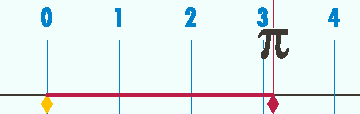
v = 12.36*{cos[2*pi*t], sin[2*pi*t]};
radius = simplify[ norm[v] ];
points = do[v, 40];
v2 = difference[points];
l = apply[norm, v2];
circumference = total[l];
mypi = circumference/(2*radius);
show mypi;
pointplot points;
save as pi;
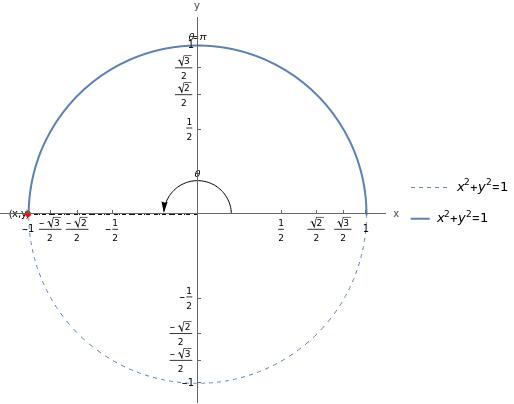
v = 12.36 {cos[2 pi t], sin[2 pi t] } : parametric equation parametric_curves for the vector that spans the circle's circumference.
radius = simplify[ norm[v] ] : compute the norm of v which is the length of vector v for any value of the variable t or shown as v[t] and due to the very definition of the circle is a constant number in our case was set to 12.36.
points = do[v, 40] : repetitively do compute 40+1 points around the circle by dividing the interval [0, 1] into 40 equal partitions.
v2 = difference[points] : assume each point is represented by a vector with pivot at origin {0, 0} endpoint at {x, y, z} as was computed by the do [ ]; start with the 2nd point/vector and subtract it from the previous point/vector namely the 1st, then move to the 3rd point/vector subtract from the 2nd point/vector until you are out of point/vectors. See the output’s arrowplot, each little vector is one of the subtractions above.
See how difference works by experimenting with the very short Free Form script below:
v = {a1, a2, a3, a4};
diff = difference[v];
show diff;
save as difference;
YouTube
Files
whiteslavesofeng00cobduoft.pdf