Manufacturing of the Modern Hebrew Fascism
Collection of Research Documents
- Arthur Ruppin: Father of modern Hebrew Fascism
- CCN Preface
- Lexicon
- Ruppin’s Weltanschauung: lawyer to biologist
- Bureau of Statistics of Jews
- The Anti-Zionist Ruppin
- Enter the Zionist Ruppin
- Margherita Sarfatti: The Jewish mother of Fascism
Arthur Ruppin: Father of modern Hebrew Fascism
Excerpts from thesis by Etan Bloom
SUBMITTED TO THE SENATE OF TEL AVIV UNIVERSITY
(1st December, 2008)
CCN Preface
First we express our gratitude to Dr. Bloom for writing this magnificent definitive history of the inception of Zionism. His rarely found research integrity and accuracy are praiseworthy.
Most of what Ruppin wrote or imagined qualifies as science fiction of a school boy pining for the attention of his master race classmates the German Protestants. The rejection by his master race giants diverts him in absolutely the reverse direction from being a secular anti-Zionist to one of its most influential founders!
He was an easy gullible sucker manipulated by the German academicians who sought huge funds from the German industrialists and as such promoted Ruppin to divert the public attention from their deliberate and intense synthesis of the pre-Hitleric atmosphere of eugenics and the ensuing harsh Jews eugencis implementations. In short, eugenics is good and even the Jewish scholars love it!
In short Ruppin's life was all about becoming a Marvel Comics super hero, if that did not work for the German Protestants, heck then join the Zionists.
Annotations
Yellow highlights are the thesis authors words.
Purple highlights are the CCN's analysts.
Callout for information is blue.
Callout for warning is orange.
Callout for danger, fear and horror is read.
Lexicon
Definitions and meanings
Hebrew vs. Jew
Weltanschauung
“Weltanschauung” straddles several English options—“worldview,” “outlook on life,” “philosophy of life,” “conception of the world,” even “comprehensive doctrine.” “Anschauung” evokes not just a ‘view’ but an intuitive, often pre-reflective grasp of reality, influenced by Kantian usage. Thus “worldview” can be too rationalized and cognitive, missing experiential, affective, and cultural dimensions; “outlook” sounds too casual; “ideology” is too narrow and political. In some authors, Weltanschauung is near-metaphysical (a global structure of meaning); in others, it can be sociological, religious, or psychological. The term’s scope varies—from individual orientation to collective cultural or epochal frameworks—making any single English equivalent riskier than context-sensitive paraphrase.
Compound of German “Welt” (world, cosmos, human life as a whole) + “Anschauung” (view, intuition, perception, contemplative seeing). “Welt” derives from Old High German “weralt/werolt” (age of man, human world), ultimately from Proto-Germanic *weraldiz (man + age). “Anschauung” comes from Middle High German “anschouwunge” (looking at, contemplation), related to the verb “anschauen” (to look at, behold) and linked in philosophical German (esp. Kant) to intuitive, non-discursive cognition. The compound is attested in German from the 18th century and gains systematic philosophical prominence in the 19th century.
Source: "weltanschauung" - Philopedia
Read more: https://philopedia.org/terms/weltanschauung/
Source: "weltanschauung" - Philopedia
Read more: https://philopedia.org/terms/weltanschauung/
https://philopedia.org/terms/weltanschauung/
Ruppin’s Weltanschauung: lawyer to biologist
The man of Action
As opposed to “theory,” the concept of Weltanschauung had the meaning of “activation” (Einschaltung); a constant urge to influence reality. Ruppin’s need to define himself in terms of this concept must be understood also as part of his attempt to ‘feel’ the German habitus and to ‘correct’ in himself the prevailing stereotype of the Jew as a passive observer, detached from ‘real life.’ In one of his early reflections regarding the Jews, Ruppin imagined that:
“The Jews of the ancient Jewish kingdom were religious through and through; they had courage and a deep sense of myth and the works of nature. That is, they were farmers. Since the Jews have stopped pushing the plough, they have become degenerate; they have for the most part lost a natural, human outlook and have become a reflective people [Reflexionisten]”
(Ruppin, [26 August 1898], CZA, A107/217).
The inferior man of Action
This admiration for his German friends and their families was in complete contrast to his attitude towards his Jewish-Berliner family, whom he visited occasionally on Sabbaths.
His worshipful descriptions of his friends are typical expressions of the outsider who sees the dominant group as perfect! In the same pattern described above, Ruppin’s admiration for his two German-Protestant student friends was paralleled by his belittling of himself
"eben habe ich Wynekens Sozialismus zum zweiten Male durchgelesen. Welcher Schwung in der Rede, welch’ hoher Flug von Gedenken, welch’ geniale Auffassung des Ganzen! Ich fühle mich dabei so unendlich klein und glaubte mich doch einst zum Höchsten berufen! Kann ich nicht den Besten ebenbürtig zur Seite stehen, so hat das ganze Leben und Streben keinen Reiz mehr für mich, dann mag man mich wie einen toten Hund verscharren!"
"I have just read through Wyneken's socialism for the second time. What verve in the speech, what a high flight of remembrance, what ingenious conception of the whole! I feel so infinitely small and believed that I had once been called to the highest! I can't do the best stand by your side on an equal footing, the whole of life and striving has no charm more for me, then they may bury me like a dead dog!"
In his early university years, Ruppin internalized more and more stereotypes through his interaction with his friends. This set of stereotypes was prevalent at the time in the German universities; the Jewish students (especially those from East Europe) were considered to be lacking in any true inspiration, mere absorbers of knowledge with no inherent intelligence but only the ability to memorize and repeat, idiots savants (Gilman 1986, 215). These stereotypes suggested that the Jewish student could not “truly” comprehend the essence or nature of the German discourse, and especially of the language, in which the German soul reveals itself. The Jews were at best ‘smart’ and ‘prosaic’ while the Christians/Aryans had ‘genius’ and were ‘poetic.’ This was the difference between the merely smart and the truly creative (Gilman 1996, 110)
Ruppin’s friends presented him with a set of stereotypical models of perception, which he, in his hyper-correctional manner was inclined to adopt: “There are vague things in the soul of the German nation that we smart Jews for the most part cannot comprehend at all, or at least do not understand properly”
(Bein 1968, I, 198).
What may seem to us today as mere stereotypes were conceived by Ruppin and his friends as ‘scientific truths’, which meant, in their young, nineteenth century, positivistic minds, also ‘facts of life.’ The racialization of the stereotypes enabled them to discuss their superiority in a most explicit way:
“Things that Fiedler told me [...] ‘do not think that I obtained my position due to my work and my strength, a poor human strength. Only by the mercy of the Lord did I achieve being preferred over you and I shaped for myself a special Weltanschauung’”
(Bein 1968, 164)
Ruppin internalized this set of stereotypes and beliefs, and as a ‘good’ and ‘honest’ Selbstkritik (Self-criticism) Jew accepted his position among them:
"becomes more and more apparent to me with every new meeting with Fiedler, how great my inferiority is"
(Korolik 1981, 96).
At the end of the 1890s, Ruppin still perceived his cultural identity according to the emancipation model, and still believed his integration into German culture a possibility. Nevertheless, his interpretation of this model would gradually move away from the Jewish-German perception of acculturation through enlightenment Bildung. In those years he began to define his cultural identity through the popular racial theories concerning the Jews, and even expressed in his diary some Rassekunde reflections on the “Jewish question":
“Spiritual and physical regeneration can be achieved only through the end of inbreeding and the mixture with healthy, strong races like Germans and Slavs. Only then will there be a possible future for the Jewish spirit”
(Bein 1968, 164).
As we shall see, within a few years Ruppin would reject this particular idea, after becoming immersed in the more up-to-date racial knowledge prevailing at the turn of the century, and grasping the fundamental importance of racial purity.
The Krupp [Haeckel] Prize and Ruppin’s Breakthrough
Although Ruppin obtained a law degree and had a promising career in the field of law, and although he wrote a doctoral thesis in political economy
(Nationalökonomie),78 his real intellectual curiosity and his first academic success lay in the new interdisciplinary field which become known in the following years as “racial hygiene” (Rassenhygiene) or “eugenics.” One of the main initiators of this paradigm in Germany, as well as of its popular repertoire, was the blond, blue eyed biologist Ernst Haeckel, one of Ruppin’s academic patrons and a central father figure of his weltanschauung, who was depicted by him as a “prächtiger Germanentyp” (Korolik 1981, 95).
From lawyer to biologist!
Basically the thesis author informs us that although Ruppin could have been a great legal professional, yet his foolish dream and passion was to be known as a renowned fake-biologist! Ruppin is flip flopping according to where and of what his profit and his ego is profited. All he is in one word: an Oppotunist. He has no Weltanschauung! He conflates seeking the admiration and approval of important people with struggling to find his Weltanschauung! As for proof ... the rest of his life as a Zionist.
Haeckel is also considered an important figure in the shift from religious to biological, race-based anti-Semitism.
(Hutton 2005, 154).
Ernst Heinrich Philipp August Haeckel (/ˈhɛkəl/;[1] German: [ɛʁnst ˈhɛkl̩]; 16 February 1834 – 9 August 1919)[2] was a German zoologist, naturalist, eugenicist, philosopher, physician, professor, marine biologist and artist.
Haeckel's affinity for the German Romantic movement, coupled with his acceptance of a form of Lamarckism, influenced his political beliefs. Rather than being a strict Darwinian, Haeckel believed that the characteristics of an organism were acquired through interactions with the environment and that ontogeny reflected phylogeny. He saw the social sciences as instances of "applied biology", and that phrase was picked up and used for Nazi propaganda.[15]
With the encouragement of his fellow student Gustav Wyneken and his Doktorvater professor Johannes Conrad, Ruppin entered a unique academic competition – known later as The Krupp Prize – which was formulated and supervised by Haeckel. This academic competition asked for ways of applying Darwinism to the organization of society and state, and Ruppin, quite surprisingly, took second place.
Enter the Eugenics
The Krupp Prize competition and its subsequent publications mark a turning point in the acceptance of eugenics in Germany by giving it scientific legitimization, public relations and a budget. It was, at the time, the most important academic prize to make a connection between science and society.
Two fundamental mistakes occurred which gave birth to Nazism and Zionism in Germany, and these two mistakes have already occurred in the USA at the time of this writing:
1. Unbridled applications of science and engineering to human affairs
2. Over monetization of sciences and the scientists
Powerful capitalists, such as Krupp in the Ruhr and Karl Ferdinand von Stumm (1843-1925) in the Saar, hoped to implement the Darwinist theories in their factories as well as to instill them into the structure of the state. Their particular interest was in theories concerning the selection (Selektionstheorie) of the work force, which was regarded more and more in terms of “energy” and “Menschenmaterial” (Thomann and Kümmel 1995, 102). Haeckel and his group established a network of scientists, experts, journals and institutions which provided the economic powers with scientific legitimacy and methodological practices; they were “experts in legitimation” as Gramsci puts it, for monitoring labor relations in Germany.
Haeckel and the Monist League which he established in Jena (1906) for disseminating “Darwinism as a weltanschauung” (Cassirer 1950, 161), were massively supported by the mega German factory owners, who increased their income significantly at the end of the 19th century and made Germany the most powerful industrial state in Europe. The anonymous sponsor of the high total of the prizes (100,000 Marks for several years), was the prominent industrialist Alfred Friedrich Krupp (1854-1902) who was also a passionate supporter of social Darwinism.
It is quite clear that the members of the committee edited Ruppin’s text and helped him shape his theory, as is evident from the correspondence he had with Ziegler, who was responsible for editing the texts according to Haeckel’s lines.
Ruppin’s profound attraction to Haeckel can be explained as connected to his “belonging” difficulties, which he believed he might solve by taking the “objective” position of the observer.
Clueless Ruppin as a tool of deception
Ruppin’s winning essay Darwinismus und Socialwissenschaft (Darwinism and Social Science) analyzed the applicability of Darwin’s theory to organizing society and the state and expressed enthusiastic belief in the power of social engineering to elevate man to a new level of morality and freedom. In presenting his euphemistic eugenics program, (which became much harsher later on when he applied it to the Jews), Ruppin acknowledged that he was demanding great sacrifices of human beings, but he believed people (i.e. Germans) would accept them if convinced of the social usefulness of their actions. Though he acknowledged the sacrifice his bio-medical vision inflicted upon the individual, he supported the state and its crucial function and gave it the decisive right to intervene in the life of the individual, promoting the idea that social welfare and education had to be combined with a program of eugenics, in which invalids and the mentally ill would be discouraged (Ruppin 1903a, 31, 36, 45-46, 64, 91-92, 123; Penslar 1991, 86-87).
“In an age of dwindling belief in the immortality of the soul, the individual will recognize, in his belonging to the state and his actions for the state, his share in eternity, in the history of the whole of mankind, and must look up to the state with genuine religious fervor. He must approach the state only as a wave in the ocean, which, barely arisen, quickly passes and sinks without a trace into the sea […] so for the peoples of old in honor of gods, so for the individual today may no sacrifice seem too great in honor of the state.”
(Ruppin 1903a, 92, in: Penslar 1991, 86-87).
Ruppin’s putting the state in the place of God...
It was impossible for me (the thesis author), in the course of my research, to find the documents regarding the committee’s reasons for giving the Prize to Ruppin; nevertheless, if I may speculate (just for a moment), giving one of the prizes to a Jew could have legitimized the other winners ... Since the competition and its agenda seem to have been a kind of “experimental balloon” for checking the reactions of academic and public opinion, it is quite possible that a “winning Jew” could have been a “life belt” should Heackel and his fellows be accused of being anti-Semitic.
Bureau of Statistics of Jews
The Bureau for Statistics of the Jews [1] was a member of Berlin at the beginning of the 20. Association founded century, which aimed to promote the research of the social relations of the Jews of all countries with the means and methods of scientific statistics.[ 1]
The later chairman Alfred Nossig founded an association in 1902 in Halensee after many years of preliminary work, which published the collection of Jewish statistics in 1903. After winning the large Jewish organizations and communities for the purposes of the association and pledged their financial support, the association founded on 1. October 1904 a permanent office in Berlin. Local groups of the Bureau were created in Frankfurt am Main, Munich and Berlin.[ 2]
In particular, the directors Jacob Segall and Arthur Ruppin made important contributions to the history of German Jewry. From January 1905, the Bureau published the monthly journal for demographics and statistics of the Jews under Ruppin’s editorial staff,[[3][4] [4]in which, in addition to statisticians, anthropologists such as Felix von Luschan, Maurice Fishberg, Arkadius Elkind[5][5] and Samuel Weissenberg were represented with treatises on the anthropology of the Jews.
In particular, the directors Jacob Segall and Arthur Ruppin made important contributions to the history of German Jewry. From January 1905, the Bureau published the monthly journal for demographics and statistics of the Jews under Ruppin’s editorial staff,[[3][4] [4]in which, in addition to statisticians, anthropologists such as Felix von Luschan, Maurice Fishberg, Arkadius Elkind[5][5] and Samuel Weissenberg were represented with treatises on the anthropology of the Jews.
Jewish count or war statistics
Right at the beginning of the war, the Bureau was affiliated with a committee for war statistics under the provisional management. Already on the 14. August 1914 called for a call from the Association of German Jews (founded in 1904 at the suggestion of the CV[7]) in the General Newspaper of Judaism Jg. 78. No. 33, pp. 388–389, the readers to send the names of Jewish army members “who belong in any capacity of the army or navy” to the association, specifying the exact rank. The collection of materials on the services of war served the Central Association and the Defense Association and nine additional Jewish organizations of the same task “to refute [to be expected] accusations of unsightly behavior of the Jews during the war period”, since “after the war, a re-emergence of the anti-Semitic movement” was expected.[ 8][9]
The work did not progress. As recently as the early 1920s, the association sent questionnaires to the rabbis in the congregations. This internal count is not to be confused with the Jewish count proposed by Erzberger and other parliamentarians in 1916.
In May 1921, Jacob Segall (scientific director) and Heinrich Silbergleit (chairman) issued a statistic ( [10]). The 84,352 Jewish war participants counted so far made up an estimated 17% of the Jewish population. In 1922, Segall published in Der Schild (1; Journal of the Reichsbund of Jewish Frontline Soldiers) “Some things about the methods of Jewish war statistics”. The fallen were published in the “shield” (1929).[ 11]
[1] https://de.wikipedia.org/wiki/Bureau_f%C3%BCr_Statistik_der_Juden
The Anti-Zionist Ruppin
Early in the last decade of the 19th century, Ruppin began to sense a gradually increasing atmosphere of anti-Semitism and there began to appear in his diaries an increasing number of reports depicting incidents of anti-Semitic rejection.
It was in those years that Ruppin became acquainted with Zionism. The first encounter mentioned in his diary took place when he attended one of the assemblies of the local Graetzverein in Magdeburg, with the intention of arguing that the Jews must stop their greediness and “Prozenhaftigkeit” (purse-pride.) (in: Penslar 1991, 84). Although he felt attracted to the idea, he dismissed the Zionist option on the threshold since he felt completely German:
"the thought interests me ...(declining Zionism) ...because I feel fully German"
Ruppin wrote in his diary that he left the Graetzverein in 1893, because its members were humiliating him and even sent him an anonymous letter in that spirit (Bein 1968, I, 201). This rejection by the German Zionists indicates Ruppin’s social position and may explain his later relations with them. Although later in his life he would become an important figure in German Zionism, it seems that his attitude towards them would always be marked by this experience of rejection, which coincided with the anti-Semitic rejection.
During the last decade of the nineteenth century, he adopted the Protestant criticism of religion and God. Although he still defined himself as a Jew, he universalized the meaning of Judaism: “Ich denke, daß man nicht dadurch ein Jude ist, daß man an einen einzigen, allmächtigen und ewigen Got glaubt”("I think that one is not a Jew by the fact that one believes in believes in a single, almighty and eternal God")(Korolik 1981, 114), and he did not accept its practical aspects: “Ich bin mit der Art, wie der jüdische Gottesdienst abgehalten wird, durchaus nicht einverstanden“ ("I do not agree at all with the way Jewish worship is held") (ibid.). He gradually stopped observing even the already lax mitzvahs (precepts) he used to keep and, in 1892 he ate, for the first time, food forbidden to Jews and commented: “I don’t even feel sorry about it” (Bein 1968, I, 194).
As the end of the century approached and as soon as he began his studies at the universities of Berlin and Halle, Ruppin began to lose even his universal belief in the “one God” and the “immortality of the soul” (Bein 1968, I, 195), and replaced this quite secular religiosity with a new weltanschauung that lacked the concept or belief in God. As already discussed, the theory concerning the “immortality of the soul” seemed to him, after he read Nietzsche, a “metaphysical solace,” to be replaced with a new positivistic one; religious emotions had to be abandoned or transformed, and Man’s beliefs centered on the state and the Vaterland (Fatherland).
In April 1903 he recorded in his diary that:
“For the first time in my life I believe I have developed a coherent Weltanschauung. This Weltanschauung culminates in the idea that human individuals as such are worthless, that only as part of a nation can they be said to be worth something, and that the nation is the means to the higher breeding or cultivation [Züchtung] of humanity. Work for one’s nation is the metaphysical purpose of human beings and must replace the false dream of individual immortality […] Jewry only has a justification for its existence if it can exist as a nation and has in itself the power to acquire the basis for the survival of a nation - a territory. Otherwise it deserves to die out. Zionism or assimilation – tertium non datum [a third is not given]".
Enter the Zionist Ruppin
It is possible that his encounters with Zionist activists such as Sami Grunaman (1875-1952),109 Albert Goldberg and Heinrich Loewe (1869-1951), who stressed the practical over the ideological, also influenced his decision to turn to Zionism.
One can see here a pattern in Ruppin’s interpretation: he accepts anti-Semitic assumptions, adapts them according to the new statistical data he has organized, but attaches them only to certain marginal and declining groups (such as the ultra-orthodox or the Sephardic/Oriental/Arab Jews, as will be discussed later).
Again the quote from the thesis' author makes it plain that Ruppin is an opportunist that bends in the direction of even the slightest breeze!
Margherita Sarfatti: The Jewish mother of Fascism
Margherita Sarfatti Benito Mussolini’s mistress
Haaretz: The Jewish Mother of Fascism
Margherita Sarfatti was known in Italy as Benito Mussolini’s mistress, but she was much more than that. She was his ideological companion, planned the ‘March on Rome’ with him, wrote articles in his name, edited the Fascist Party organ and wrote his first official biography.
ROME – Everyone in Italy wanted to forget the “Duce’s other woman”: the Fascists, because she was Jewish; their opponents, because she was Fascist; and the family, because she became an embarrassing historical burden. As a result, Margherita Sarfatti’s story slipped out of the public awareness, and along with it her central role in Italian fascism and the Duce’s life.
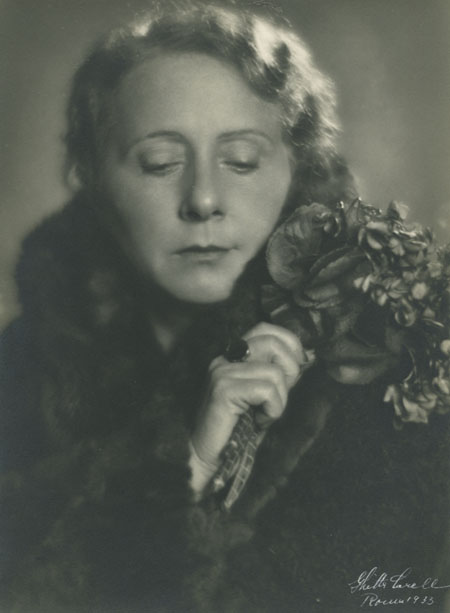
Today, more than 60 years after the Fascist dictator was executed, Sarfatti’s descendants prefer to view her as an intellectual and a patron of the arts, who worked to distanced Italy from the Nazi danger and was forced to flee to Argentina when Benito Mussolini implemented the race laws. They did not hear from her about the 20 years in which she shared Mussolini’s doctrine and bed. Or about the 1,272 letters he wrote her in those years, and which disappeared. No, they are not in her private archive at her home at 18 Via Dei Villini in Rome. At least, that is what her granddaughter, Ippolita Gaetani, who is in charge of the archive, told Haaretz in an exclusive interview. An American cousin, who is also named Margherita Sarfatti, is convinced the letters are in the hands of the Rome cousin.
Many visitors have recently called at the luxurious building in Rome – journalists, researchers, writers (“Italian Night,” by Nicole Fabre, a novel in which Sarfatti is a leading character, was recently published in France). It is a lavish patrician building in ocher, which is a three-minute walk from Villa Torlonia, the Duce’s official residence – three minutes from the villa’s back entrance, it should be noted. “The villa is being renovated,” says a smiling young woman who is working in the courtyard, “but you can visit. Go around to the other side, it’s worth it.”
At the home on the Via Dei Villini in Rome, a gilded bell, a vast black gate, a double wooden door, an elevator in an ornate metal cage, a broad marble staircase. The door is opened by Ippolita Gaetani, a spare, blue-eyed woman of 66, who has a determined, no-nonsense manner. The apartment is spacious, sun-washed, and furnished with classical restraint. The documents and photographs of Grandmother Margherita are housed in one room, in the center of which is the “Holy of Holies”: Sarfatti’s desk. On the wall is a famous portrait of Sarfatti with her daughter Fiammetta, painted by Achille Funi. Next to it are shelves laden with her notebooks and diaries, and a chest with 12 huge drawers.
Before the interview gets under way, the hostess receives a phone call. “I am being interviewed for an Israeli paper,” she apologizes, and adds, “No, no, the ‘good’ paper.” Ippolita Gaetani and her two sisters, Sancia and Margherita, are identified with the Italian left and are quite active on behalf of the Palestinian cause.
Ippolita was 21 when her grandmother died, in 1961, at the age of 81, but never asked her about her past, about her affair with Mussolini or her role in the Fascist movement. And Sarfatti, she says, never volunteered information on the subject. She talked about art, recited Dante, Shakespeare, Edgar Allan Poe and did crosswords in Figaro Litteraire. “After the war there was a deep collective repression, people tried to forget, did not boast about it. There was a kind of self-censorship. People are only now starting to talk about that period, and also about my grandmother,” Gaetani says.
When did you learn about your grandmother’s part in Mussolini’s life and in the Fascist movement in Italy?
“Very late, at the age of 17, 18, and from friends. It was not talked about at home. There was repression in Italy. Everything was imputed to the Germans, all the evils, the race laws, the persecutions. In my home, too, everything was imputed to the Germans. When I grew up and started to read, I understood that f ascism and Nazism are interchangeable. My mother did not think so – she continued to say that fascism was all right until it cozied up to Hitler.
“In my opinion, if the blacks and not the Jews had been persecuted then, many Jews would still be fascists … In fact, it is the same today. Many Jews in Italy are fascists, because fascism is far closer to today’s Israel; they are persecuting the Arabs. If you go to the Rome Ghetto today, you will see that part of the Rome Jewish community is truly fascist, fascist in its mentality, in the head. And the situation in the Middle East complicates matters. They accuse everyone who speaks out against Israel of being anti-Semitic. And in Italian politics they are far closer to the right than to the left.”
Encounter with history
Her mother, Fiammetta, converted to Christianity in 1930 and remained in Italy with her family even after Margherita and her son, Amedeo, went into exile to Argentina following the implementation of the race laws. But Sarfatti feared for the well-being of her daughter and her grandchildren, and after Rome was conquered by the Nazis she made long-distance use of the few connections she still retained from her days of glory in order to ensure that no harm would befall them. Thus Fiammetta found asylum in a hospital, disguised as a nurse; her husband, Livio, who was not Jewish, went into the underground; and their children were sent to Catholic convents. Margherita’s older sister, Nella Errera, did not fare so well. She and her husband, Paolo, who officially denied their Jewishness, were arrested in 1944 by the S.S. and sent to the camp at Fossoli and from there to Auschwitz. They died on the way to the extermination camp.
Did your grandmother talk about the past or feel responsibility for her sister’s death?
“Not with me, not with us, that was taboo at home. She may have had qualms of conscience, but either you commit suicide or you decide to live. People lived with worse things on their conscience. She was actually involved with art – it is not that she harmed or informed on anyone. On the contrary, some historians say that as long as she was by his side, Mussolini did fewer horrible things. She herself did not do anything bad to anyone. That her man was scum – of that there is no doubt.”
The dramatic story of Margherita Sarfatti’s life begins with a tranquil, happy childhood in the ghetto of Venice, where she was born on April 8, 1880, the youngest child of an affluent religious Jewish family, the Grassinis (the father of the Italian writer Natalia Ginzburg was her cousin). The lovely girl with red hair and green eyes and insatiable curiosity was raised in a protected setting and surrounded by love, especially on the part of her grandmother, Dolcetta Levi Nahmias, a “woman of valor,” in the Jewish term, from whom she learned to live in the present and not get caught up in the past.
“Oh, God,” she would mumble every night in a prayer she made up, “make me learn how to be happy and learn how to be grateful for all the good things you have given me.” To be happy, at any price: that was the motto that propelled her throughout her life. At the age of 18, despite her parents’ objections, she married Cesare Sarfatti, a Jewish lawyer and socialist, who was 14 years her senior. The Sarfattis had three children: Roberto, Amedeo and Fiammetta.
However, she found life in Venice too confining, and her husband was also eager for a change. The couple moved to the nerve center of Italy – Milan. There Margherita began to carve herself a place in the intellectual elite and to become active in fields which until then had been male prerogatives: journalism and art. To that end, she opened her salon every Wednesday to the city’s Who’s Who and gained the reputation of an impeccable hostess: beautiful, witty and vivacious. Her home became the center of the artistic avant-garde, the melting pot of Futurism, and later of the Novecento Italiano movement. The leading artists, writers and politicians were regulars in her home.
“A kind of acute sense of smell impelled me toward gifted people,” she wrote in her memoirs, which are really a collection of episodes about her meetings with preeminent world figures, including the inventor Guglielmo Marconi, Pope Pius X, president Franklin Delano Roosevelt, Albert Einstein and many others. Israel Zangwill, whom she calls the “Jewish Dickens,” and Ze’ev Jabotinsky, the Zionist Revisionist leader, were also among her acquaintances.
“She was an educated woman, very attentive to the cultural fashions, a manipulative woman, ambitious and uninhibited, with a singular talent for self-promotion (a talent she showed also after her son died in World War I, appropriating his death as another means of self- promotion),” says the historian Dr. Simona Urso, from the University of Padua, who has written a biography of Sarfatti.
The dramatic pivot of her life – the encounter with history – occurred in 1912, when a young, uncouth and unknown journalist named Benito Mussolini was appointed editor of the socialist journal Avanti, for which Sarfatti wrote art criticism. At 29, he was three years younger than Sarfatti, an ardent socialist from the provinces, a charismatic womanizer with a gift for holding his listeners in thrall with his talk. Sarfatti spotted a “glint of fanaticism” in his eyes and was immediately drawn to the power he projected.
Haaretz: Mussolini’s Jewish Lover Who Crafted Italian Fascism
Margherita Sarfatti wasn’t just the dictator’s most erudite paramour; she was his secret adviser and ideologue. The English version of her memoirs is finally out.
On November 14, 1938, shortly after the Italian Racial Laws were passed, Margherita Sarfatti slipped out of her home near Lake Como, got into her car and asked her chauffeur to drive her to the nearby Swiss border.
Among the few belongings the Jewish socialite and art critic had stuck in her two suitcases were 1,272 letters she had received from Benito Mussolini over their 20-year romantic and ideological relationship — a sort of insurance policy. Sarfatti, 58 at the time, would return to Italy only in 1947 after living in exile in France, Argentina and Uruguay.
In addition to art essays she wrote for local newspapers during her exile, Sarfatti published in 1945, shortly after Mussolini’s death, a series of articles in the Argentine paper Crítica in which she revealed details about her relationship with Il Duce. Scholars believe she waited until he no longer had the chance to harm the family members she had left behind in Rome.
Today, 70 years later, these articles have been published in the English-language book “My Fault: Mussolini As I Knew Him.” Dubbed by Enigma as “the unpublished memoir of Mussolini’s longtime lover,” the book’s 18 chapters come edited and annotated by historian Brian R. Sullivan, whose commentary is informed by three decades of research in Italy, France, Switzerland, Britain and the United States.
Just as the story of the long, intimate relationship between Sarfatti and Mussolini lay forgotten in archives for years until Philip V. Cannistraro and Sullivan published their 1993 work “Il Duce’s Other Woman,” Sarfatti’s memoirs remained abandoned in the shadows of history for decades.
Indeed, Sarfatti wasn’t just one of Mussolini’s hundreds of lovers. The aristocratic, intellectual and ambitious wife of wealthy Zionist lawyer Cesare Sarfatti, and mother of their three children, did not only share her bed with Il Duce. She also helped him forge and implement the fascist idea; she contributed advice — and Sullivan says, money — to help organize the 1922 March on Rome in which Mussolini seized power.
During those 20 years she was his eminence grise and unofficial ambassador, glorifying him in her 1925 biography that was translated into 18 languages.
Il Duce’s many frailties
It was Clara Petacci who has gone down in history as Mussolini’s most famous lover. In April 1945, Italian partisans shot her and Il Duce and hung their bodies upside down in Milan’s Piazzale Loreto. But after their intense 20-year personal and political relationship, Sarfatti was apparently the one who knew him best — maybe even better than his lawful wife, Rachele Guidi.
“Mussolini and Sarfatti had shown each other their souls,” Sullivan writes in the book’s long introduction. “She had listened to his secrets she knew most everything about Mussolini’s hidden weaknesses, his human frailties, his crude behavior, his superstitions, his ignorant misunderstandings about so many scientific and medical matters, and about his syphilis.”
But according to Sullivan, as much as Mussolini feared that Sarfatti would expose details on their sex life, he feared even more that she would reveal other shortcomings — and destroy the demigod image he had worked so hard to create.
Although Sarfatti’s 1955 Italian-language autobiography “Acqua Passata” (“Water Under the Bridge”) does not mention her relationship with Il Duce, her memoirs make up for it. She recounts a raft of personal and political anecdotes, provides quotes from Mussolini and talks about his sex addiction and cocaine use. But she never slides into bedroom gossip.
From her descriptions Mussolini comes across as a brilliant, charismatic statesman — but also an egocentric one ridden by inferiority complexes, fears and superstitions. He was also an unbridled womanizer, not to mention a manipulator who didn’t hesitate in his youth to threaten suicide in a letter to his mother “if she failed to send him some money for food.”
Sarfatti, meanwhile, comes across as a haughty, self-confident woman who often boasts of her good judgment, intuition and wisdom in both political and personal affairs.
Despite the book’s title “My Fault,” chosen by Sarfatti decades ago for the memoirs, she expresses no regret over her relationship with Mussolini, who was responsible for the deaths of her sister and brother-in-law on their way to Auschwitz, the destruction of Italian democracy and the establishment of a dictatorship. On the contrary, Sarfatti evades responsibility, putting all the blame on Mussolini.
Pesky Pact of Steel
Sarfatti maintains that fascism began as a positive idea that was distorted over the years. She claims that even Mussolini underwent a complete change. “After less than a decade in power, Mussolini seemed to me to have become someone else,” she writes. “He began to deny even the right to interior freedom and to subject the very souls of his people to the power of the state.”
As Sarfatti puts it, Mussolini’s alliance with Nazi Germany, which she opposed, was the main cause of his downfall. “But the Duce did not form the Rome–Berlin Axis or the Pact of Steel with the Führer by accident. Mussolini harbored within him a number of defects that attracted him to the Germans of his time. Thus he succumbed to the illness of power, to the madness of the Caesars.”
About one matter, though, she does accept the blame. “I cannot hide behind my work as an art critic. I must accept my responsibilities. I believed in Fascism and fought for it in the beginnings,” she writes.
“Worse, I wrote a book read by many that interpreted the goals of Fascism in a favorable light and proclaimed to the entire world that Mussolini was a hero of historic proportions. That was my fault …. It is my duty to declare that Mussolini fell because of his complete moral bankruptcy.”
Lamenting the failure of her “final, desperate attempt to guide Mussolini,” she adds: “Meanwhile, we discovered that behind the mask of Fascism lay an abyss of corruption, nepotism, favoritism and arbitrary lawlessness.”
Like most Italians, Sarfatti saw Mussolini as the embodiment of the “good tyrant,” adding that she had hoped he would turn out wiser, more level-headed and more just than the leaders produced by the ballot box.
Sullivan lambastes Sarfatti’s attempt to put all the blame on Il Duce. He writes that since it was Sarfatti, more than Mussolini, who crafted the ideological and philosophical basis of fascism between 1913 and 1919, she can’t evade responsibility for what others did based on her views. He adds that the original manuscript contains inaccuracies and spelling mistakes.
In his copious comments and remarks — often more comprehensive than the original text — Sullivan contends that after Sarfatti fled Italy, she agreed with Mussolini not to reveal details about their relationship. In exchange, no harm would befall her family still in Rome, among them her daughter Fiametta, her son-in-law and their three children.
But history lost out, Sullivan concludes, in that the book was not published in the late 1940s. Sarfatti possessed priceless photographs, letters and documents in Mussolini’s own hand.
“At least some of that historically precious material might have become available to scholars over sixty years ago,” Sullivan writes. “Instead, it passed into the possession of Sarfatti’s heirs after her death. They have refused permission to anyone to study those valuable records. Indeed, they have consistently denied their very existence. One can only hope they will have a change of mind.”