# Yishuv
The **Yishuv** ([Hebrew](https://en.wikipedia.org/wiki/Hebrew_language "Hebrew language"): ישוב,[lit.](https://en.wikipedia.org/wiki/Literal_translation "Literal translation") 'settlement'), **HaYishuv Ha'ivri** ([Hebrew](https://en.wikipedia.org/wiki/Hebrew_language "Hebrew language"): הישוב העברי,[lit.](https://en.wikipedia.org/wiki/Literal_translation "Literal translation") 'the [Hebrew](https://en.wikipedia.org/wiki/Hebrews#Use_in_Zionism "Hebrews") settlement'), or **HaYishuv HaYehudi Be'Eretz Yisra'el** (lit. 'the Jewish Settlement in the Land of Israel') was the community of [Jews](https://en.wikipedia.org/wiki/Jews "Jews") residing in [Palestine](https://en.wikipedia.org/wiki/Palestine_(region) "Palestine (region)") prior to the establishment of the [State of Israel](https://en.wikipedia.org/wiki/State_of_Israel "State of Israel") in 1948. The Yishuv was also referred to as the [Palestinian Jewish](https://en.wikipedia.org/wiki/Palestinian_Jews "Palestinian Jews") community.[\[1\]](https://en.wikipedia.org/wiki/Yishuv#cite_note-1) The term Yishuv came into use in the 1880s, when there were about 25,000 Jews living in that region, and continued to be used until 1948, by which time there were some 630,000 Jews there.[\[2\]](https://en.wikipedia.org/wiki/Yishuv#cite_note-2) The term is still in use to denote the pre-1948 Jewish residents in Palestine, corresponding to the southern part of [Ottoman Syria](https://en.wikipedia.org/wiki/Ottoman_Syria "Ottoman Syria") until 1918, [OETA South](https://en.wikipedia.org/wiki/Occupied_Enemy_Territory_Administration "Occupied Enemy Territory Administration") in 1917–1920, and [Mandatory Palestine](https://en.wikipedia.org/wiki/Mandatory_Palestine "Mandatory Palestine") in 1920–1948.[\[3\]](https://en.wikipedia.org/wiki/Yishuv#cite_note-3)
A distinction is sometimes drawn between the [*Old Yishuv*](https://en.wikipedia.org/wiki/Old_Yishuv "Old Yishuv") and the [*New Yishuv*](https://en.wikipedia.org/wiki/Yishuv#New_Yishuv). 'Old Yishuv' refers to all the Jews living in Palestine before the first [Zionist](https://en.wikipedia.org/wiki/Zionist_movement "Zionist movement") immigration wave ([*aliyah*](https://en.wikipedia.org/wiki/Aliyah "Aliyah")) of 1882, and to their descendants until 1948. The Old Yishuv residents were religious Jews, living mainly in [Jerusalem](https://en.wikipedia.org/wiki/Jerusalem "Jerusalem"), [Safed](https://en.wikipedia.org/wiki/Safed "Safed"), [Tiberias](https://en.wikipedia.org/wiki/Tiberias "Tiberias"), and [Hebron](https://en.wikipedia.org/wiki/Hebron "Hebron"). There were smaller communities in [Jaffa](https://en.wikipedia.org/wiki/Jaffa "Jaffa"), [Haifa](https://en.wikipedia.org/wiki/Haifa "Haifa"), [Peki'in](https://en.wikipedia.org/wiki/Peki'in "Peki'in"), [Acre](https://en.wikipedia.org/wiki/Acre,_Israel "Acre, Israel"), [Nablus](https://en.wikipedia.org/wiki/Nablus "Nablus"), [Shfaram](https://en.wikipedia.org/wiki/Shfaram "Shfaram"), and until 1799[\[4\]](https://en.wikipedia.org/wiki/Yishuv#cite_note-benayahu-4) in [Gaza](https://en.wikipedia.org/wiki/Gaza_City "Gaza City"). In the final centuries before modern Zionism,\[[**clarification needed**](https://en.wikipedia.org/wiki/Wikipedia:Please_clarify "Wikipedia:Please clarify")\] a large part of the Old Yishuv spent their time studying the [Torah](https://en.wikipedia.org/wiki/Torah "Torah") and lived off charity ([halukka](https://en.wikipedia.org/wiki/Halukka "Halukka")), donated by Jews in the [diaspora](https://en.wikipedia.org/wiki/Jewish_diaspora "Jewish diaspora").[\[5\]](https://en.wikipedia.org/wiki/Yishuv#cite_note-5)\[[**clarification needed**](https://en.wikipedia.org/wiki/Wikipedia:Please_clarify "Wikipedia:Please clarify")\]
The term 'New Yishuv' refers to those who adopted a new approach, based on economic independence and various national ideologies, rather than strictly religious reasons for settling in the "Holy Land".\[[**citation needed**](https://en.wikipedia.org/wiki/Wikipedia:Citation_needed "Wikipedia:Citation needed")\] The precursors began building homes outside the [Old City](https://en.wikipedia.org/wiki/Old_City_(Jerusalem) "Old City (Jerusalem)") walls of Jerusalem in the 1860s, followed soon after by the founders of the [moshava](https://en.wikipedia.org/wiki/Moshava "Moshava") of [Petah Tikva](https://en.wikipedia.org/wiki/Petah_Tikva "Petah Tikva"), with growth in full swing during the [First Aliyah](https://en.wikipedia.org/wiki/First_Aliyah "First Aliyah") of 1882, followed by the founding of neighbourhoods and villages until the establishment of the State of Israel in 1948.
#### Ottoman rule
The Old Yishuv were the Jewish communities of southern [Ottoman Syria](https://en.wikipedia.org/wiki/Ottoman_Syria "Ottoman Syria") in the [Ottoman Empire](https://en.wikipedia.org/wiki/Ottoman_Empire "Ottoman Empire"),[\[6\]](https://en.wikipedia.org/wiki/Yishuv#cite_note-6) up to the onset of Zionist [aliyah](https://en.wikipedia.org/wiki/Aliyah "Aliyah") and the consolidation of the New Yishuv by the end of World War I in 1918 and the establishment of the British [Mandate for Palestine](https://en.wikipedia.org/wiki/Mandate_for_Palestine "Mandate for Palestine"). The Old Yishuv had continuously resided in Palestine and was largely made up of [ultra-Orthodox Jews](https://en.wikipedia.org/wiki/Ultra-Orthodox_Jews "Ultra-Orthodox Jews") dependent on external donations ([Halukka](https://en.wikipedia.org/wiki/Halukka "Halukka")) for living, as opposed to the later Zionist aliyah and the New Yishuv, who were more socialist-leaning and secular, emphasizing labor and self-sufficiency.\[[**citation needed**](https://en.wikipedia.org/wiki/Wikipedia:Citation_needed "Wikipedia:Citation needed")\]
The Old Yishuv developed after a period of severe decline in Jewish communities of the Southern [Levant](https://en.wikipedia.org/wiki/Levant "Levant") during the [early Middle Ages](https://en.wikipedia.org/wiki/Early_Middle_Ages "Early Middle Ages"), and was composed of three clusters. The oldest group consisted of the [Ladino](https://en.wikipedia.org/wiki/Judaeo-Spanish "Judaeo-Spanish")-speaking [Sephardic Jewish](https://en.wikipedia.org/wiki/Sephardic_Jew "Sephardic Jew") communities in [Galilee](https://en.wikipedia.org/wiki/Galilee "Galilee") and the [Judeo-Arabic](https://en.wikipedia.org/wiki/Judeo-Arabic "Judeo-Arabic") speaking [Musta'arabi Jews](https://en.wikipedia.org/wiki/Musta'arabi_Jews "Musta'arabi Jews") who settled in Eretz Yisrael in the Ottoman and late [Mamluk period](https://en.wikipedia.org/wiki/Mamluk_Sultanate_(Cairo) "Mamluk Sultanate (Cairo)"). A second group was composed of [Ashkenazi](https://en.wikipedia.org/wiki/Ashkenazi "Ashkenazi") and [Hasidic](https://en.wikipedia.org/wiki/Hasidic "Hasidic") Jews who had emigrated from Europe in the 18th and early 19th centuries. A third wave was constituted by Yishuv members who arrived in the late 19th century.[\[7\]](https://en.wikipedia.org/wiki/Yishuv#cite_note-7) The Old Yishuv was thus generally divided into two independent communities – the [Sephardi Jews](https://en.wikipedia.org/wiki/Sephardi_Jews "Sephardi Jews") (including Musta'arabim), mainly constituting the remains of Jewish communities of [Galilee](https://en.wikipedia.org/wiki/Galilee "Galilee") and the [Four Holy Cities](https://en.wikipedia.org/wiki/Four_Holy_Cities "Four Holy Cities") of Judaism, which had flourished in the 16th and 17th centuries; and the [Ashkenazi Jews](https://en.wikipedia.org/wiki/Ashkenazi_Jews "Ashkenazi Jews"), whose immigration from Europe was primarily since the 18th century.[\[8\]](https://en.wikipedia.org/wiki/Yishuv#cite_note-Bloch-8)
The *Old Yishuv* term was coined by members of the 'New Yishuv' in the late 19th century to distinguish themselves from the economically dependent and generally earlier Jewish communities, who mainly resided in the four holy cities, and unlike the New Yishuv, had not embraced land ownership and agriculture. Apart from the Old Yishuv centres in the four holy cities of Judaism, namely [Jerusalem](https://en.wikipedia.org/wiki/Jerusalem "Jerusalem"), [Hebron](https://en.wikipedia.org/wiki/Hebron "Hebron"), [Tiberias](https://en.wikipedia.org/wiki/Tiberias "Tiberias") and [Safed](https://en.wikipedia.org/wiki/Safed "Safed"), smaller communities also existed in [Jaffa](https://en.wikipedia.org/wiki/Jaffa "Jaffa"), [Haifa](https://en.wikipedia.org/wiki/Haifa "Haifa"), [Peki'in](https://en.wikipedia.org/wiki/Peki'in "Peki'in"), [Acre](https://en.wikipedia.org/wiki/Acre,_Israel "Acre, Israel"), [Nablus](https://en.wikipedia.org/wiki/Nablus "Nablus") and [Shfaram](https://en.wikipedia.org/wiki/Shfaram "Shfaram"). [Petah Tikva](https://en.wikipedia.org/wiki/Petah_Tikva "Petah Tikva"), although established in 1878 by the Old Yishuv, nevertheless was also supported by the arriving Zionists. [Rishon LeZion](https://en.wikipedia.org/wiki/Rishon_LeZion "Rishon LeZion"), the first settlement founded by the [Hovevei Zion](https://en.wikipedia.org/wiki/Hovevei_Zion "Hovevei Zion") in 1882, could be considered the true beginning of the *New Yishuv*.[\[9\]](https://en.wikipedia.org/wiki/Yishuv#cite_note-9)
[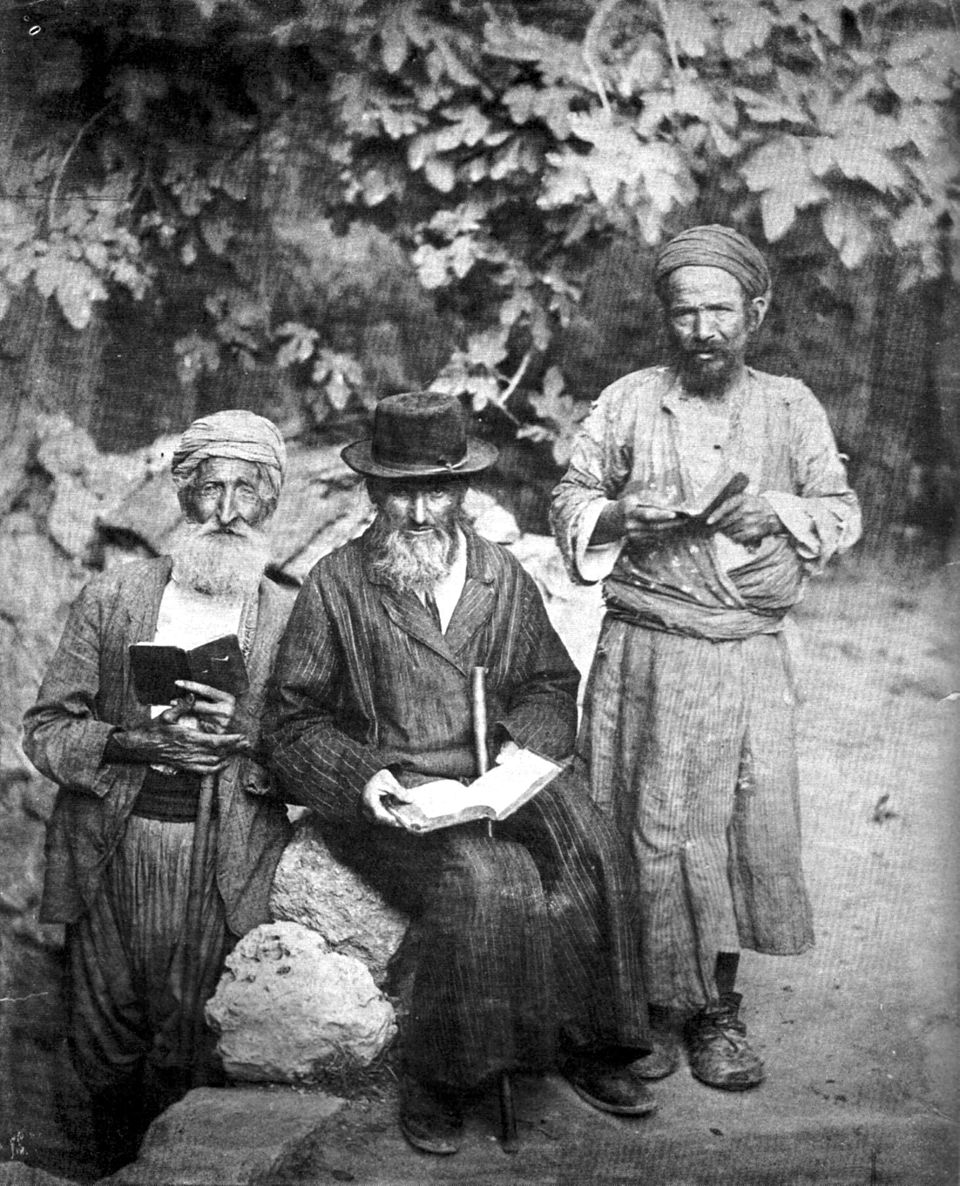](https://wiki.compclassnotes.com/uploads/images/gallery/2026-09/tYfimage.png)
[Jewish](https://en.wikipedia.org/wiki/Jews "Jews") community in the [Mutasarrifate of Jerusalem](https://en.wikipedia.org/wiki/Mutasarrifate_of_Jerusalem "Mutasarrifate of Jerusalem") under [Ottoman](https://en.wikipedia.org/wiki/Ottoman_Empire "Ottoman Empire") rule, 1895
#### Beginning of modern Aliyah (New Yishuv)
The Ottoman government was not supportive of the new settlers from the First and Second Aliyah, as the Ottoman government officially restricted Jewish immigration. The Yishuv relied on money from abroad to support their settlements.
In 1908, the Zionist Organization founded the [Palestine Office](https://en.wikipedia.org/wiki/Palestine_Office?action=edit&redlink=1 "Palestine Office (page does not exist)") \[[he](https://he.wikipedia.org/wiki/%D7%94%D7%9E%D7%A9%D7%A8%D7%93%20%D7%94%D7%90%D7%A8%D7%A6%D7%99%D7%A9%D7%A8%D7%90%D7%9C%D7%99 "he:המשרד הארצישראלי")\], under [Arthur Ruppin](https://en.wikipedia.org/wiki/Arthur_Ruppin "Arthur Ruppin"), for land acquisition, agricultural settlement and training,[\[10\]](https://en.wikipedia.org/wiki/Yishuv#cite_note-10) and later for urban expansion. The first Hebrew high schools were opened in Palestine as well as the [Technion](https://en.wikipedia.org/wiki/Technion "Technion"), the first institution for higher learning. [Hashomer](https://en.wikipedia.org/wiki/Hashomer "Hashomer"), a Zionist self-defence group, was created to protect the Jewish settlements. Labor organizations were created along with health and cultural services, all later coordinated by the [Jewish National Council](https://en.wikipedia.org/wiki/Jewish_National_Council "Jewish National Council"). By 1914, the old Yishuv was a minority, and the New Yishuv began to express itself and its [Zionist](https://en.wikipedia.org/wiki/Zionism "Zionism") goals.
The [First Aliyah](https://en.wikipedia.org/wiki/First_Aliyah "First Aliyah") was the very beginning of the creation of the New Yishuv. More than 25,000 Jews immigrated to Palestine. The immigrants were inspired by the notion of creating a national home for Jews. Most of the Jewish immigrants came from Russia, escaping the [pogroms](https://en.wikipedia.org/wiki/Pogrom "Pogrom"), while some arrived from Yemen. Many of the immigrants were affiliated with [Hovevei Zion](https://en.wikipedia.org/wiki/Hovevei_Zion "Hovevei Zion"). Hovevei Zion purchased land from Arabs and other Ottoman subjects and created various settlements such as [Yesud HaMa'ala](https://en.wikipedia.org/wiki/Yesud_HaMa'ala "Yesud HaMa'ala"), [Rosh Pinna](https://en.wikipedia.org/wiki/Rosh_Pinna "Rosh Pinna"), [Gedera](https://en.wikipedia.org/wiki/Gedera "Gedera"), [Rishon LeZion](https://en.wikipedia.org/wiki/Rishon_LeZion "Rishon LeZion"), [Nes Tziona](https://en.wikipedia.org/wiki/Nes_Tziona "Nes Tziona") and [Rechovot](https://en.wikipedia.org/wiki/Rechovot "Rechovot"). These agricultural settlements were supported by philanthropists from abroad, chiefly [Edmond James de Rothschild](https://en.wikipedia.org/wiki/Edmond_James_de_Rothschild "Edmond James de Rothschild"). and [Alphonse James de Rothschild](https://en.wikipedia.org/wiki/Alphonse_James_de_Rothschild "Alphonse James de Rothschild").[\[11\]](https://en.wikipedia.org/wiki/Yishuv#cite_note-11)
[Eliezer Ben-Yehuda](https://en.wikipedia.org/wiki/Eliezer_Ben-Yehuda "Eliezer Ben-Yehuda") also immigrated during the first Aliyah. Ben-Yehuda took it upon himself to revive the Hebrew language, and along with [Nissim Bechar](https://en.wikipedia.org/wiki/Nissim_Bechar?action=edit&redlink=1 "Nissim Bechar (page does not exist)") started a school for teaching Hebrew, later on founding the first Hebrew newspaper.
During the Second Aliyah, between 1903 and 1914, there were 35,000 new immigrants, primarily from the [Russian Empire](https://en.wikipedia.org/wiki/Russian_Empire "Russian Empire").
During [World War I](https://en.wikipedia.org/wiki/World_War_I "World War I"), the conditions for the Jews in the Ottoman Empire worsened. All those Jews who were of an enemy nationality were exiled and others were drafted into the Ottoman army. Many of those exiled fled to [Egypt](https://en.wikipedia.org/wiki/Egypt "Egypt") and the [United States](https://en.wikipedia.org/wiki/United_States "United States"). Those who remained in the Ottoman ruled Palestine faced hard economic times. There was disagreement whether to support the British or the Turks. A clandestine group, [Nili](https://en.wikipedia.org/wiki/Nili "Nili"), was established to pass information to the British in the hope of defeating the Ottomans and ending their rule over Palestine. The purpose and members of the Nili were discovered. All involved were executed by the Ottomans except its founder, [Aaron Aaronsohn](https://en.wikipedia.org/wiki/Aaron_Aaronsohn "Aaron Aaronsohn"), who escaped to Egypt. During World War I, the Jewish population in Palestine diminished by a third due to deportations, immigration, economic trouble and disease. In 1915, the [British Army](https://en.wikipedia.org/wiki/British_Army "British Army") recruited Yishuv Jews who had been exiled to Egypt into the Zion Mule Corps, which provided logistical support during the [Gallipoli campaign](https://en.wikipedia.org/wiki/Gallipoli_campaign "Gallipoli campaign"). Subsequently, the British established the [Jewish Legion](https://en.wikipedia.org/wiki/Jewish_Legion "Jewish Legion"), which participated in the British conquest of Ottoman Syria (including Palestine), leading to the Turkish surrender. The Jewish Legion's soldiers were predominantly diaspora Jews, but after British forces entered Palestine, a battalion of local Jews was recruited, which carried out support roles and guarded prisoners.
#### Paramilitary forces
See [Bar-Giora](https://en.wikipedia.org/wiki/Bar-Giora_(organisation) "Bar-Giora (organisation)"), [Hamagen](https://en.wikipedia.org/wiki/Hamagen "Hamagen"), Hanoter, and [Hashomer](https://en.wikipedia.org/wiki/Hashomer "Hashomer").
#### During the British Mandate
[World War I](https://en.wikipedia.org/wiki/World_War_I) saw the [dissolution of the Ottoman Empire](https://en.wikipedia.org/wiki/Dissolution_of_the_Ottoman_Empire "Dissolution of the Ottoman Empire") and the division of its territory. The [Sykes–Picot Agreement](https://en.wikipedia.org/wiki/Sykes%E2%80%93Picot_Agreement "Sykes–Picot Agreement") led to a division of Ottoman territory between British and French rule, and the [McMahon–Hussein correspondence](https://en.wikipedia.org/wiki/McMahon%E2%80%93Hussein_correspondence "McMahon–Hussein correspondence") "ambiguously omitted" the region of Palestine from what was promised to become an Arab state to the Hashemite sharif.[\[12\]](https://en.wikipedia.org/wiki/Yishuv#cite_note-12) The British then worked to follow through on the [Balfour Declaration](https://en.wikipedia.org/wiki/Balfour_Declaration "Balfour Declaration") of 1917, that announced British support for the [Zionist](https://en.wikipedia.org/wiki/Zionism "Zionism") aspiration to establish "a national home for the Jewish people" in Palestine.[\[13\]](https://en.wikipedia.org/wiki/Yishuv#cite_note-13)[\[14\]](https://en.wikipedia.org/wiki/Yishuv#cite_note-:3-14) The Jewish population was variously estimated at less than 10% of the [population of Palestine](https://en.wikipedia.org/wiki/Demographic_history_of_Palestine_(region) "Demographic history of Palestine (region)") before the beginning of [British Mandatory rule](https://en.wikipedia.org/wiki/Mandatory_Palestine "Mandatory Palestine") (1920–1948)[\[14\]](https://en.wikipedia.org/wiki/Yishuv#cite_note-:3-14) to slightly more at the beginning.[\[15\]](https://en.wikipedia.org/wiki/Yishuv#cite_note-15)
Under British rule Jewish immigration, the majority from Europe, led to the rapid growth of the Yishuv. It referred to this immigration in Hebrew as [aliyah](https://en.wikipedia.org/wiki/Aliyah "Aliyah"), meaning "going up", giving it an ideological and religious connotation unlike immigration to other places.[\[16\]](https://en.wikipedia.org/wiki/Yishuv#cite_note-16) Additional [Jewish land purchases in Palestine](https://en.wikipedia.org/wiki/Jewish_land_purchase_in_Palestine "Jewish land purchase in Palestine") enabled the establishment of more farming communities known as [*moshavim*](https://en.wikipedia.org/wiki/Moshav "Moshav") and [*kibbutzim*](https://en.wikipedia.org/wiki/Kibbutz "Kibbutz"). The [League of Nations](https://en.wikipedia.org/wiki/League_of_Nations "League of Nations") codified support for the eventual "establishment in Palestine of a national home for the Jewish people" into the [foundational document](https://en.wikipedia.org/wiki/Mandate_for_Palestine "Mandate for Palestine") of the British Mandate in Palestine, thereby facilitating what detractors later regarded not as aliyah, or the flight of refugees from Nazi and Fascist atrocities,[\[17\]](https://en.wikipedia.org/wiki/Yishuv#cite_note-17) but as the Zionist colonization of Palestine.[\[14\]](https://en.wikipedia.org/wiki/Yishuv#cite_note-:3-14)[\[18\]](https://en.wikipedia.org/wiki/Yishuv#cite_note-18)[\[19\]](https://en.wikipedia.org/wiki/Yishuv#cite_note-:0-19): xx The Yishuv had a level of international recognition that the [Arab Higher Committee](https://en.wikipedia.org/wiki/Arab_Higher_Committee "Arab Higher Committee"), the governing body of the Arab majority in Mandatory Palestine did not have. At times the British referred to the Arabs only as "non-Jewish communities".[\[19\]](https://en.wikipedia.org/wiki/Yishuv#cite_note-:0-19)
#### Parliamentary representation and self-government
A department of the [World Zionist Organization](https://en.wikipedia.org/wiki/World_Zionist_Organization "World Zionist Organization") became the [Jewish Agency for Palestine](https://en.wikipedia.org/wiki/Jewish_Agency_for_Israel#Jewish_Agency_for_Palestine_1929%E2%80%931948 "Jewish Agency for Israel"), and later the [Jewish Agency for Israel](https://en.wikipedia.org/wiki/Jewish_Agency_for_Israel "Jewish Agency for Israel"). The agency and representative bodies were set up to enable self government.[\[20\]](https://en.wikipedia.org/wiki/Yishuv#cite_note-20) The Assembly of Representatives was the elected parliamentary assembly of the Jewish community in [Mandatory Palestine](https://en.wikipedia.org/wiki/Mandatory_Palestine "Mandatory Palestine"). It was established on 19 April 1920,[\[21\]](https://en.wikipedia.org/wiki/Yishuv#cite_note-21) and functioned until 13 February 1949, the day before the [first Knesset](https://en.wikipedia.org/wiki/1949_Israeli_legislative_election "1949 Israeli legislative election"), elected on 25 January, was sworn in. The Assembly met once a year to elect the executive body, the Jewish National Council,[\[22\]](https://en.wikipedia.org/wiki/Yishuv#cite_note-K-22) which was responsible for education, local government, welfare, security and defense.[\[23\]](https://en.wikipedia.org/wiki/Yishuv#cite_note-23) It also voted on the budgets proposed by the Jewish National Council and the Rabbinical Council.[\[22\]](https://en.wikipedia.org/wiki/Yishuv#cite_note-K-22) The [Jewish National Council](https://en.wikipedia.org/wiki/Jewish_National_Council "Jewish National Council") (ועד לאומי *Va'ad Le'umi*) was also known as the General Council of the Jewish Community of Palestine.[\[24\]](https://en.wikipedia.org/wiki/Yishuv#cite_note-24)
Yishuv governing institutions were recognized by the British government and created a [quasi state](https://en.wikipedia.org/wiki/Quasi-state "Quasi-state") as well as a structure of self-governing institutions that legitimately represented the Jewish population.[\[19\]](https://en.wikipedia.org/wiki/Yishuv#cite_note-:0-19)[\[25\]](https://en.wikipedia.org/wiki/Yishuv#cite_note-:2-25) It was "recognized as a public body for the purpose of advising and cooperating with the Administration of Palestine", and it was entitled to diplomatic representation in the League of Nations [Permanent Mandates Commission](https://en.wikipedia.org/wiki/Permanent_Mandates_Commission "Permanent Mandates Commission") in Geneva, as well as in London and elsewhere.[\[19\]](https://en.wikipedia.org/wiki/Yishuv#cite_note-:0-19) These were given quasi-official diplomatic status by Britain and the [League of Nations](https://en.wikipedia.org/wiki/League_of_Nations "League of Nations"), giving the Yishuv's governing bodies international legitimacy.[\[19\]](https://en.wikipedia.org/wiki/Yishuv#cite_note-:0-19): 45
#### Paramilitary forces
Main articles: [Haganah](https://en.wikipedia.org/wiki/Haganah "Haganah"), [Irgun](https://en.wikipedia.org/wiki/Irgun "Irgun"), and [Lehi (group)](https://en.wikipedia.org/wiki/Lehi_(group) "Lehi (group)")
See also: [Zionist political violence](https://en.wikipedia.org/wiki/Zionist_political_violence "Zionist political violence")
The most notable Jewish paramilitaries in the [British Mandate of Palestine](https://en.wikipedia.org/wiki/Mandatory_Palestine "Mandatory Palestine") were the [Haganah](https://en.wikipedia.org/wiki/Haganah "Haganah"), the [Irgun](https://en.wikipedia.org/wiki/Irgun "Irgun") and [Lehi](https://en.wikipedia.org/wiki/Lehi_(group) "Lehi (group)"). In October 1945, during the [Jewish insurgency in Mandatory Palestine](https://en.wikipedia.org/wiki/Jewish_insurgency_in_Mandatory_Palestine "Jewish insurgency in Mandatory Palestine"), those organizations joined to form the [Jewish Resistance Movement](https://en.wikipedia.org/wiki/Jewish_Resistance_Movement "Jewish Resistance Movement"). It was established by the [Jewish Agency](https://en.wikipedia.org/wiki/Jewish_Agency "Jewish Agency") and activated for some ten months, until August, 1946.[\[26\]](https://en.wikipedia.org/wiki/Yishuv#cite_note-Agency-26) The alliance coordinated acts of sabotage and attacks against British authorities.
\[1\] [https://en.wikipedia.org/wiki/Yishuv](https://en.wikipedia.org/wiki/Yishuv)