The Assassinations
Few well recorded and openly admitted assassination of both Jews and Christians at the hands of Zionists. The actual number of assassinations is much larger.
- The Zionists assasination of Yaakov Yisroel Dehan on July 1, 1924
- The Zionists assassination of Walter Edward Guinness - Lord Moyne – 1944
- The Zionists assassination of Folke Bernadotte in 1948
The Zionists assasination of Yaakov Yisroel Dehan on July 1, 1924
July 5762/2002
The young martyr, Dr. Yaakov Yisrael Dehan was murdered on July 1, 1924. He was a man who devoted all his energies and the best years of his life to saving the remnant of loyal Jews, and to promote peace with the veteran Arab residents of the Holy Land. Through his knowledge of politics and diplomacy, Dehan contributed much to crystallizing an independent position for Orthodox Jewry unaffiliated with the Zionist leadership.
At a time when the first followers of the Zionist movement began streaming into the Holy Land in large numbers, defiling the holiness of the land, and by virtue of their idiotic ideas began to work to expel the Arabs who had been living there for centuries in order to establish a Zionist state.
The Zionists first approached the British authorities by pretending to present themselves as the representatives of the Jewish nation, who desired to establish a “national home” without any regard whatsoever of the fact that the vast majority of the Jewish People opposed Zionism in those days. However, through their various contacts, the Zionists managed to bring about the Balfour Declaration (known among our rabbis of the time as the Baal Peor Declaration – a pun referring to the idolatry mentioned in the Bible), based on the “right” of the Jews to establish a state in Palestine, and ultimately the state itself to our great misfortune.
Good relations existed between the Jewish and Arab communities, and the leadership of the Orthodox Jewish community conducted themselves according to the principles of Judaism, never provoking their non-Jewish neighbors. The Arabs were very friendly and neighborly, and a spirit of mutual respect was typical.
When the winds of Zionism began to blow through Palestine, the Arabs began to change their attitude because of the fact that they heard that the “Jews” wanted to grab the Land from them and expel them. Of course, they did not distinguish between the Zionist troublemakers and the members of the loyal authentic Jewish community that advocated tolerance and peace. There were outbreaks of violence here and there, until bloodshed began and many people died.
However, instead of learning from this experience that brought suffering upon the Jewish People in the Holy Land, and ceasing their dangerous lawless behavior,the Zionists used these events as “additional proof” for the need for a state and an army to protect the Jews from violence. Jewish blood was of no importance to the Zionists in comparison to their “lofty” nationalist goals.
It was clear to the leaders of the Orthodox community that there was an immediate need for an organization to confront the Zionist organization, and demand that the British desist from endorsing the idea of a Zionist state, and resolve Arab-Jewish tensions peacefully.
A great and unexpected opportunity presented itself in the form of Dr. Yaakov Yisrael Dehan, who had embraced Judaism from a life of secularism, and had made his way to the Orthodox community of Jerusalem during those difficult days. He sensed the truth, and from then on never ceased to march with the great rabbi of Jerusalem, Rabbi Yosef Chaim Zonnenfeld, who wisely advised Dehan.
Dehan established extensive contacts with many governmental authorities in Europe, including the English, and proceeded to carry out his work immediately. In no time at all he transformed the loyal Jewish community from a tiny one without any international recognition to a community standing up against the Zionist heretics. He and other members of the community represented the Orthodox Jews under the name of “Eida Haredis” (G-d-Fearing Community), and represented the position of the loyal Jewish community.
It goes without saying that the Eida Haredis was accepted warmly among non-Jews, much moreso than was the case with the Zionists – both because of the fact that the Eida Haredis represented traditional, authentic Judaism against Zionism that openly rejected Judaism in its entirety, and because of the fact that the Orthodox position made more sense in order to prevent bloodshed and promote harmony in Palestine.
Dr. Dehan then organized a delegation of Orthodox leaders to meet with Arab leaders headed by King Abdullah. The Jewish delegation was headed by Rabbi Zonnenfeld, and was welcomed by the Arabs like royalty. The king even gave them expensive gifts as a sign of his affection.
Of course the Zionists were gritting their teeth when they learned of this event, and saw the possibility that all of their projects may end up collapsing in front of their very eyes. The Zionists began their attacks against the loyal Jewish community in general, and against Dr. Dehan in particular. They slandered him with increasing brutality until they went so far as to call for his murder.
In those days the G-d-fearing Jews were persecuted greatly by the Zionists, and whenever they ran into Dehan in the street they would insult him. However, Dehan never ceased his holy work on behalf of our rabbis. When the Zionists realized that their persecution of Dehan had no effect, they decided to kill him.
In a plan approved by the leading Haganah Zionists a number of young Zionists encountered Dr. Dehan as he left the Shaarei Zedek Hospital in Jerusalem.The Zionist Avraham Tahomi, may his name be obliterated, shot Dehan three times in the chest, and shortly thereafter Dehan expired, returning his soul to heaven. This murder was carried out with the approval of the Zionist leadership.
On that fateful day of July 1, 1924, when the Zionists committed their crime, for which we suffer to this very day and still do not see the end in sight, they shot him in his pure heart. But they did not only shoot him and kill him, but they shot and killed the entire People, thereby preventing any plan that did not comply with their wicked intentions.
Nevertheless, some seventy-eight years after that horrible day, there is still a community of Jews following in the authentic path, and refusing to bow to the Zionist idol. It is in large measure due to the selfless holy efforts of Yaakov Dehan, a martyr of his people who paved the way with self-sacrifice that there are still Jews who refuse to succumb to the Zionist regime of heretics despite the fact that the Zionists overpower the authentic Jews with their laws and power, It is in the merit of Yaakov Dahan that there are still Jews today throughout the world who stand and announce unflinchingly their unswerving loyalty to the countries in which they live, and that there are still Jews in this world who declare to the nations of world that the Zionists and their state has no link with Judaism or the Jewish People.
His murder proved to every loyal Jew that the Zionists appearing on the scene were no friends of the Jewish People, but were murderers who hated Judaism, something that was the beginning of the opportunity of recognizing the enemy. On the most recent anniversary of Dehan’s murder we remembered the good work of Dr. Yaakov Yisrael Dehan on behalf of authentic Judaism in his war against Zionism and its wicked plans. Let us learn from his work to strengthen our resolve and dedication in refusing to bow to the Zionist idol, and to pray for divine providence to redeem the world.
https://youtu.be/r18BpAHVnbQ?si=0VYoih0nHuof_hv8
Jul 11, 2024
On Friday July 5, 2024, a group of Jews went to visit the gravesite of Professor Yaakov Yisroel DeHaan, on the 100th anniversary of his murder at the hands of the Zionists. DeHaan was an important political activist who worked alongside Rabbi Yosef Chaim Sonnenfeld in the 1920’s to establish the Eidah Chareidis, the anti-Zionist Jewish community of the Holy Land, as an independent community not represented by the Zionists. His many political connections, his mastery of diplomacy and his work with Arab leaders to find a haven for Jews outside of the context of Zionism posed a threat to the Zionists, and in 1924 they assassinated him.
The inscription on his gravestone reads: “Here lies the exceptional scholar and professor, Dr. Yaakov Yisroel ben Yitzchak Halevi DeHaan, who gave up a promising career and placed his life in danger to fight like a lion and a warrior, fearlessly advocating with all his heart and soul for the establishment of the Orthodox Jewish community here in Jerusalem. He was murdered by wicked men in the prime of his youth on Monday night, 29 Sivan 5684 (June 30, 1924). He came to the Holy Land in 1919 and became an ally of G-d-fearing leaders. Through his advice and wisdom he assisted them and accomplished great things. He supported numerous charitable organizations in the Holy Land.”
 1-N-1035x688
 7-1
7-1 15-1035x690
 4-3-1035x690
 3-1-1035x690
 9-1035x690


On Sunday at noon, on the 29th day of the Jewish month of Sivan, a delegation from the religious Haredi community in Jerusalem visited the grave of the holy Jewish martyr Dr. Jacob Israel Dahan on the Mount of Olives in the Old City of Jerusalem. This visit marked the 99th anniversary of his assassination by the Zionists nearly a century ago.
Dr. Dahan, may God avenge his blood, was the right-hand man of Rabbi Yosef Chaim Sonnenfeld, the chief rabbi of Jerusalem. He acted on Rabbi Sonnenfeld’s behalf to prevent the destruction that the Zionists were wreaking on the religious Jewish community in the Holy Land, as well as to oppose the Zionists’ plot to establish their state.
On his tombstone, it is noted that he was active in managing many charitable institutions. Among his efforts with the authorities at that time was ensuring that ultra-Orthodox Jews received separate representation, independent of the Zionists and not subject to the national committee established by the Zionists. This led to the establishment of the Ashkenazi city committee, also known as the “Orthodox community.”
Dr. Dahan was honored with various titles, including Swedish Honorary Consul, and achieved significant success. It is well known that he received a golden forced gift as an appreciation during a visit to the King of Jordan, accompanied by Rabbi Yosef Chaim Sonnenfeld. The Zionists saw him as a major obstacle due to his great political influence, his proximity to the monarchy, and his significant accomplishments.
The Zionists threatened both him and Rabbi Yosef Chaim Sonnenfeld. When they confronted Rabbi Sonnenfeld, he unbuttoned his shirt and challenged them to shoot. They did not act on their threats against Rabbi Sonnenfeld but instead targeted Dr. Dahan, ultimately proving their determination to eliminate him. As Dr. Dahan was leaving the old Shaarei Zedek Hospital, some Zionists approached and shot him three times, killing him.
The assassination of Dr. Dahan was intended to announce and ensure that the existence of the Zionist state depended on his murder and the silencing of the voice of ultra-Orthodox Judaism.
[1] When the Zionists killed Yaakov Yisroel Dehan on July 1, 1924 - Neturei Karta International
[2] 100 years since the assassination of Dr. Dehaan by the Zionists - Neturei Karta International
[3] Visit to the grave of Jewish martyr Dr. Jacob Israel Dahan - Neturei Karta International
The Zionists assassination of Walter Edward Guinness - Lord Moyne – 1944
Walter Edward Guinness, 1st Baron Moyne, DSO & Bar, TD, PC (29 March 1880 – 6 November 1944), was a British Conservative politician, soldier and businessman. He served as the British minister of state in the Middle East until November 1944, when he was assassinated by the Zionist terrorist group Lehi in Cairo. The assassination of Lord Moyne sent shock waves through Palestine and the rest of the world. [1]
He was an advocate of compromise between Arabs and Jews in Palestine and his death hastened the onset of a conflict in Israel-Palestine that continues to this day.

Assassination
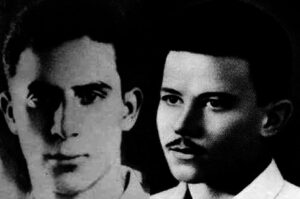
In the early afternoon of 6 November 1944, Eliyahu Bet-Zuri and Eliyahu Hakim of the Jewish terrorist group Lehi waited for Moyne near his home in Cairo following a well-planned and much practised plan of action to assassinate Moyne.[67][68]
Moyne arrived in his car with his driver, Lance Corporal Arthur Fuller, his secretary, Dorothy Osmond, and his ADC, Major Andrew Hughes-Onslow. The ADC went to open the front door of the residence and the driver got out to open the door for Moyne. They were suddenly told not to move, as Bet-Zuri emerged and shot Fuller in the chest, causing him to collapse in the driveway and bleed to death in minutes. Hakim then pulled the car door open and shot Moyne three times. The first bullet hit him in the neck on the right side, just above the clavicle, the second penetrated his abdomen, punctured his colon and large intestine, and became embedded to the right of the second lumbar vertebrae, while the third shot, fired after Moyne raised his right hand, ripped across four of his fingers and went in and out of his chest, causing no serious injuries.[69]
Hakim and Bet-Zuri ran out of the yard, jumped on their rented bicycles, and began pedalling down the street away from the scene. Major Hughes-Onslow rushed to the sentry box and raised the alarm. Hearing it, Hakim and Bet-Zuri turned onto a side street. They had very nearly gotten away when an Egyptian motorcycle policeman, El-Amin Mahomed Abdullah, caught up to them. Bet-Zuri fired a volley of warning shots in his direction, which he ignored. Abdullah then dismounted and ordered him to drop his weapon. Bet-Zuri attempted to shoot out the motorcycle's tires but found that his pistol had run out of ammunition, and as he attempted to reload it, Abdullah fired, hitting Bet-Zuri in the chest. Hearing the commotion, Hakim turned back to help Bet-Zuri, and within minutes, another policeman appeared, and the two were placed under arrest.[69]
Meanwhile, Moyne regained consciousness, and in a few minutes, a doctor and ambulance arrived. Moyne was rushed to a British military hospital in Cairo and admitted at 1:40 p.m., in critical condition, having lost a great deal of blood through gross haemorrhaging and suffering from shock. Five minutes later, he was given the first of three blood transfusions, causing his condition to improve. After he complained of a burning sensation down his right leg and an inability to move it, X-rays revealed an injury to his thoracic vertebrae. Later, his right arm also became paralyzed as a result of the neck wound. Doctors were reluctant to operate until his condition improved, but at 5:30, a lumbar puncture revealed a bloodstain, and it was decided to operate. He was given another blood transfusion, and in the operation that followed, surgeons removed the bullet lodged near the second lumbar vertebra and discovered the injuries to the colon and large intestine, while the neck wound and finger wounds were cleaned. Soon after the operation, his condition began to deteriorate, and he died at 8:40 pm, aged 64.[69]
As the principal witness at the trial, Major Hughes-Onslow became a marked man and was sent to Aden and then to Khartoum for his safety. He subsequently said, "No doubt Lord Moyne could have been regarded as a target for political assassination, but the shooting of the chauffeur was pure murder."[70][71]
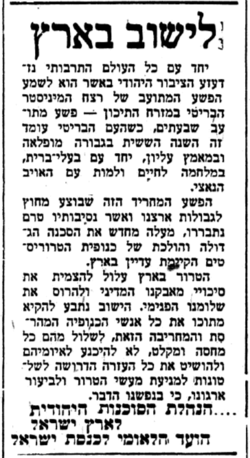
Condemnation of the assassination by official Jewish organizations[66]
Moyne's body was flown home to England and cremated on 17 November at Golders Green Crematorium.[72] His will was proven on 2 December, with his estate valued at £2 million (equivalent to £76,681,040 in 2025).[73][74]
According to a member of the Lehi's three-man executive, Natan Yellin-Mor, the group's founder Ya'ir Stern had considered the possibility of assassinating the British Minister Resident in the Middle East as early as 1941 before Moyne held the position.[75] Moyne's predecessor Richard Casey was deemed unsuitable because he was Australian.[76] When Moyne replaced Casey in 1944, planning for the operation began.
As well as being the highest British official within Lehi's reach, Moyne was regarded as personally responsible for Britain's Palestine policy. In particular, he was regarded as one of the architects of Britain's strict immigration policy, and to have been responsible for the British hand in the Struma disaster,[75] which followed a refusal to grant visas to Palestine for its Jewish refugee passengers, decided during his time as Colonial Secretary.[72] According to Bell, Lord Moyne was believed by the underground to be an Arabist, who had consistently followed an anti-Zionist line.[77]
However, according to Yellin-Mor:[78]
"Really these acts by Lord Moyne were without meaning for us. They were useful only as propaganda, because they allowed us to explain to the people why we had killed him. What was important to us was that he symbolized the British Empire in Cairo. We weren't yet in a position to try to hit Churchill in London, so the logical second best was to hit Lord Moyne in Cairo."
According to Yaakov Banai (Mazal), who served as the commander of the fighting unit of Lehi, there were three purposes in the assassination:[79]
- To show the world that this conflict was not between a government and its citizens as Britain had tried to show but between citizens and a foreign ruler.
- To demonstrate that the conflict was between the Jewish people and British Imperialism.
- To take the "War of Liberation" out of the Land of Israel and the Yishuv. The trial was not planned, but the action had to capture a place in the world press and lead political thoughts.

The Stern Gang
By 1941 Lord Moyne had served in various posts which included Kenya and as acting secretary of the Polish Relief Fund. He celebrated Empire Day (24th of May) by speaking on the colonies, protectorates, and mandated territories that the world war had given a new strength and power to Empire Unity

Minister resident in the Middle East
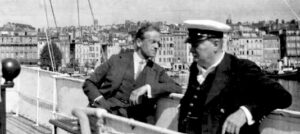
Moyne and Churchill, the two were personal friends.
Lesser men may have been dismayed by the turn of events. However, Lord Moyne remained resolute in his belief in compromise between Jews and Arabs. He dismissed his Egyptian police escort and a police guard that was stationed at his house day and night.
In November 1944, Moyne was assassinated near his office in Cairo by two criminal members of Lehi or the ‘Stern gang’. They were later hanged.
In November 1944 (just three months after the attempt on High Commissioner Mac Michael’s life) two Stern Gang members, Eliahu Hakim and Eliyahu Bet-Zuri waited for Lord Moyne near his Cairo residence when he was shot in the neck, chest and abdomen as he stepped into his automobile in front of his home. His chauffer was killed instantly. Lord Moyne had once survived the gun. This time the overseer of limited Jewish immigration expired in a British military hospital in Cairo -several hours after the event The murderers themselves narrowly escaped lynching at the hands of Egyptian passers-by and they were apprehended soon after.
The aftermath
Although the group had been targeting British Mandate personnel since 1940, Moyne was the first high-profile British official to be killed by them, though several failed attempts had been made to assassinate the British High Commissioner in Palestine, Sir Harold MacMichael. This was therefore the opening shot in the new Lehi campaign.
British prime minister Winston Churchill, who once described himself as a "Zionist,"[84] taking the view that the creation of a Jewish state in Palestine would provide Britain with a more reliable and powerful ally,[78] for the time-being tempered his support for Zionism.[85][86] Moyne had been sent to Cairo because of their long personal and political friendship, and Churchill told the House of Commons:
If our dreams for Zionism are to end in the smoke of assassins' pistols and our labours for its future to produce only a new set of gangsters worthy of Nazi Germany, many like myself will have to reconsider the position we have maintained so consistently and so long in the past. If there is to be any hope of a peaceful and successful future for Zionism, these wicked activities must cease, and those responsible for them must be destroyed root and branch. [...] In Palestine the executive of the Jewish Agency have called upon the Jewish community—and I quote their actual words: 'To cast out the members of this destructive band, deprive them of all refuge and shelter, to resist their threats, and to render all necessary assistance to the authorities in the prevention of terrorist acts, and in the eradication of the terrorist organisation.' These are strong words, but we must wait for these words to be translated into deeds.[87]
Referring to Lord Moyne, he also added, "I can assure the House that the Jews in Palestine have rarely lost a better or more well-informed friend."[88]
[1] https://en.wikipedia.org/wiki/Walter_Guinness,_1st_Baron_Moyne
The Zionists assassination of Folke Bernadotte in 1948
Folke Bernadotte, Count of Wisborg (Swedish: [fɔ̂l.kɛ̂ bæɳaˈdɔtː]; 2 January 1895 – 17 September 1948) was a Swedish nobleman and diplomat. In World War II, he negotiated the release of about 450 Danish Jews and 30,550 non-Jewish prisoners of many nations from the Nazi German Theresienstadt Ghetto.[a] They were released on 14 April 1945.[4][5] In 1945 he received a German surrender offer from Heinrich Himmler, though the offer was ultimately rejected by the allies.
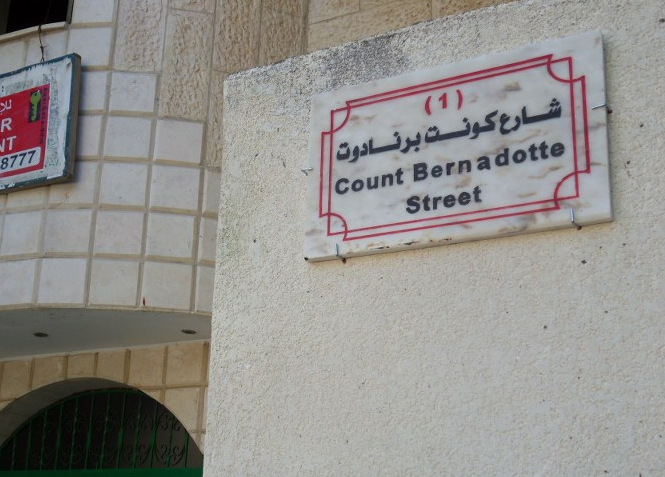
Count Bernadotte street sign in Gaza City, Gaza Strip
After the war, Bernadotte was unanimously chosen to be the United Nations Security Council mediator in the Arab–Israeli conflict of 1947–1948.
He was assassinated in Jerusalem in 1948 by the Zionist terror group Lehi while pursuing his official duties. Upon his death, Ralph Bunche took up his work at the UN, mediating the 1949 Armistice Agreements between Israel and Egypt.
Folke Bernadotte was born in Stockholm into the House of Bernadotte, the Swedish royal family. His father, Prince Oscar Bernadotte, Count of Wisborg (formerly Prince Oscar of Sweden, Duke of Gotland), was the second son of King Oscar II of Sweden; his mother, Ebba Munck af Fulkila, had been a lady-in-waiting to Victoria of Baden, the wife of Crown Prince Gustaf. Oscar had married Ebba without the consent of the King, and so was forced to renounce his Swedish titles; in 1892, he was granted the titles of Prince Bernadotte and Count of Wisborg by his uncle, Adolphe, Grand Duke of Luxembourg.[6][7]
Bernadotte attended school in Stockholm, after which he entered training to become a cavalry officer at the Royal Military Academy. He took the officer's exam in 1915, was commissioned a lieutenant in 1918, and subsequently was promoted to the rank of major.
UN mediator
In 1948, Bernadotte played a central but brief role in the expanding Arab-Israeli conflict, a role which culminated in his assassination.
On November 29, 1947, the United Nations passed Resolution 181 for the Partition of Palestine, endorsing an independent Jewish state. Violence immediately broke out between Jewish and Arab fighters; this first phase of conflict, known as the 1947–1948 Civil War in Mandatory Palestine, lasted until May 14, 1948, when the Zionist leadership proclaimed the independent State of Israel and Britain began the termination of its 27-year control of Palestine. Arab nations bordering Israel immediately joined the battle on the Palestinian Arabs side, marking the commencement of the 1948 Arab–Israeli War. The United Nations Security Council demanded an immediate cease-fire, and the secretary general appointed Bernadotte as "United Nations Mediator in Palestine."[18]
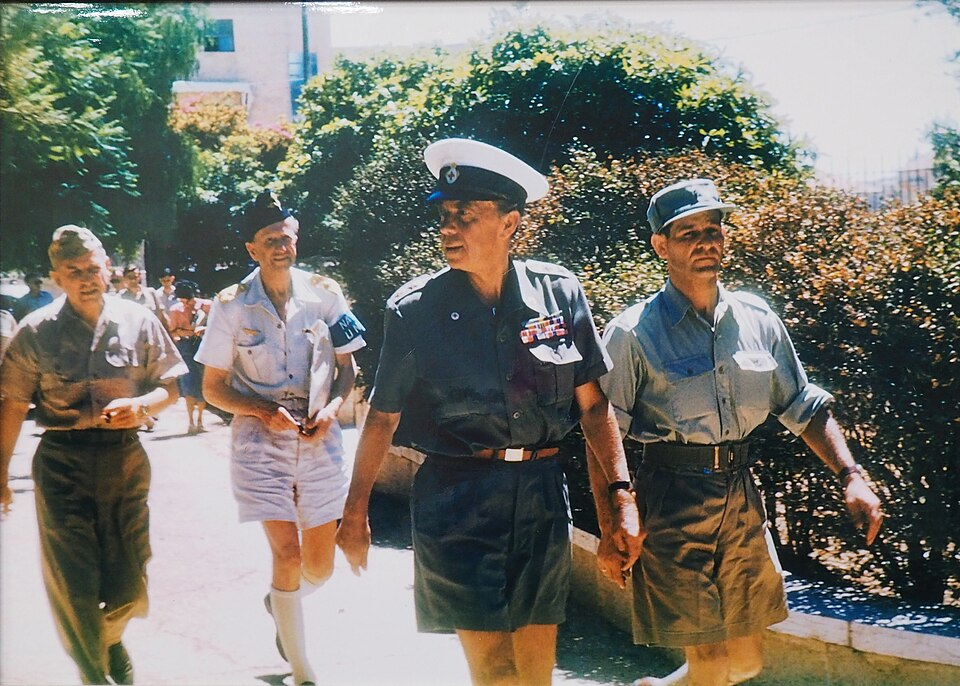
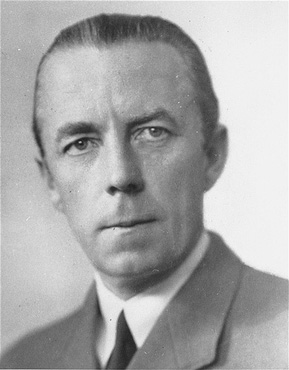
Folke Bernadotte in 1948
It was the first official mediation in the UN's history - Bernadotte's assignment was to effect a cease-fire between the Zionist and Arab forces and then seek a peaceful resolution by proposing partition plans.[19] Bernadotte succeeded in achieving an initial truce, which went into effect on June 11 and lasted until July 8.
Achieving a satisfactory resolution to the conflict was significantly more difficult; Bernadotte wrote that "in putting forward any proposal for the solution of the Palestine problem, one must bear in mind the aspirations of the Jews, the political difficulties and differences of opinion of the Arab leaders, the strategic interests of Great Britain, the financial commitment of the United States and the Soviet Union, the outcome of the war, and finally the authority and prestige of the United Nations."[20][21]
His final report, submitted to the United Nations in September, proposed that the Negev was to become Arab territory and the western Galilee, intended for the Arab state in the partition plan, would be included in the Jewish state.[22] The disposition of the Arab part of Palestine was to be decided by the Arab states in consultation with the Palestinian Arabs, with a recommendation of a merger with Transjordan.[22]
Assassination
_family_grave_2007.jpg)
Prince Oscar Bernadotte's family tomb at the Northern Cemetery in Stockholm where the remains of Folke Bernadotte also are interred
On Friday 17 September 1948, four members of the Zionist paramilitary militant organization Lehi, sometimes referred to in the West as the Stern Gang, dressed in the uniforms of IDF soldiers and attacked Bernadotte's UN convoy as it drove through West Jerusalem, killing him as well as the French officer riding next to him, Colonel André Serot.
Planning and background
The Stern Gang saw Bernadotte as a puppet of the British and the Arabs and therefore a serious threat to the emerging State of Israel.[23]: 239–255 Since a truce was in force, Lehi feared that the Israeli leadership would agree to Bernadotte's peace proposals, which it considered disastrous.[23]: passim [24] The group was unaware the Israeli government had already decided to reject Bernadotte's plan.[3]: 200–201 [25]
The killing was approved by the three-man 'center' of Lehi: Yitzhak Yezernitsky (the future Prime Minister of Israel Yitzhak Shamir), Nathan Friedmann (also called Natan Yellin-Mor) and Yisrael Eldad (also known as Scheib). A fourth leader, Emmanuel Strassberg (Hanegbi) was also suspected by the Israeli Prime Minister David Ben-Gurion of being part of the group that ordered the assassination.[3]: 194 [26][27][28] The assassination was planned by Lehi's Jerusalem operations chief, Yehoshua Zettler.[29]
The attack
In the Katamon quarter, we were held up by a Jewish Army type jeep placed in a road block and filled with men in Jewish Army uniforms. At the same moment, I saw an armed man coming from this jeep. I took little notice of this because I merely thought it was another checkpoint. However, he put a Tommy gun through the open window on my side of the car, and fired point blank at Count Bernadotte and Colonel Serot. I also heard shots fired from other points, and there was considerable confusion. [...]
Colonel Serot fell in the seat in back of me, and I saw at once that he was dead. Count Bernadotte bent forward, and I thought at the time he was trying to get cover. I asked him: 'Are you wounded?' He nodded, and fell back. [...]
When we arrived [at the Hadassah hospital] I carried the Count inside and laid him on the bed [...] I took off the Count's jacket and tore away his shirt and undervest. I saw that he was wounded around the heart and that there was also a considerable quantity of blood on his clothes about it.
When the doctor arrived, I asked if anything could be done, but he replied that it was too late.
— General Åge Lundström, who was in the UN vehicle[30]
A four-man team, consisting of Yehoshua Cohen, Yitzhak Ben-Moshe (Markovitz), Avraham Steinberg, and Meshulam Makover, ambushed Bernadotte's motorcade in Jerusalem's Katamon neighborhood. The team left a Lehi base in a Jeep and set up a makeshift roadblock at Ben Zion Guini Square, off Hapalmach Street, and waited in the jeep. When Bernadotte's motorcade approached, Cohen, Ben-Moshe, and Steinberg got out and approached it, while Makover, the driver, remained in the jeep. Captain Moshe Hillman, the motorcade's Israeli liaison officer, who was sitting in the leading UN vehicle, called out in Hebrew to let them through, but was ignored.
Cohen came up to Bernadotte's sedan and fired through an open window, pumping six shots into Bernadotte's chest, throat and arms and 18 into Colonel André Serot who was seated to his left, killing both.[5] Serot had swapped places in the motorcade to join Bernadotte - they had become friends after Bernadotte was instrumental in saving Serot's wife's life in a German concentration camp.[5] Ben-Moshe and Steinberg shot at the tires of the UN vehicles, while Cohen finished the magazine by firing at the radiator. The driver of the sedan, Colonel Frank M. Begley, got out and tried to grapple with Cohen as he fired his last shots, but was burned in the face by the gun flashes. Ben-Moshe and Steinberg then rushed back and mounted the jeep, which quickly accelerated down a side road, while Cohen ran away from the scene across a roadside field.[29][31][32][33]
All four members of the hit team made it to the religious community of Shaarei Pina, where they hid with local Haredi sympathizers. After a few days in hiding, they fled to Tel Aviv in the back of a furniture truck.[34]
Following the shooting, Bernadotte's car sped to Hadassah Mount Scopus Hospital, despite damage to the radiator; the lead vehicle followed as its tires came apart. At the hospital, Bernadotte was pronounced dead. His body was moved to the YMCA, after which it was taken to Haifa and flown back to Sweden. Bernadotte was granted a state funeral, Abba Eban attended on behalf of Israel. Bernadotte was survived by a widow and two sons, a 12-year-old and a 17-year-old. He was buried in Prince Oscar Bernadotte's family tomb at the Northern Cemetery in Stockholm.[35]
Investigation
The Israel Police, along with the military police and security services, investigated the assassination, but failed to identify any of the participants in the assassination, and the case was eventually closed without any of the participants having been identified. It has been suggested that the reasons for the failure of the investigation were poor coordination between these bodies, which resulted in information that may have assisted the police not being turned over to them, and the lack of proficiency among police officers and investigators in the early days of the Israel Police.[36] The murder case was identified as 148/48 in Israeli police records.[37]
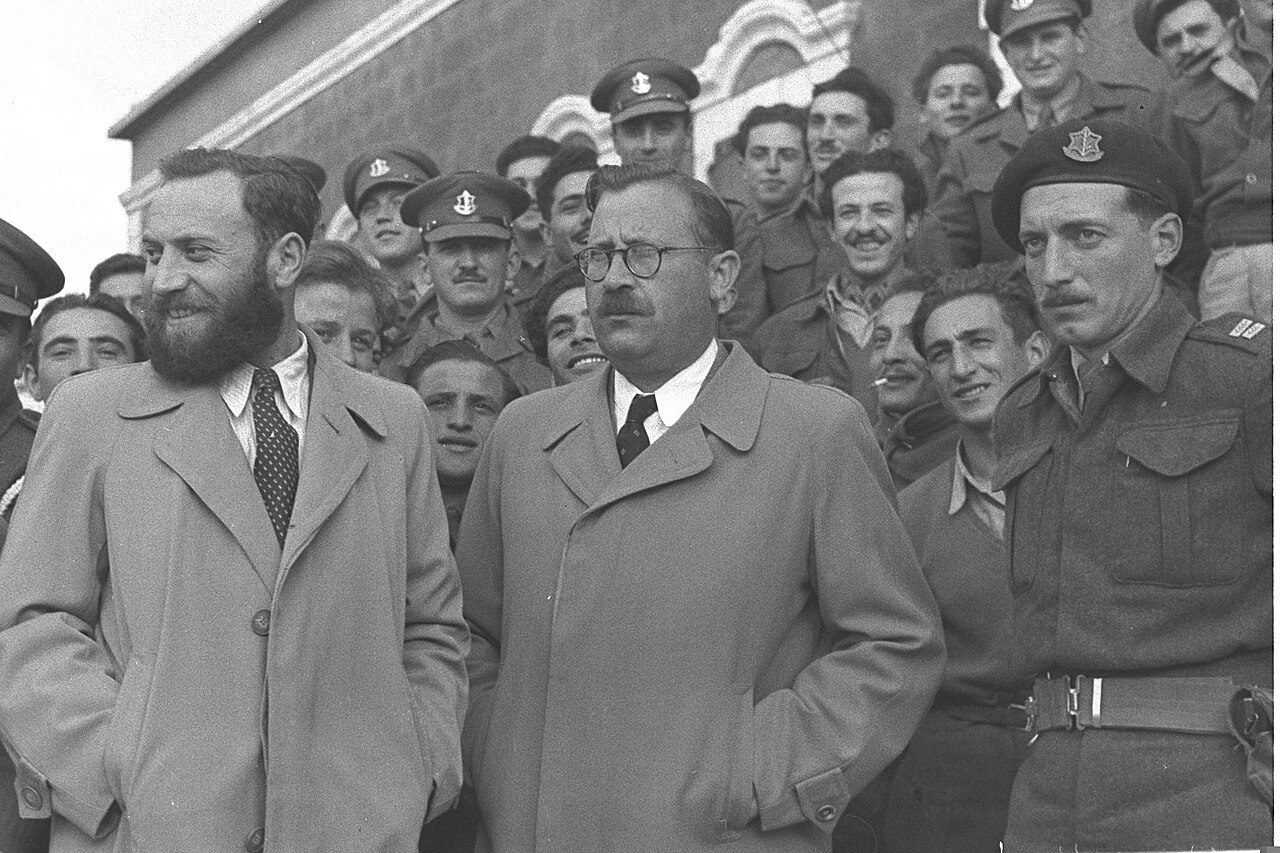
Natan Yellin-Mor (center) and Matityahu Shmueliwitz in front of the Acre prison, after their release in 1949
Lehi leaders initially denied responsibility for the attack.[38] Only later did Lehi take responsibility for the killings in the name of Hazit Hamoledet (the Homeland Front), a name they copied from a war-time Bulgarian resistance group.[d][23]: 252–253
In the wake of universal condemnation of the killing, Israeli Prime Minister David Ben-Gurion moved to shut down the Irgun and Lehi.[40] While the underground organizations had by then mostly been integrated into the IDF, especially after the Altalena Affair, they had retained an independent presence in Jerusalem. With Bernadotte's assassination, the Israeli government lost its last remaining tolerance for them and passed the Ordinance to Prevent Terrorism. Lehi was declared a terrorist organization and many of its members were arrested.[41][42] In addition, an ultimatum was issued to the Irgun to fully integrate into the IDF or be destroyed, and IDF troops surrounded the Irgun camp in Jerusalem. The Irgun accepted the ultimatum, and its fighters subsequently turned over their arms and enlisted in the IDF.[43][44]
Yellin-Mor and another Lehi member, Mattityahu Shmulevitz, were charged with belonging to a terrorist organization. They were found guilty but immediately released and pardoned. Yellin-Mor had meanwhile been elected to the first Knesset.[23]: 261–270 Betty Knut-Lazarus, a Lehi militant, and the granddaughter of composer Alexander Scriabin, was also imprisoned for being allegedly involved in the killing, before being subsequently released.[45]
Years later, Cohen's role was uncovered by David Ben-Gurion's biographer Michael Bar Zohar, while Cohen was working as Ben-Gurion's personal bodyguard. The first public admission of Lehi's role in the killing was made on the anniversary of the assassination in 1977.[46] The statute of limitations for the murder had expired in 1971.[27][3]: 193 In 1988, two years after Cohen's death, Zettler and Makover publicly confessed their role in the assassination and confirmed that Cohen had killed Bernadotte.[37] In the late 1960s, Israeli journalist Baruch Nadel published a book in which he also claimed to have taken part in planning the murder.[47]
The weapon which was used in the assassination (an MP 40, serial number 2581)[37] was lost, and was only found again in 2018 during an inventory check in the Heritage House of the Israel Police [he], when an unidentified box was found to contain an MP 40 machine pistol and the curator, Shlomi Shitrit, decided to identify the history of the weapon. Prior to finding it, it was believed to have been destroyed.
[1] https://en.wikipedia.org/wiki/Folke_Bernadotte