# 🔑: Public Key, 🗝 Private Key
##### Public-key cryptography, or asymmetric cryptography,
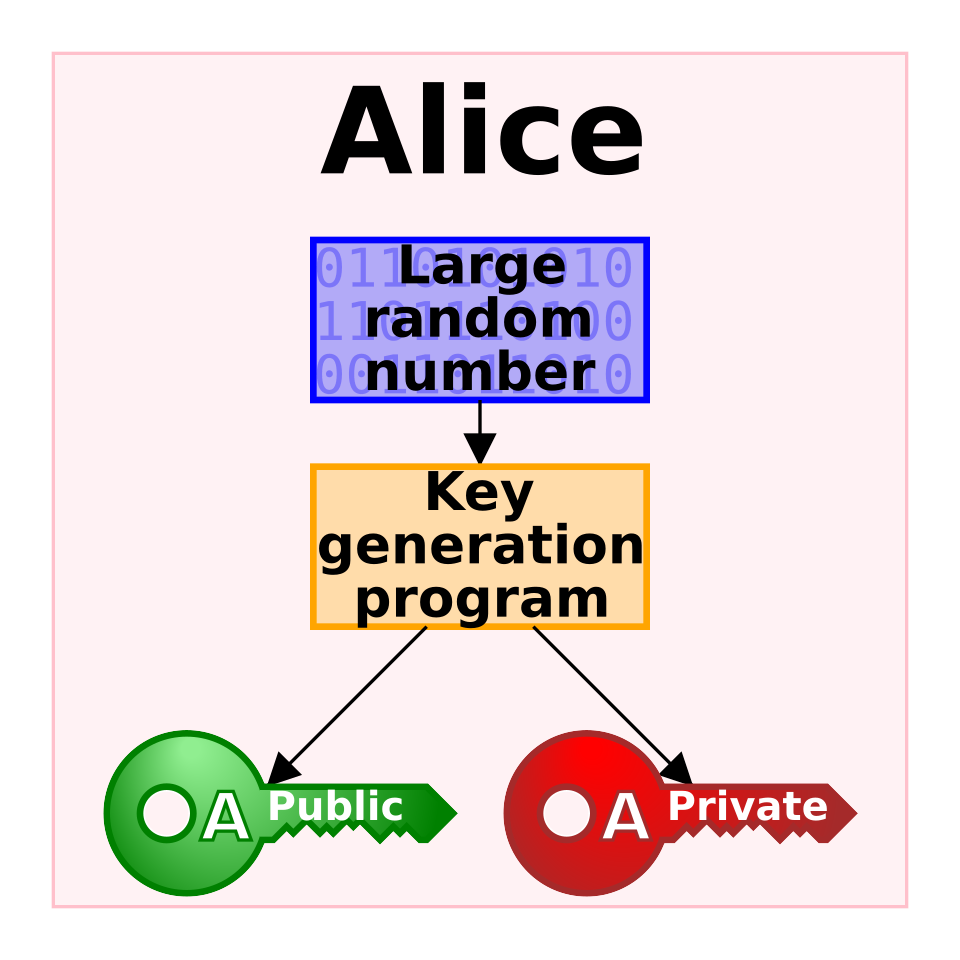
An unpredictable (typically large and [random](https://en.wikipedia.org/wiki/Random "Random")) number is used to begin generation of an acceptable pair of [keys](https://en.wikipedia.org/wiki/Cryptographic_key "Cryptographic key") suitable for use by an asymmetric key algorithm.
##### Free Form Programmable Keys
🔑: Public Key
🗝 Private Key
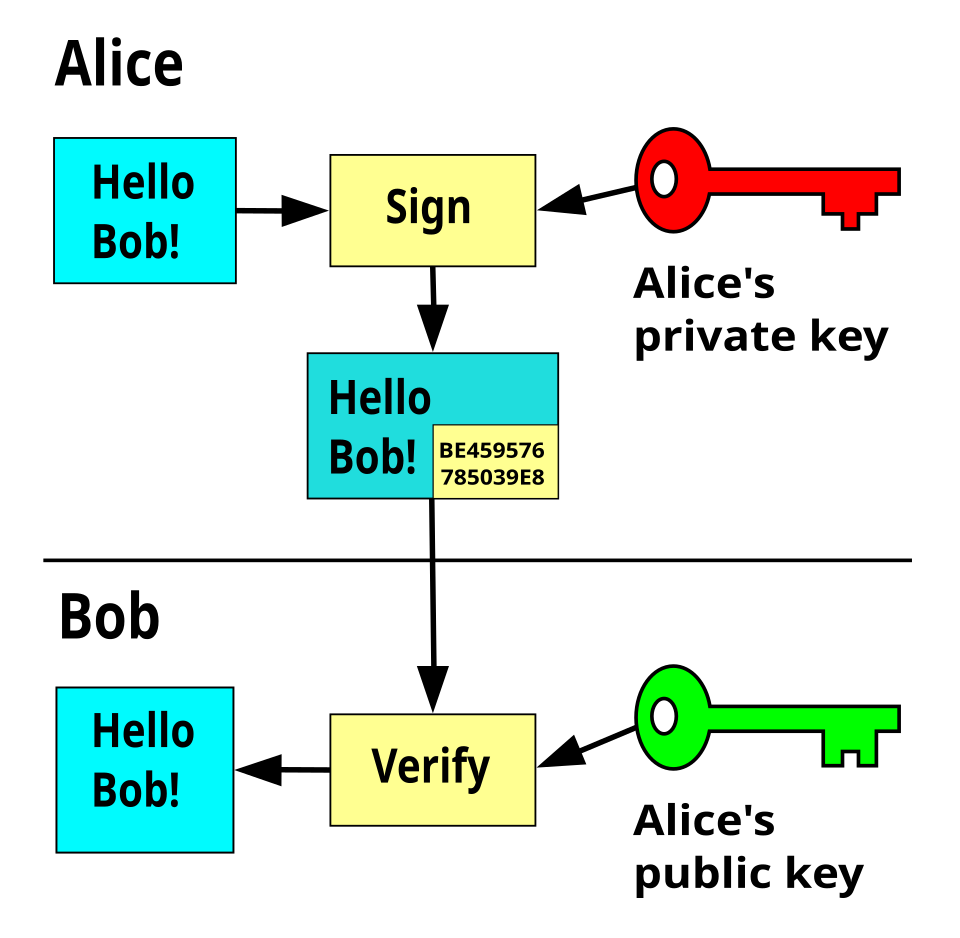
In this example the message is [digitally signed](https://en.wikipedia.org/wiki/Digital_signature "Digital signature") with Alice's private key, but the message itself is not encrypted. 1) Alice signs a message with her private key. 2) Using Alice's public key, Bob can verify that Alice sent the message and that the message has not been modified.
\[1\] [https://en.wikipedia.org/wiki/Public-key\_cryptography](https://en.wikipedia.org/wiki/Public-key_cryptography)